

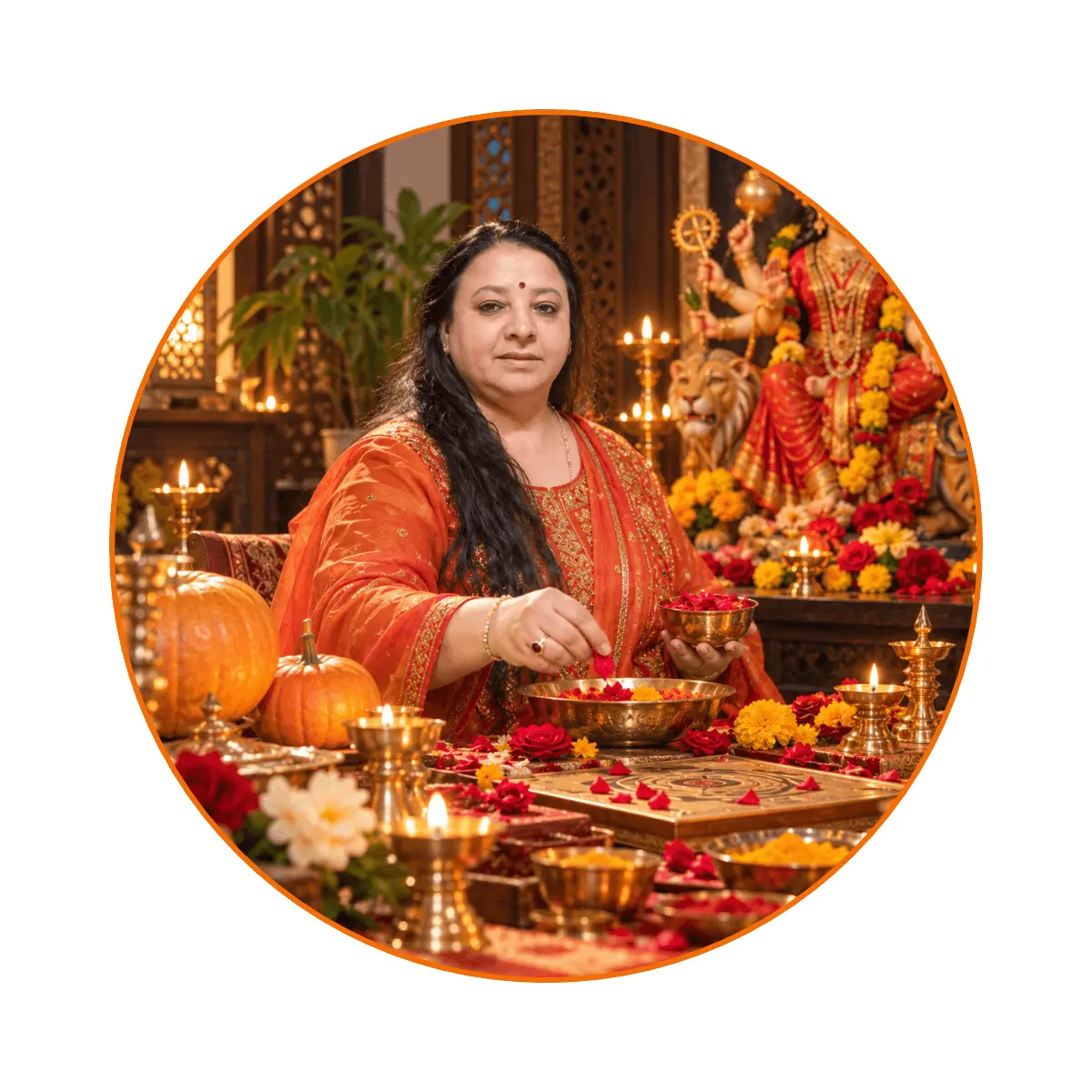
The Shri Kushmunda Sadhana Course is intended for people interested in the devotional traditions associated with Goddess Kushmanda, one of the nine forms of Goddess Durga worshipped during Navratri. She is traditionally associated with creation, vitality, radiance, and the sustaining power of the Divine Feminine. Her worship holds an important place in Hindu devotional life, particularly among devotees who honour the different forms of Durga.
Sadhana refers to a regular spiritual practice carried out with dedication and purpose. Depending on the tradition, it may include prayer, mantra recitation, meditation, contemplation, and other forms of worship. The Shri Kushmunda Sadhana Course offers an opportunity to explore the religious background, symbolism, and devotional practices associated with Goddess Kushmanda.
For people interested in Durga worship, Navratri traditions, or personal spiritual discipline, this course provides a subject for further study and reflection.
Understanding Goddess Kushmanda
Goddess Kushmanda is traditionally recognised as the fourth form of Navadurga, the nine forms of Goddess Durga worshipped during Navratri. In popular Hindu accounts, she is associated with the creation of the universe through her divine radiance and creative power. Her name and stories are interpreted in different ways across devotional traditions.
Kushmanda is commonly depicted with a radiant appearance and multiple arms holding symbolic objects. These images communicate ideas about divine strength, creation, protection, and the sustaining qualities of the Goddess. The details of her representation may vary across images and religious settings.
The Shri Kushmunda Sadhana Course may appeal to learners who want to understand the goddess’s role within Hindu traditions and the meaning behind her worship. Learning about the stories and symbols associated with Kushmanda can provide useful context for devotional practices.
The Meaning of Sadhana
Sadhana generally refers to a disciplined spiritual routine followed with dedication. In Hindu devotional traditions, it may involve prayer, mantra recitation, meditation, reading religious texts, or other forms of worship.
The specific form of sadhana depends on the deity, the practitioner’s tradition, and the purpose of the practice. Some devotional activities are widely practised, while other ritual methods may have particular instructions or require guidance from a knowledgeable teacher.
The Shri Kushmunda Sadhana Course is intended for people interested in exploring this area of spiritual learning. The exact practices included depend on the course materials and the approach followed by the provider.
A thoughtful approach to sadhana places importance on understanding the meaning of a practice, maintaining consistency, and respecting its religious context. Rather than expecting immediate results, learners can take time to understand the teachings and their significance.
Mantra and Devotional Recitation
Mantra recitation is an important part of many Hindu devotional traditions. A mantra may consist of a divine name, a traditional phrase, or a sequence of sounds repeated during prayer or meditation. Devotees may use recitation as an expression of faith or as a way to focus their attention.
Goddess Kushmanda is honoured through prayers and devotional practices associated with the wider worship of Durga. The method of recitation, pronunciation, and ritual procedure may vary depending on the particular tradition being followed.
Through the Shri Kushmunda Sadhana Course, learners may explore the role of prayer and mantra in Kushmanda worship. The specific prayers, recitations, and instructions included depend on the course offering.
Mantra practice should be approached with respect for its religious background and realistic expectations. Although many devotees find recitation personally meaningful, it cannot guarantee health, wealth, protection, or any other specific outcome.
Creation, Radiance, and Vitality
Goddess Kushmanda is associated in popular Hindu traditions with creation and divine radiance. Her stories offer a way to reflect on the creative aspects of existence and the importance of vitality, hope, and perseverance.
For devotees, these themes may provide a personal focus during prayer or meditation. Someone may reflect on how to approach a new responsibility with patience, while another person may use devotional time to consider their goals and daily priorities.
The Shri Kushmunda Sadhana Course may interest people who want to explore these symbolic meanings alongside devotional study. Spiritual reflection can be personally meaningful when it encourages thoughtful decisions and responsible action.
These associations should be understood within their religious context rather than as promises of supernatural effects. Devotional practice does not guarantee success, remove every obstacle, or replace the practical work needed to address everyday challenges.
Goddess Kushmanda and Navratri
Navratri is an important Hindu festival dedicated to the worship of the Goddess in her different forms. During the festival, devotees may observe prayer, fasting according to personal and family traditions, temple visits, devotional singing, and other religious activities.
Goddess Kushmanda is traditionally worshipped on the fourth day of Navratri in the widely followed Navadurga sequence. Her worship forms part of the broader celebration of the many qualities and expressions associated with Goddess Durga.
The Shri Kushmunda Sadhana Course may be relevant to people who want to learn more about this devotional tradition and its place in the Navratri calendar. Understanding the festival’s background can help learners appreciate the cultural and religious significance of the practices they encounter.
Customs can differ by region, family, and community. When following a particular observance, it is useful to respect the tradition and guidance relevant to your own practice.
Developing a Consistent Spiritual Routine
Many people who follow devotional traditions set aside regular time for prayer, meditation, or religious study. A quiet place and a manageable routine can help make spiritual practice part of everyday life.
If you are studying the Shri Kushmunda Sadhana Course, approach the material gradually. Take notes on unfamiliar terms, learn about the background of the practices, and make sure you understand the purpose of each instruction.
Some practitioners prefer simple devotional routines, while others follow more detailed forms of worship. The appropriate approach depends on personal belief and the tradition being followed. A routine should be realistic and consistent with the guidance of the relevant tradition.
If the course provides specific ritual instructions, follow the supplied guidance. Practices that require initiation or personal supervision should be undertaken with appropriate instruction.
Who May Be Interested in This Course?
The Shri Kushmunda Sadhana Course may suit people interested in Goddess Kushmanda, Navadurga worship, Navratri traditions, or Hindu devotional practices. It may also appeal to existing devotees who want to organise their study of the goddess and her significance.
Beginners may find it useful to learn about Kushmanda’s symbolism and religious background before exploring particular devotional methods. Those with prior experience may wish to study the subject in greater detail.
The course’s suitability depends on the teaching approach and material provided. Learners should approach the subject with respect for the tradition and realistic expectations about spiritual practice.
Respectful and Responsible Practice
Goddess Kushmanda is part of living Hindu religious traditions, and her worship has cultural and personal significance for many devotees. A respectful approach recognises that practices vary and that no single method represents every community.
The Shri Kushmunda Sadhana Course should be approached as a spiritual or educational offering. Religious beliefs about blessings, protection, or spiritual progress are matters of faith and cannot guarantee particular results.
For important decisions involving health, finances, safety, or relationships, rely on appropriate professional advice and reliable information. Spiritual reflection can accompany practical action but should not replace it.
Begin Your Study of Kushmanda Sadhana
The Shri Kushmunda Sadhana Course offers a subject for people interested in Goddess Kushmanda and the devotional traditions associated with her worship. By exploring the meaning of sadhana, the role of mantra, and the symbolism of the goddess, learners can develop a clearer understanding of this area of Hindu spiritual life.
Approach the subject with patience, respect, and an interest in its cultural and religious context. A considered study of Kushmanda traditions can help you appreciate their significance and decide how they relate to your own spiritual interests.
Course note: The specific lessons, mantras, rituals, and learning materials depend on the course offering. Spiritual practices are matters of faith and tradition and do not guarantee particular personal, financial, health, or supernatural outcomes.


Reviews
There are no reviews yet.