

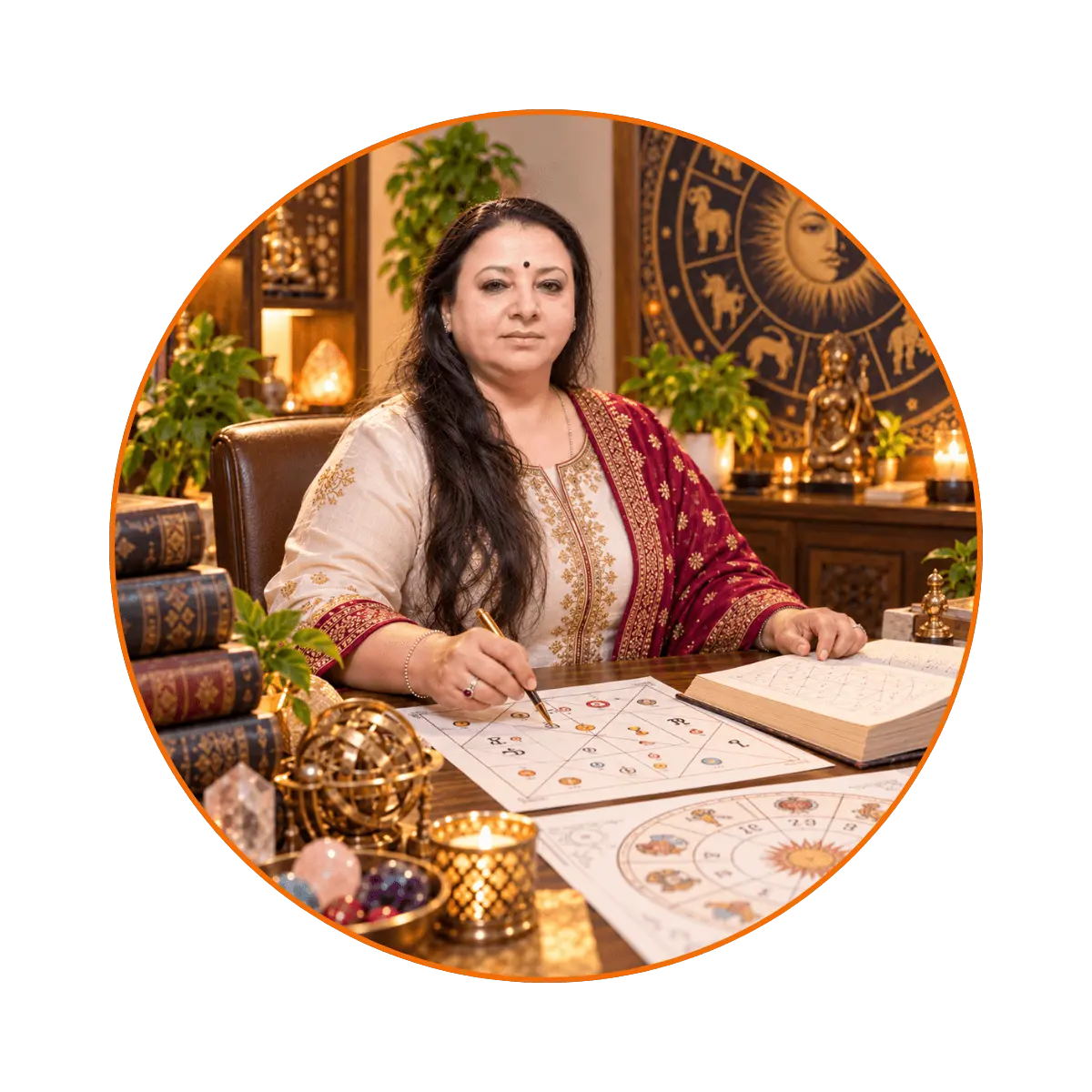
The Vedic Astrology Course is designed for students who want to learn the basic principles of Jyotish and develop a practical method for reading birth charts. Vedic astrology uses planets, zodiac signs, houses, nakshatras, planetary periods and other factors to study a horoscope.
The Vedic Astrology Course is suitable for beginners as well as learners who already have some knowledge of astrology. It introduces the main concepts in a clear order so students can understand how different parts of a horoscope are studied together.
Vedic astrology has a long traditional history in India. It is also known as Jyotish and is used by practitioners for horoscope interpretation, timing and traditional guidance. This course focuses on learning the principles and applying them through chart practice.
What Is Vedic Astrology?
The Vedic Astrology Course begins with an introduction to the basic structure of Vedic astrology. A birth chart is prepared using the date, time and place of birth, and the positions of planets are studied in relation to signs and houses.
Students learn the role of the Sun, Moon, Mars, Mercury, Jupiter, Venus, Saturn and the lunar nodes Rahu and Ketu. Each planet has traditional significations and is studied according to its position and relationships in the horoscope.
The course also explains why accurate birth details are important when preparing a chart.
Understanding the Zodiac Signs
A major section of the Vedic Astrology Course is the study of the twelve zodiac signs.
The signs are traditionally divided according to elements, qualities and other classifications. Each sign has a ruling planet and specific characteristics used during horoscope interpretation.
Students learn the names, symbols, ruling planets and general qualities of the twelve signs. They also study how a planet may be interpreted differently depending on the sign it occupies.
Understanding signs provides a foundation for studying planets and houses.
The Nine Planets
The Vedic Astrology Course introduces the nine traditional planetary influences used in Jyotish: Sun, Moon, Mars, Mercury, Jupiter, Venus, Saturn, Rahu and Ketu.
Each planet is associated with particular areas and qualities. The Sun is traditionally connected with authority and vitality, while the Moon is associated with the mind and emotions. Mars relates to action and courage, Mercury to communication and learning, Jupiter to knowledge and guidance, Venus to relationships and comforts, and Saturn to discipline and responsibility.
Rahu and Ketu are lunar nodes and have their own traditional interpretations.
Students learn how these planets are studied according to their house, sign, lordship and relationships.
Twelve Houses
The Vedic Astrology Course teaches the importance of the twelve houses in a birth chart.
Each house represents different areas of life. The first house is associated with the self and personality. The second relates to family, speech and resources. The fourth is connected with home and comfort, while the seventh is traditionally studied for marriage and partnerships.
The tenth house is commonly considered for profession and public activity. The eleventh is associated with gains and networks, while the twelfth can relate to expenses, isolation and distant places.
Students learn to connect house meanings with planets and signs during chart analysis.
Ascendant and Moon Sign
The Vedic Astrology Course gives attention to the Ascendant, also called Lagna, because it forms an important starting point for traditional horoscope analysis.
The Ascendant determines the house arrangement of a birth chart. Students learn how to identify it and study its ruling planet.
The Moon sign is also important in Vedic astrology. The Moon is traditionally associated with the mind, feelings and day-to-day experience. Students learn why both the Ascendant and Moon can be considered during horoscope interpretation.
Nakshatras
Nakshatras are an important part of the Vedic Astrology Course.
The zodiac is traditionally divided into 27 nakshatras, each with its own name, planetary ruler and symbolic associations. Students learn the basic structure of the nakshatras and how the Moon’s position is used to identify the birth nakshatra.
Nakshatras also play an important role in several traditional timing systems. Understanding them can therefore help students move from basic chart reading to more detailed study.
Planetary Aspects and Relationships
The Vedic Astrology Course explains how planets interact with each other through traditional aspects and placements.
Students learn to identify conjunctions, aspects and other relationships between planets. These relationships are considered along with the houses and signs involved.
For example, a planet placed in a particular house may also influence another house through its traditional aspect. Studying these connections helps students build a broader picture of the horoscope.
House Lords
House lordship is another important topic in the Vedic Astrology Course.
Every house has a ruling planet based on the Ascendant sign. Students learn how to identify the lord of each house and study where that planet is placed.
The house occupied by a house lord can provide another layer of interpretation. Students can practise tracing these connections while analysing a birth chart.
Yogas in Vedic Astrology
The Vedic Astrology Course may introduce traditional planetary combinations known as yogas.
Different yogas are associated with different themes and are formed through particular relationships between planets and houses. Students learn the basic conditions for identifying commonly studied yogas.
A yoga should not be interpreted in isolation. Its strength and relevance can be considered alongside the overall horoscope.
Vimshottari Dasha
Planetary periods are an important part of the Vedic Astrology Course.
Students are introduced to Vimshottari Dasha, a traditional timing system based on planetary periods. The sequence and duration of planetary periods are studied along with the birth nakshatra.
Students learn how practitioners traditionally examine the current and upcoming planetary periods when studying a specific area of life.
Timing should be considered as one part of horoscope analysis rather than as a guarantee of a particular event.
Transit Study
The Vedic Astrology Course can also introduce planetary transits.
A transit refers to the current movement of a planet through the zodiac. Traditional astrologers compare these movements with the birth chart when studying a particular period.
Students learn the basic idea behind transit analysis and how it can be considered alongside planetary periods and natal chart placements.
Navamsa Chart
The Vedic Astrology Course may introduce the Navamsa or D9 chart as an important divisional chart in Vedic astrology.
Students learn the basic purpose of the Navamsa and how it is traditionally considered alongside the main birth chart. Depending on the level of the course, learners may study its use in relation to planetary strength, marriage and other traditional areas.
Students should first understand the main birth chart before moving into detailed divisional chart analysis.
Practical Horoscope Reading
The Vedic Astrology Course encourages practical chart study. Students can work through sample birth charts and follow a clear sequence.
A basic reading can include:
- Identify the Ascendant.
- Note the planets in each house.
- Study the zodiac signs.
- Identify house lords.
- Examine planetary aspects.
- Check important combinations.
- Study relevant nakshatras.
- Consider planetary periods.
- Review relevant transits.
- Form a traditional interpretation.
This approach helps learners avoid jumping between unrelated parts of the chart.
Who Can Take This Course?
The Vedic Astrology Course can be useful for:
- Beginners interested in Jyotish
- Astrology students
- Existing horoscope readers
- Spiritual study learners
- Numerology practitioners
- Tarot and traditional divination learners
- Students interested in Indian astrology
- Anyone wanting structured astrology practice
A basic understanding of numbers and simple calculations can be helpful, but advanced mathematics is not required for traditional chart study.
Developing Your Astrology Practice
Regular practice is important when studying the Vedic Astrology Course. Students can keep a notebook containing sample charts, planetary positions, house lords and their observations.
It is useful to analyse one topic at a time instead of trying to interpret every part of a chart immediately. For example, students can first practise Ascendant and house analysis, then add planetary aspects, nakshatras and dashas.
This gradual approach can make complex charts easier to study.
Important Note
The Vedic Astrology Course teaches Vedic astrology as a traditional cultural and belief-based system. Astrological predictions and interpretations are not scientifically established.
Vedic astrology should not replace qualified medical, legal, financial, psychological or other professional advice. Students and practitioners should use appropriate professional guidance when making important decisions.
Why Choose the Vedic Astrology Course?
The Vedic Astrology Course provides a structured introduction to the main principles of Jyotish, including planets, signs, houses, nakshatras, yogas, dashas, transits and practical horoscope analysis.
Students can begin with the foundation of a birth chart and gradually move toward more detailed topics. The course encourages regular chart practice and careful observation rather than relying only on memorised meanings.
For anyone interested in learning traditional Indian astrology in an organised way, the Vedic Astrology Course provides a useful foundation for continued study and practice.
Reviews
There are no reviews yet.