
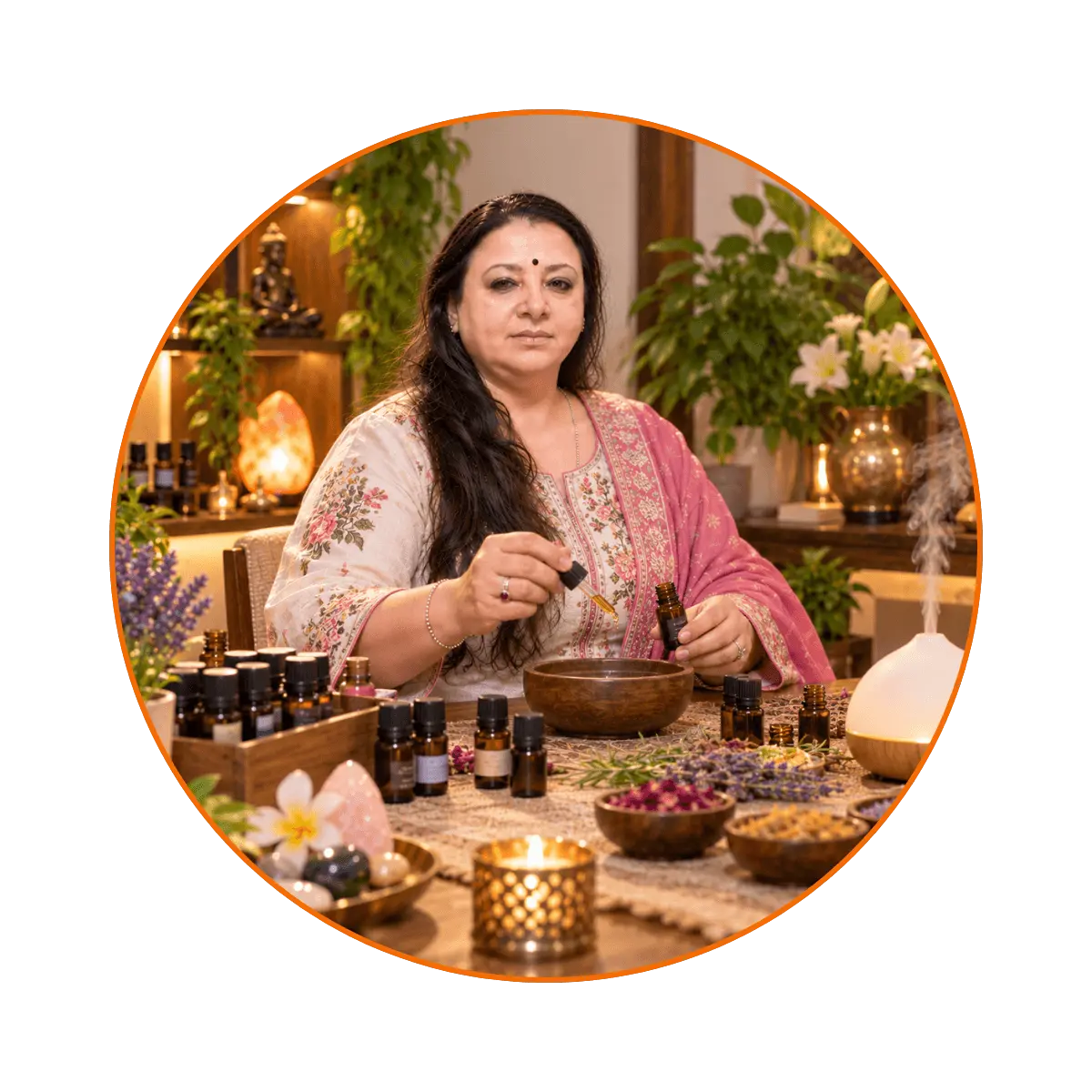
The Aroma Therapy Course is designed for students who want to learn the traditional and practical use of aromatic essential oils. The course introduces essential oils, their common uses, methods of application, blending basics, storage and important safety practices.
The Aroma Therapy Course is suitable for beginners, wellness learners, massage practitioners and people interested in natural aroma practices. Students can learn how different essential oils are selected and how they may be used through methods such as diffusion, inhalation and diluted topical application.
Aromatherapy is commonly used as a complementary wellness practice involving aromatic plant extracts. Essential oils are concentrated substances, so learning about proper dilution, storage and safe handling is an important part of responsible practice.
What Is Aromatherapy?
The Aroma Therapy Course begins with an introduction to aromatherapy and its traditional use of aromatic plant oils.
Essential oils are obtained from different parts of plants, including flowers, leaves, roots, bark, seeds and peels. Oils have distinct aromas and are commonly used in diffusers, massage preparations, personal care products and other wellness routines.
Students learn the basic differences between essential oils, carrier oils and other aromatic products. This foundation helps learners make better choices when preparing simple aromatherapy applications.
Understanding Essential Oils
A major part of the Aroma Therapy Course is learning about essential oils and their common characteristics.
Students may study oils such as lavender, peppermint, eucalyptus, lemon, tea tree, rosemary, frankincense and sweet orange. Each oil has its own aroma and traditional uses.
The course helps learners understand that essential oils are highly concentrated and should not automatically be applied directly to the skin.
Different oils can also have different safety considerations. Learning how to research an oil before use is therefore an important part of aromatherapy study.
Carrier Oils
The Aroma Therapy Course introduces carrier oils because they are commonly used when preparing essential oils for topical application.
Examples of carrier oils include coconut oil, jojoba oil, sweet almond oil, sesame oil and grapeseed oil. Carrier oils can dilute essential oils and make them more suitable for certain topical preparations.
Students learn why dilution is important and how the intended use, concentration and individual circumstances can affect the preparation.
Essential Oil Dilution
Proper dilution is an important safety topic in the Aroma Therapy Course.
Essential oils are concentrated, and using too much can increase the chance of skin irritation or other unwanted reactions. Students learn the basic idea of dilution and how to follow appropriate instructions for the particular oil and intended use.
For personal use, learners should follow reliable product instructions and seek guidance from a qualified aromatherapy professional when unsure.
Children, pregnant people, older adults and people with certain health conditions may require additional precautions.
Aromatherapy Diffusion
The Aroma Therapy Course can introduce diffuser use as one method of enjoying aromatic oils.
Students learn how diffusers work, how oils may be added according to the manufacturer’s instructions and why ventilation can be important.
A diffuser should be used according to its instructions rather than assuming that more oil provides better results. Strong aromas may be unpleasant for some people and can cause discomfort or irritation.
Students also learn the importance of cleaning and maintaining diffuser equipment.
Inhalation Methods
The Aroma Therapy Course can cover simple inhalation methods used in aromatherapy.
These may include diffuser use, aromatic inhalers or other methods designed for controlled exposure to an aroma.
Students learn that direct inhalation of concentrated essential oils is not the same as normal diluted aromatic use. Safety instructions should always be followed.
People with respiratory sensitivity should be especially careful with strong aromas and seek appropriate professional guidance if needed.
Massage Oil Preparation
Massage is another common application discussed in the Aroma Therapy Course.
Essential oils may be diluted in a suitable carrier oil before being used as part of a massage preparation. Students learn how to select an appropriate aroma and prepare a simple diluted blend.
The course also covers basic precautions, including avoiding contact with the eyes and sensitive areas and checking for possible skin sensitivity.
Massage with essential oils should be treated as a complementary wellness practice and not as a replacement for medical treatment.
Blending Essential Oils
The Aroma Therapy Course teaches basic blending principles so students can understand how different aromas may work together.
A simple blend can contain a main aroma along with supporting scents. Students can experiment with different combinations while keeping the total concentration appropriate for the intended use.
It is useful to record each blend, including the oils used, quantities and intended purpose. This makes it easier to repeat a blend or adjust it later.
Aroma Selection
Choosing an oil should depend on the purpose of the practice, personal preference and safety considerations. The Aroma Therapy Course teaches students to consider these factors before preparing a blend.
For example, a person may prefer a floral aroma for a relaxing evening routine, while another may prefer a fresh citrus or herbal aroma.
Aromatherapy is highly individual, and an aroma that one person enjoys may not be comfortable for another.
Essential Oil Safety
Safety is a major part of the Aroma Therapy Course.
Students learn about precautions such as:
- Avoiding undiluted topical use unless specifically appropriate
- Keeping oils away from the eyes
- Keeping essential oils away from children and pets
- Storing oils properly
- Checking product instructions
- Performing appropriate skin testing when needed
- Using suitable dilution
- Avoiding unsafe ingestion
- Considering individual sensitivities
Some essential oils may be unsuitable for certain people or situations. Students should always check reliable safety information before using an unfamiliar oil.
Storage and Handling
The Aroma Therapy Course also covers basic storage practices.
Essential oils should generally be kept tightly closed and stored according to the manufacturer’s instructions. Many oils are best protected from excessive heat, light and moisture.
Proper storage can help maintain the quality of the product and reduce accidental spills or exposure.
Students can also learn the importance of clearly labelling homemade blends with the ingredients and date of preparation.
Practical Aromatherapy Exercises
The Aroma Therapy Course encourages practical learning through simple exercises.
Students can practise:
- Identifying different aromas.
- Learning the basic characteristics of common oils.
- Selecting suitable carrier oils.
- Preparing simple diluted blends.
- Creating diffuser combinations.
- Recording blend recipes.
- Practising safe storage.
- Creating a personal aroma routine.
These exercises can help learners become more familiar with the materials and develop careful handling habits.
Aromatherapy for Personal Wellness
The Aroma Therapy Course may help students create simple personal wellness routines involving pleasant aromas.
A person might use a suitable aroma during meditation, quiet reading, relaxation time or a bedtime routine. The purpose is to create a pleasant sensory environment rather than make a medical claim.
Aromatherapy can be used alongside normal wellness habits such as adequate sleep, balanced nutrition, exercise and appropriate healthcare.
Who Can Take This Course?
The Aroma Therapy Course can be useful for:
- Beginners interested in aromatherapy
- Wellness learners
- Massage practitioners
- Spa professionals
- Natural product enthusiasts
- Meditation practitioners
- Complementary wellness students
- People interested in essential oil blending
No advanced scientific background is required for basic aromatherapy study.
Developing Your Aromatherapy Practice
Regular practice can help students become more familiar with aromas, dilution and blending. A simple notebook can be useful for recording oil names, aromas, dilution levels and personal observations.
Students should avoid experimenting with large quantities. Learning gradually and following reliable safety guidance is a better approach.
It is also important to understand that natural does not automatically mean safe. Essential oils are concentrated substances and should be handled carefully.
Important Note
The Aroma Therapy Course teaches aromatherapy as a complementary wellness practice. Essential oils may be used for fragrance, relaxation and personal care, but claims that aromatherapy or individual oils can diagnose, treat or cure medical conditions are not scientifically established.
This course should not replace medical treatment or professional healthcare advice. Anyone with a medical condition, allergy, pregnancy, medication use or other health concern should consult an appropriately qualified healthcare professional before using essential oils.
Essential oils should not be taken internally unless specifically directed by a suitably qualified professional and the product is clearly intended for such use.
Why Choose the Aroma Therapy Course?
The Aroma Therapy Course provides a practical introduction to essential oils, carrier oils, blending, diffusion, massage preparations and safety.
Students can learn how to identify common oils, prepare simple blends and use aromatic products responsibly. The course places importance on careful handling because essential oils are concentrated and require appropriate use.
For anyone interested in essential oils and complementary wellness practices, the Aroma Therapy Course offers a structured way to study aromatherapy and develop practical skills for personal use or further learning.

Reviews
There are no reviews yet.