
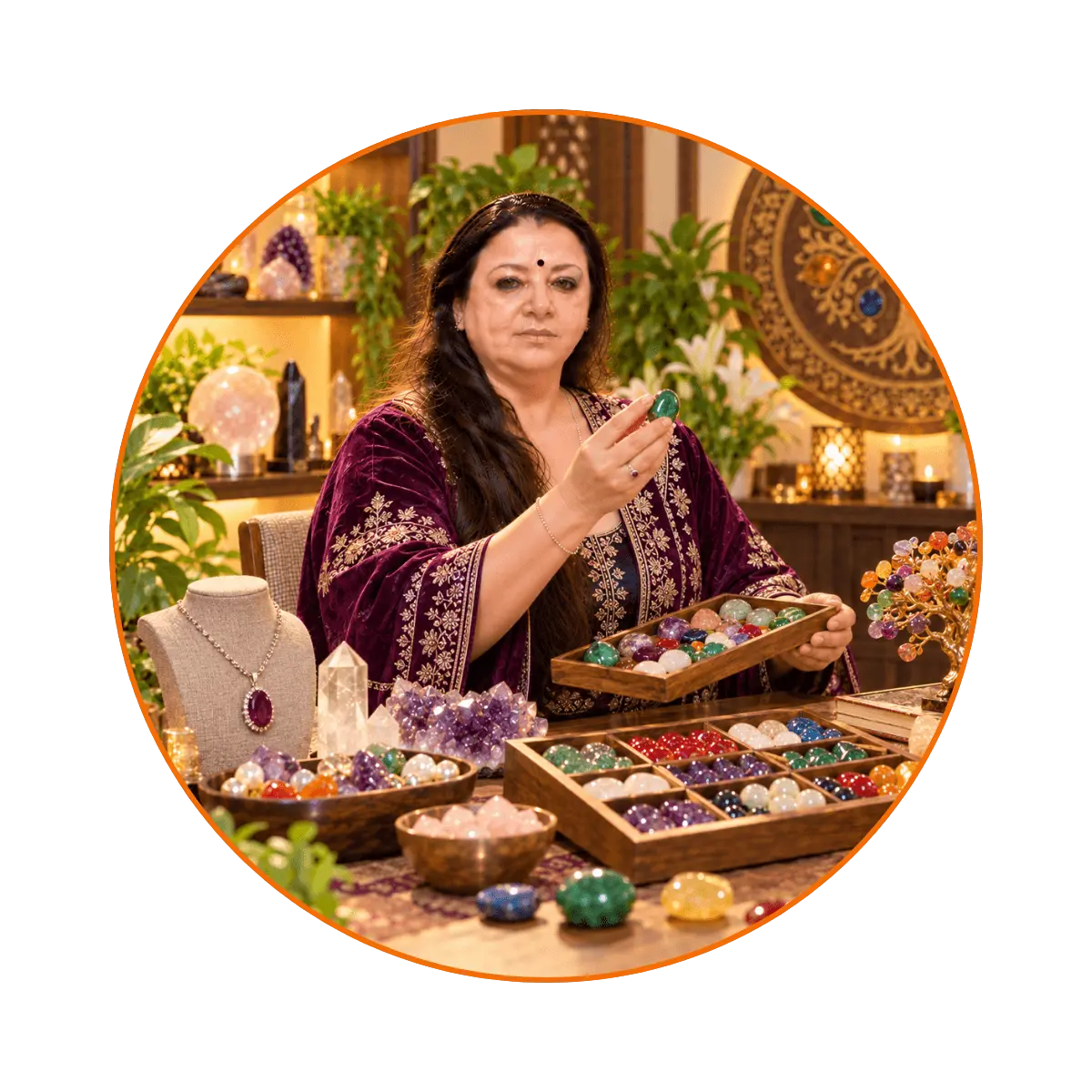
The Gem Therapy Course is designed for people who are interested in gemstones, traditional healing practices, meditation and spiritual study. Gemstones have been valued for centuries for their beauty, cultural meaning and traditional associations. Different systems connect particular gems with colours, planets, qualities, intentions and spiritual practices.
A Gem Therapy Course provides an introduction to these traditional ideas while helping students understand how gemstones can be used in personal meditation and reflective practices. The focus is on learning about gems, their traditional meanings, care and responsible use rather than making promises about health or life results.
Gem therapy is found in different forms across traditional and modern spiritual practices. Some systems use gemstones according to colour, birth information, planetary associations or personal preference. Other approaches focus mainly on meditation and symbolic meaning.
The Gem Therapy Course can be approached as a spiritual and complementary practice. Gemstones may be used as objects of focus during meditation, as personal reminders or as part of traditional rituals.
Understanding Gem Therapy
Gem therapy refers to the traditional and spiritual use of gemstones for personal wellbeing, meditation and symbolic practices. Different traditions may assign particular qualities to specific gems.
For example, ruby is often associated with vitality and confidence, emerald with growth and balance, sapphire with clarity and discipline, and pearl with calmness and emotional sensitivity. These meanings can vary between traditions.
A Gem Therapy Course helps students understand these associations without treating them as universal medical facts.
Gemstones should not be viewed as replacements for doctors, medicines or professional healthcare. Their traditional use belongs to the field of spiritual and complementary practices.
Gemstones and Traditional Beliefs
Many gemstone traditions connect stones with planets, zodiac signs, colours or specific personal qualities. In Indian astrology and related traditions, gemstones may be recommended according to a person’s horoscope or planetary associations.
A Gem Therapy Course may explore these traditional ideas and explain why different gemstones are selected for different purposes.
Students can also learn that gemstone traditions differ. A stone recommended in one system may not have the same meaning in another.
Understanding these differences helps students approach gemstone practices with care rather than assuming that one method applies to everyone.
Choosing the Right Gemstone
Gem selection is an important part of a Gem Therapy Course. A gemstone may be selected according to traditional associations, colour, personal preference, birth information or a particular spiritual practice.
Students can learn to consider the purpose for which a gemstone is being used and the tradition behind the recommendation.
Physical characteristics also matter. Natural gemstones can differ in colour, clarity, size, shape, inclusions and surface appearance. Two pieces of the same gemstone may look quite different.
Some stones may be treated, heated, dyed or enhanced. Understanding these differences can help students make more informed decisions when purchasing gemstones.
Natural Gemstone Variation
Natural stones are formed through geological processes, so variation is normal. A Gem Therapy Course can help students understand that natural gemstones may contain inclusions, colour zones, lines, cloudiness or other markings.
These characteristics do not automatically mean that a gemstone is poor quality. In some cases, natural inclusions are part of the identity of the stone.
Students should also learn to distinguish between natural, treated, synthetic and imitation stones when possible.
When purchasing valuable gemstones, proper certification from a reliable gem laboratory may be appropriate.
Gemstone Colour and Symbolism
Colour plays an important role in gemstone traditions. Red stones may be associated with strength and activity, green stones with growth and balance, blue stones with calmness and clarity, while yellow stones may be linked with confidence and optimism.
A Gem Therapy Course can explore these symbolic associations as part of meditation and personal reflection.
Colour meanings are not fixed scientific rules. Personal experiences and cultural traditions can influence how a person responds to a particular gemstone.
Students can keep a journal to record which colours and stones they naturally prefer and what personal associations they have with them.
Gemstone Meditation
Meditation is a simple way to work with gemstones. During a Gem Therapy Course, students may hold a gemstone in their hand or place it nearby while sitting quietly.
Attention can be placed on the stone’s colour, shape, texture or weight. Slow breathing can be used to create a calm setting for observation.
Some people may prefer to close their eyes and visualise the gemstone. Others may find it easier to look directly at the stone.
The gemstone can simply act as a physical focus for meditation. There is no need to expect a particular experience.
Gemstones and Chakras
Modern spiritual practices often connect gemstones with the seven main chakras. Red stones may be associated with the root chakra, orange with the sacral chakra, yellow with the solar plexus, green or pink with the heart, blue with the throat, indigo with the brow and violet with the crown.
A Gem Therapy Course may explore these associations as part of spiritual practice.
Chakra systems are traditional concepts and are not scientifically established medical systems. Students should use gemstone and chakra associations for meditation and symbolic reflection rather than medical diagnosis.
Gemstones and Planetary Associations
Some traditional Indian gemstone practices connect particular stones with planets. Ruby is commonly associated with the Sun, pearl with the Moon, red coral with Mars, emerald with Mercury, yellow sapphire with Jupiter, diamond with Venus, blue sapphire with Saturn, hessonite with Rahu and cat’s eye with Ketu.
A Gem Therapy Course can introduce these traditional associations and explain their role in gemstone-based spiritual practices.
Planetary gemstone recommendations can be quite specific in traditional astrology. Anyone considering an expensive gemstone based on astrological advice should understand the tradition being followed and verify the gemstone’s authenticity and quality.
Cleansing and Care
Gemstone cleansing is common in spiritual practices. Different traditions recommend different methods, including moonlight, sound, visualisation, smoke or simple physical cleaning.
A Gem Therapy Course can introduce these practices while also discussing the physical care of gemstones.
Not every gemstone should be placed in water, salt or direct sunlight. Some stones can be damaged, scratched, faded or affected by certain substances.
Students should learn about the physical properties of each gemstone before choosing a cleansing method.
Wearing Gemstones
Some traditions recommend wearing gemstones in rings, pendants or bracelets. The choice of metal, finger, day or method may vary according to the particular system being followed.
A Gem Therapy Course can discuss these traditions as part of gemstone study.
Students should also consider practical factors such as comfort, durability, skin sensitivity and the security of the setting.
Traditional gemstone recommendations should not be treated as guaranteed methods for improving health, finances, relationships or other areas of life.
Gemstones and Intention
Intention setting can be used alongside gemstone meditation. A student may choose a gemstone and decide what it represents personally.
For example, a green gemstone may serve as a reminder of balance, while a blue stone may be used as a reminder to communicate calmly.
A Gem Therapy Course can encourage students to write their intention before meditation and record their observations afterward.
The intention is personal and symbolic. The gemstone should not be presented as having guaranteed power over external events.
Gemstone Grids and Arrangements
Some spiritual practitioners arrange gemstones in patterns or grids. Stones may be selected according to colour, symbolic meaning or personal intention.
A Gem Therapy Course can introduce these arrangements as reflective and spiritual practices.
A simple arrangement might include several stones placed around a central gemstone during meditation. Students can observe the colours and shapes while focusing on a chosen theme.
There is no scientifically established evidence that a gemstone grid produces a particular energetic result. Its value can be understood as part of personal spiritual practice.
Gem Therapy and Personal Reflection
The Gem Therapy Course can also be used alongside journaling and self-reflection. Students may choose one gemstone and spend several minutes observing it before writing about their thoughts.
This can become a simple personal routine.
A gemstone may remind someone of a particular intention, personal quality or period of life. These associations can make the practice meaningful without requiring a belief that the stone has medical powers.
Responsible Use of Gemstones
Responsible gemstone practice includes understanding the limits of traditional claims. A Gem Therapy Course should not encourage students to tell others that gemstones can cure diseases or replace professional treatment.
If someone has a medical or psychological concern, appropriate professional care should be sought.
Students should also avoid making expensive gemstone recommendations without proper knowledge. Gemstone value can depend on many factors, including natural origin, treatment, colour, clarity, size, cut and certification.
Who Can Study a Gem Therapy Course?
The Gem Therapy Course can be suitable for beginners, gemstone enthusiasts, meditation practitioners, spiritual learners and people interested in traditional gemstone systems.
Previous experience is not necessarily required unless specific requirements are set by the course provider.
People who already practise astrology, Reiki, chakra meditation, crystal work or other spiritual traditions may also find gemstone practices useful as an additional area of study.
Building a Personal Gemstone Practice
A personal gemstone practice does not require a large collection. A few carefully selected stones can be enough for meditation and reflection.
A Gem Therapy Course can help students develop a routine involving gemstone selection, observation, cleansing, meditation and journaling.
Students can keep records of the stones they use, the traditional meanings associated with them and their own observations.
Over time, this can help create a more organised understanding of personal gemstone preferences.
Important Note
Gem therapy is a traditional, spiritual and complementary practice. Claims that gemstones can diagnose, cure or treat medical conditions are not scientifically established.
The Gem Therapy Course is intended for education, spiritual study, meditation and personal reflection. It should not replace medical treatment, psychological care, counselling or professional advice.
Astrological gemstone recommendations are also based on traditional beliefs and should not be presented as guaranteed solutions for health, financial, relationship or other personal concerns.
Why Choose a Gem Therapy Course?
The Gem Therapy Course offers a practical introduction to gemstone traditions, meditation, colour symbolism, chakra associations, planetary connections and gemstone care.
For beginners, it provides a simple way to understand how gemstones are used in different spiritual practices. For people who already collect gemstones, it can provide a more organised approach to studying their traditional meanings.
The Gem Therapy Course also encourages responsible gemstone use. Students can learn to appreciate natural variations, understand basic care requirements and consider authenticity when purchasing valuable stones.
Gemstones can be beautiful objects as well as meaningful symbols. When used for meditation and personal reflection, they can become part of a simple spiritual routine without making unrealistic claims about their effects.
Reviews
There are no reviews yet.