

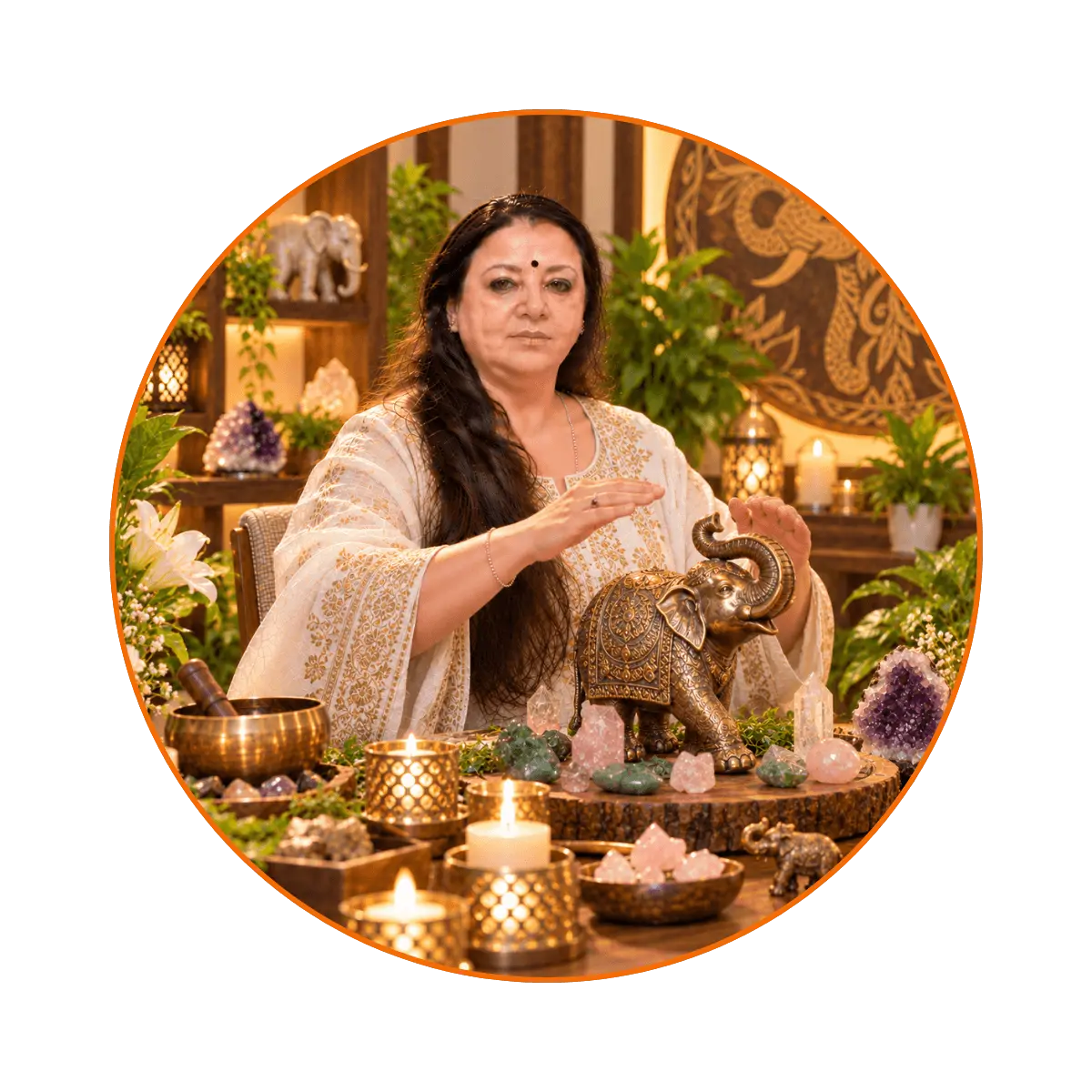
The Gaja Reiki Course is designed for people interested in Reiki, meditation, spiritual practices and the symbolic meaning of Gaja, the elephant. In Indian culture and spiritual traditions, the elephant is often associated with qualities such as strength, stability, wisdom, patience and steady progress. These symbolic qualities can provide a meaningful focus for meditation and personal reflection.
A Gaja Reiki Course brings elephant symbolism into a Reiki-based spiritual practice through meditation, visualization, intention setting and energy awareness. The approach can be used by people who enjoy working with animal symbolism and want to include Gaja themes in their personal Reiki practice.
The Gaja Reiki Course should be understood as a spiritual and complementary practice. It is not a medical treatment, and claims about energetic effects are not scientifically established. The purpose is to provide a framework for meditation, reflection and personal spiritual study.
Understanding Gaja Reiki
The word Gaja is associated with the elephant and carries a long history in Indian language, culture and spiritual symbolism. The elephant can represent qualities such as strength, patience, stability, wisdom and the ability to move steadily through obstacles.
A Gaja Reiki Course uses these symbolic qualities as themes for Reiki-style meditation and personal practice. Students may visualise an elephant during meditation or use elephant imagery as a reminder of qualities they want to reflect upon.
The meaning of Gaja can differ according to tradition and personal belief. The course can therefore be approached as a symbolic spiritual practice rather than as a fixed system with one interpretation.
Gaja Symbolism in Meditation
Meditation is an important part of a Gaja Reiki Course. Students may sit quietly, focus on their breathing and bring an image of an elephant into their mind.
The elephant can be visualised walking calmly through a forest, standing near water or simply remaining still in a peaceful natural setting. The image can provide a point of focus during meditation.
A student may reflect on qualities such as patience, confidence, stability and calmness while using the image.
Visualization experiences differ between individuals. Some people may see a clear image, while others may experience only a thought, feeling or general impression.
Reiki and Gaja Symbolism
Reiki is a Japanese spiritual practice commonly associated with meditation, focused attention and hands-on or hands-near methods. Different Reiki traditions may use their own teachings and approaches.
In a Gaja Reiki Course, Reiki-style practices can be combined with elephant symbolism for personal meditation and spiritual work.
The Gaja theme can provide a symbolic focus during a Reiki session. Students may imagine the qualities represented by an elephant while practising breathing, meditation or traditional hand positions.
The symbolic element does not need to be treated as a physical force. It can simply provide a meaningful image for concentration and reflection.
Elephant as a Symbol of Strength
The elephant is widely recognised for its physical strength and steady nature. In a Gaja Reiki Course, this quality can be used as a theme for personal reflection.
Students may meditate on the idea of inner steadiness when dealing with everyday challenges. The practice can involve visualising an elephant standing firmly on the ground and using the image as a reminder to remain calm and patient.
This does not mean that Reiki or elephant symbolism guarantees confidence or removes difficulties. The exercise is intended as a personal meditation practice.
Gaja and Grounding
Grounding is a common theme in meditation and energy-based spiritual practices. The physical presence and connection with the earth often associated with elephants can make Gaja symbolism suitable for grounding exercises.
A Gaja Reiki Course may use visualisation involving the feet, the ground and a stable natural environment. Students can sit comfortably, breathe slowly and imagine themselves becoming more aware of their surroundings.
The practice can help create a period of quiet attention.
Grounding in this context refers to a meditation and awareness exercise rather than a scientifically established energy treatment.
Gaja and Patience
Elephants are often used symbolically to represent patience and steady movement. A Gaja Reiki Course can use this idea during meditation and journaling.
Students may reflect on situations where they feel rushed or distracted and consider how a slower, more patient approach might help them make thoughtful choices.
A simple meditation may involve imagining an elephant moving slowly through a natural landscape. The student can follow the image while maintaining comfortable breathing.
The practice is not about predicting outcomes. It is a way to use symbolism as a reminder of personal qualities.
Gaja and Wisdom
The elephant is also commonly associated with wisdom in cultural and spiritual symbolism. In a Gaja Reiki Course, this association can be explored through quiet reflection.
Students may choose a personal question or situation and spend time observing their thoughts without immediately seeking an answer.
Writing afterward can help record the ideas that came up during meditation. This approach keeps the practice focused on personal awareness rather than claiming that the symbolic image provides guaranteed guidance.
Visualization Practices
Visualization can be used throughout a Gaja Reiki Course. Students may imagine an elephant in different natural settings or focus on specific qualities represented by Gaja.
A simple practice can begin with slow breathing. The student can then imagine an elephant approaching calmly and remaining nearby. Attention can be placed on the image, the surrounding environment or the quality the student wishes to reflect upon.
Visualization does not have to be detailed. A general idea of an elephant can be enough for the exercise.
Gaja Reiki and Intention Setting
Intention setting can give a Gaja Reiki Course session a clear purpose. Before meditation, students may choose an intention connected with stability, patience, courage or thoughtful action.
For example, someone may use an elephant image as a reminder to remain steady during a busy period.
The intention should focus on the student’s own thoughts and actions. It should not be used as a method for controlling another person or guaranteeing a particular external result.
Writing the intention before meditation can also make it easier to review the practice afterward.
Gaja Reiki and Breathing
Breathing exercises can be combined with Gaja meditation. Students can sit comfortably and allow the breath to remain slow and natural.
During a Gaja Reiki Course practice, each breath can be used as a reminder to remain present. The student may imagine an elephant standing calmly while following the natural rhythm of breathing.
There is no need to use forceful breathing or uncomfortable breath-holding techniques. The practice should remain comfortable and suitable for the individual’s needs.
Gaja Reiki and Nature
Elephants are closely connected with natural environments, making nature a useful theme for Gaja meditation. Students may practise outdoors or use nature imagery while sitting indoors.
A Gaja Reiki Course can include simple observation of trees, plants, water, earth and natural sounds.
A quiet walk can also become a reflective practice. Students may imagine the steady movement of an elephant while paying attention to their own surroundings.
The purpose is to encourage observation and personal reflection rather than make claims about supernatural effects in nature.
Working With Reiki Hand Positions
People who already practise Reiki may choose to combine Gaja symbolism with familiar hand positions. Hands can be placed gently on the body or held slightly above it according to the practitioner’s preferred Reiki tradition.
In a Gaja Reiki Course, an elephant image may be used during the session as a symbolic focus.
When working with another person, consent must always be obtained before physical contact. Hands-near techniques can be used when touch is not wanted.
Gaja Reiki should never be presented as a replacement for medical care.
Gaja Reiki for Personal Practice
A Gaja Reiki Course can be used for individual meditation without requiring another person. Students may create a quiet space and practise for a few minutes at a time.
A simple routine might include breathing, Gaja visualization, Reiki-style hand positions and journaling.
Keeping a record of each session can help students notice their own responses to different images and practices.
There is no need to expect the same experience every time. Some sessions may feel focused, while others may simply provide a quiet period away from daily activity.
Working With Other People
Students who study a Gaja Reiki Course may eventually wish to share meditation or Reiki-style practices with friends or willing participants.
Consent, privacy and clear communication should always be maintained. Participants should know that Gaja Reiki is a spiritual or complementary practice.
Practitioners should not make claims about curing diseases, removing medical conditions or producing guaranteed emotional or personal results.
If someone has a health concern, they should be encouraged to seek advice from an appropriate qualified professional.
Who Can Study a Gaja Reiki Course?
The Gaja Reiki Course can be suitable for beginners, Reiki practitioners, meditation students and people interested in elephant symbolism and spiritual practices.
Previous Reiki experience may or may not be required depending on the course provider. Students should check the provider’s specific requirements before enrolling.
People who already work with meditation, crystals, chakras, animal symbolism or other energy-based practices may also find Gaja themes useful as part of their personal routine.
Creating a Gaja Reiki Practice Space
A dedicated space is not necessary for a Gaja Reiki Course, but a quiet environment can make meditation easier.
Students may keep an elephant image, statue, artwork or other personal object nearby as a visual reminder. Such objects are optional and do not need to have any particular spiritual property.
A comfortable chair, cushion or clean floor area can provide enough space for meditation.
If candles or incense are used, normal fire and ventilation safety should be followed.
Developing a Regular Practice
A regular Gaja Reiki Course practice can be simple and flexible. Students may practise for a few minutes in the morning, evening or whenever they have quiet time.
They can choose one quality, such as patience or stability, and use Gaja symbolism as a reminder during meditation.
Journaling can be useful for recording the chosen intention, visualization and personal observations.
Over time, students can decide which practices feel comfortable and meaningful to them.
Important Note
Gaja Reiki is a spiritual and complementary practice based on Reiki-style methods, meditation and elephant symbolism. Claims about energy effects or healing results are not scientifically established.
The Gaja Reiki Course is intended for spiritual education, meditation and personal reflection. It should not replace medical treatment, psychological care, counselling or other professional services.
Individual experiences can differ, and no specific health, emotional, financial or personal outcome should be promised.
Why Choose a Gaja Reiki Course?
The Gaja Reiki Course provides a simple way to explore Reiki-style meditation through the symbolism of the elephant. It can be suitable for people who feel connected with animal symbolism, nature and reflective spiritual practices.
The Gaja theme provides familiar qualities such as patience, strength, stability and wisdom that can be used as subjects for meditation.
For existing Reiki practitioners, the Gaja Reiki Course can provide another symbolic theme for personal practice. For beginners, it can offer an accessible introduction to combining Reiki-style meditation with meaningful imagery.
The practice does not require complicated equipment. A quiet space, comfortable position and time for focused reflection can be enough.
By keeping expectations realistic and respecting personal beliefs, the Gaja Reiki Course can be used as a gentle spiritual practice for meditation, self-reflection and regular quiet time.
Reviews
There are no reviews yet.