
Tarot Reading Session: What Beginners Should Know
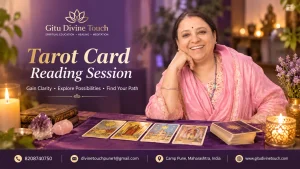
Tarot Card Reading Session – Complete Guide for Beginners Introduction: Discover the Meaning of Tarot Card Reading A Tarot Card Reading Session is a guided session in which a tarot reader interprets symbolic cards to help a person explore questions, understand different perspectives and reflect on possible choices. People often seek tarot readings for guidance about relationships, career decisions, personal growth, emotional clarity and spiritual development. At Gitu Divine Touch, Pune, tarot is a subject that can be explored as a spiritual practice, a symbolic language and a method of self-reflection. Whether you are completely new to tarot or already familiar with the cards, understanding how a tarot card reading session works can help you approach it with curiosity and realistic expectations. A tarot reading does not have to be about predicting an unavoidable future. Many people use it as an opportunity to pause, examine their circumstances and consider possibilities they may not have noticed before. In this guide, you will learn what tarot card reading means, how a session works, what questions you can ask, the benefits and limitations of tarot, and how to prepare for a tarot card reading session in Pune or online. 1. What Is a Tarot Card Reading Session? A tarot card reading session is an appointment in which a reader uses a deck of tarot cards to interpret symbols, imagery and traditional meanings in relation to a question or situation. A conventional tarot deck contains 78 cards: During a reading, the reader selects or draws cards and interprets them using the question, the card imagery, the card positions and the chosen reading method. For example, someone who feels uncertain about a career decision may ask, “What should I consider before choosing my next professional step?” The reader might use a three-card spread to explore the person’s present situation, a possible challenge and a constructive next step. The interpretation can encourage reflection, but it should not replace practical research, professional advice or the person’s own judgment. 2. Tarot Card Reading Meaning in Simple English Tarot card reading means interpreting tarot cards to explore a question, situation or personal concern. Each card has a collection of traditional interpretations and symbols. The reader considers these meanings alongside the question and the arrangement of the cards. For example: These are common interpretations, not fixed rules. Meanings may vary according to the deck, the reading tradition, the question and the surrounding cards. A card should not automatically be treated as a literal prediction. Its imagery can provide a starting point for discussion and reflection. 3. History and Background of Tarot Cards Tarot cards have a documented history that goes back to fifteenth-century Europe. Early tarot decks were used primarily for card games in Italy. Their use for divination developed later, becoming particularly prominent in eighteenth-century France. The Rider–Waite–Smith deck, first published in 1909, helped popularise the illustrated imagery familiar to many modern readers. See the historical overview from the Victoria and Albert Museum: https://www.vam.ac.uk/articles/tarot-cards. Over time, different readers and spiritual traditions developed interpretations connecting tarot imagery with philosophy, astrology, numerology and other symbolic systems. Today, tarot is used in different ways. Some readers approach it as a spiritual or intuitive practice, while others use the cards as prompts for storytelling, journaling or personal reflection. Claims that tarot originated as an ancient Egyptian divination system are not established by the historical evidence described by the museum source above. Understanding this background helps readers distinguish the documented history of tarot from later spiritual interpretations. 4. How Does a Tarot Card Reading Session Work? A tarot card reading session usually follows a simple process. Step 1: Identify the question The person attending the session shares the subject they want to explore. Examples include: Clear, open-ended questions generally encourage more useful reflection than questions demanding a guaranteed yes-or-no prediction. Step 2: Select a suitable spread A spread is the arrangement of cards used during a reading. A beginner-friendly session may use one card or three cards. A longer session may use a more detailed spread if the question requires it. Step 3: Draw the cards Depending on the reader’s method, the person may shuffle and draw the cards, or the reader may do so. There is no single universal procedure that every tarot reader must follow. Step 4: Interpret the cards The reader considers the traditional meanings, illustrations, card positions and relationship between the cards. For instance, The Hermit may invite reflection, while the Eight of Pentacles may suggest practising a skill or improving one’s work. Together, these cards might prompt a discussion about taking time to develop professional expertise. Step 5: Discuss practical insights The reader explains the interpretation and may ask questions that help the person relate the symbols to their circumstances. Step 6: Summarise possible next steps The session may conclude with a short summary of the themes discussed and practical questions to consider. The final decision remains with the person receiving the reading. 5. Different Types of Tarot Card Reading Sessions Tarot readings can focus on different areas of life. The following are common formats rather than separate, universally standardised systems. Love and relationship tarot reading A relationship reading may explore communication, personal expectations, recurring patterns, boundaries and areas that need attention. For example, a person experiencing misunderstandings with a partner might use the session to reflect on how they communicate and what they need to discuss honestly. Tarot cannot reliably establish another person’s private thoughts, prove infidelity or guarantee marriage. Career tarot reading A career reading can help someone explore professional priorities, confidence, workplace challenges and possible choices. A person considering a new job might reflect on their skills, financial needs, work environment and long-term goals. Finance and abundance tarot reading This type of session may explore a person’s attitudes towards security, opportunities, discipline and decision-making. Cards cannot guarantee wealth, investment returns or business success. Financial decisions should be based on evidence, careful planning and qualified financial advice where appropriate. Personal growth tarot reading A personal development
Tarot Reading Session: What Beginners Should Know Read Post »