

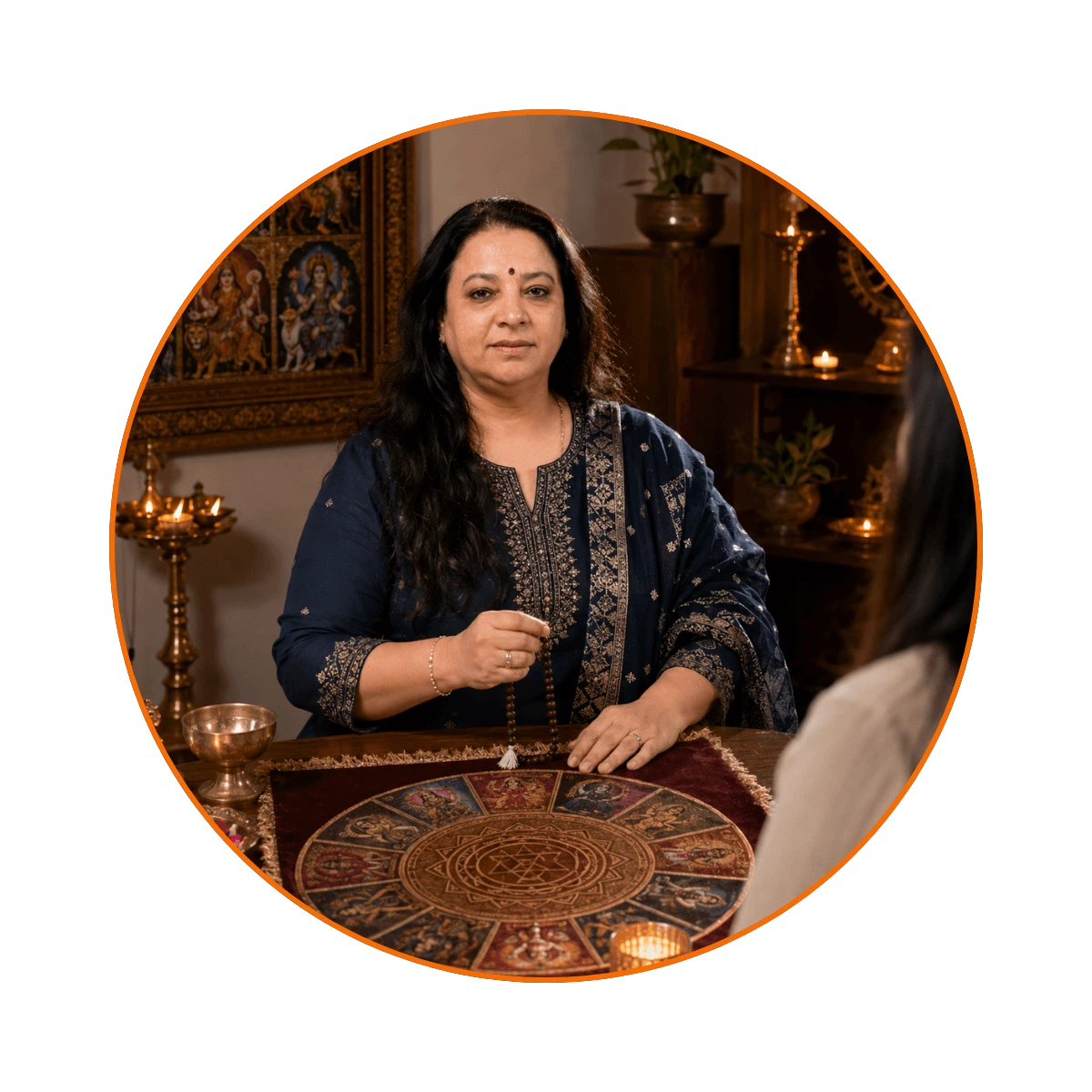
Dus Mahavidya Healing Session
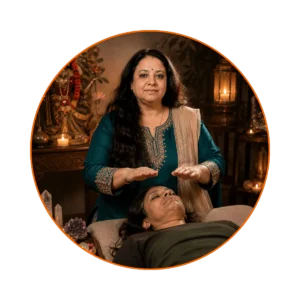
A Dus Mahavidya healing session is a spiritually focused consultation inspired by the traditional understanding of the ten Mahavidya forms. The session provides a quiet and personal setting for reflection, guided discussion and spiritual practices connected with these powerful symbolic traditions.
This session is approached with respect, care and a grounded understanding of personal circumstances. Rather than presenting dramatic claims or fixed promises, the consultation gives you an opportunity to discuss what you are experiencing and explore the spiritual meaning you may associate with the Dus Mahavidya tradition.
What is Dus Mahavidya healing?
Dus Mahavidya healing refers to a spiritual-wellness approach associated with the ten Mahavidyas, traditionally understood within Shakta traditions as ten distinct expressions of the Divine Feminine. Each form carries its own symbolism, qualities and traditional associations.
In a personal session, these themes can be discussed in relation to your present concerns, inner experiences and spiritual interests. Dus Mahavidya healing is not treated as a theatrical or supernatural experience. The emphasis is on a calm consultation, thoughtful interpretation and practices appropriate to the individual session.
A personal approach to the session
Every person arrives with different questions. Some may be going through a period of uncertainty, while others may simply feel drawn toward learning more about the Mahavidya tradition. The consultation can therefore be adapted to the reason you have chosen to attend.
During Dus Mahavidya healing, the practitioner listens carefully to your concerns before deciding how to structure the discussion. You are encouraged to explain your situation in your own words. There is no need to use complicated spiritual terminology or have previous knowledge of the ten Mahavidyas.
The session can provide space to slow down and look at your situation from a spiritual perspective. Where appropriate, traditional concepts may be explained in simple language so that you can understand their relevance without feeling overwhelmed by unfamiliar ideas.
The ten Mahavidyas and their symbolism
The Mahavidya tradition includes ten principal forms, each associated with particular qualities, stories and symbolic meanings. These include Kali, Tara, Tripura Sundari, Bhuvaneshvari, Bhairavi, Chhinnamasta, Dhumavati, Bagalamukhi, Matangi and Kamala.
Each form has a distinct place within the traditional framework. The symbolism can relate to subjects such as time, knowledge, strength, awareness, detachment, abundance, speech and inner discipline. The interpretation depends on the particular tradition and the context in which the forms are being studied.
A Dus Mahavidya healing session does not require you to memorise these forms. If a particular Mahavidya becomes relevant to the consultation, the practitioner can explain the associated symbolism and discuss how it may be understood within your personal spiritual journey.
Kali
Kali is traditionally associated with time, change, courage and the ending of limitations. Her symbolism can provide a basis for discussing situations involving letting go, inner strength and acceptance of change.
Tara
Tara is traditionally connected with guidance, protection and wisdom. Her symbolism may be explored when a person is seeking greater clarity or reflecting on a difficult stage of life.
Tripura Sundari
Tripura Sundari is associated with beauty, balance, awareness and harmony within traditional Shakta interpretations. Her symbolism can encourage reflection on how different parts of life are held together.
Bhuvaneshvari
Bhuvaneshvari is traditionally associated with space, openness and the wider field of existence. Discussions connected with her symbolism may focus on perspective, acceptance and creating room for thoughtful consideration.
Bhairavi
Bhairavi represents intensity, discipline and focused spiritual practice in traditional interpretations. Her symbolism can be discussed in relation to determination, personal responsibility and disciplined attention.
Chhinnamasta
Chhinnamasta carries complex symbolism connected with sacrifice, life force and the relationship between giving and receiving. Because her imagery can be intense, the subject is discussed thoughtfully and respectfully.
Dhumavati
Dhumavati is traditionally associated with detachment, solitude, difficult experiences and the wisdom that can arise through periods of limitation. Her symbolism can provide a different way of considering situations that feel uncertain or uncomfortable.
Bagalamukhi
Bagalamukhi is traditionally connected with stillness, restraint and focused power. Her symbolism may be relevant when discussing the importance of pausing before reacting and maintaining control over one’s words and actions.
Matangi
Matangi is associated with knowledge, communication, expression and artistic or intellectual qualities. Her symbolism may be explored when communication, learning or self-expression is an important part of the discussion.
Kamala
Kamala is traditionally associated with prosperity, beauty, abundance and harmony. Her symbolism can provide a reflective framework for discussing gratitude, balance and one’s relationship with material and personal wellbeing.
What happens during a Dus Mahavidya healing session?
The session generally begins with a private conversation. You can explain what brought you to the consultation and mention any particular spiritual question or personal concern you would like to discuss.
The practitioner then considers the direction of the session and introduces relevant traditional concepts where appropriate. Dus Mahavidya healing may involve guided reflection, spiritual discussion, meditation-oriented practices or other session elements depending on the nature of the consultation.
The process is not rushed. You have an opportunity to ask questions and discuss anything that comes up during the session. If a particular concept is unfamiliar, it can be explained before moving to the next part of the consultation.
Who may find this session meaningful?
This session may be suitable for people who have an interest in Shakta traditions, the Mahavidya forms, spiritual reflection or traditional Indian approaches to inner wellbeing. It may also appeal to someone who wants a private conversation about spiritual questions without attending a large group setting.
You do not need to consider yourself highly spiritual to attend. Curiosity is enough. You can approach Dus Mahavidya healing as an opportunity to learn, reflect and discuss ideas that may have personal meaning for you.
A peaceful and private environment
Personal spiritual discussions are easier when there is enough privacy and time to speak comfortably. The consultation is designed as a one-to-one experience, allowing the practitioner to give attention to your individual questions rather than following a general group programme.
The atmosphere is kept peaceful and respectful. The intention is to create a setting where you can speak openly, listen carefully and take time to consider what the discussion means to you.
Preparing for your consultation
There is no complicated preparation required. Before your appointment, think about what you would like to discuss. You may write down a few questions if that helps you organise your thoughts.
If you are completely new to the Mahavidya tradition, you do not need to study the subject beforehand. The practitioner can introduce the relevant concepts during the consultation and explain them in an accessible way.
It is also helpful to approach Dus Mahavidya healing with an open but balanced mindset. Spiritual practices can hold different meanings for different people, and your own understanding and personal judgment remain important throughout the process.
What you can expect
You can expect a respectful one-to-one consultation centred around your questions and spiritual interests. The practitioner will listen to you, explain relevant traditional ideas and guide the session according to the nature of your concerns.
The focus is on meaningful conversation and personal reflection rather than dramatic claims. Dus Mahavidya healing is presented as a spiritual-wellness experience, giving you the freedom to consider the ideas discussed and decide what is personally relevant.
Important note
Dus Mahavidya healing is offered as a spiritual and wellness-oriented service. It is not a substitute for medical, psychological, legal or financial professional advice. If you have a physical or mental health concern, please consult an appropriately qualified healthcare professional.
Spiritual interpretations are personal and should not be understood as guaranteed predictions or definite outcomes. Any decisions you make after a consultation remain your own responsibility.
Book your Dus Mahavidya healing session
If you feel drawn to the Mahavidya tradition and would like a private opportunity to discuss its symbolism and spiritual significance, this session offers a calm setting for one-to-one guidance.
Whether you already have knowledge of the ten Mahavidyas or are encountering these traditions for the first time, the consultation can be adapted to your level of familiarity. Bring your questions, your curiosity and the areas you would like to discuss.
Dus Mahavidya healing provides space for thoughtful spiritual conversation, traditional symbolism and guided personal reflection in a private setting. The experience is centred on listening, understanding and allowing the session to develop naturally around your individual concerns.
Reviews
There are no reviews yet.