

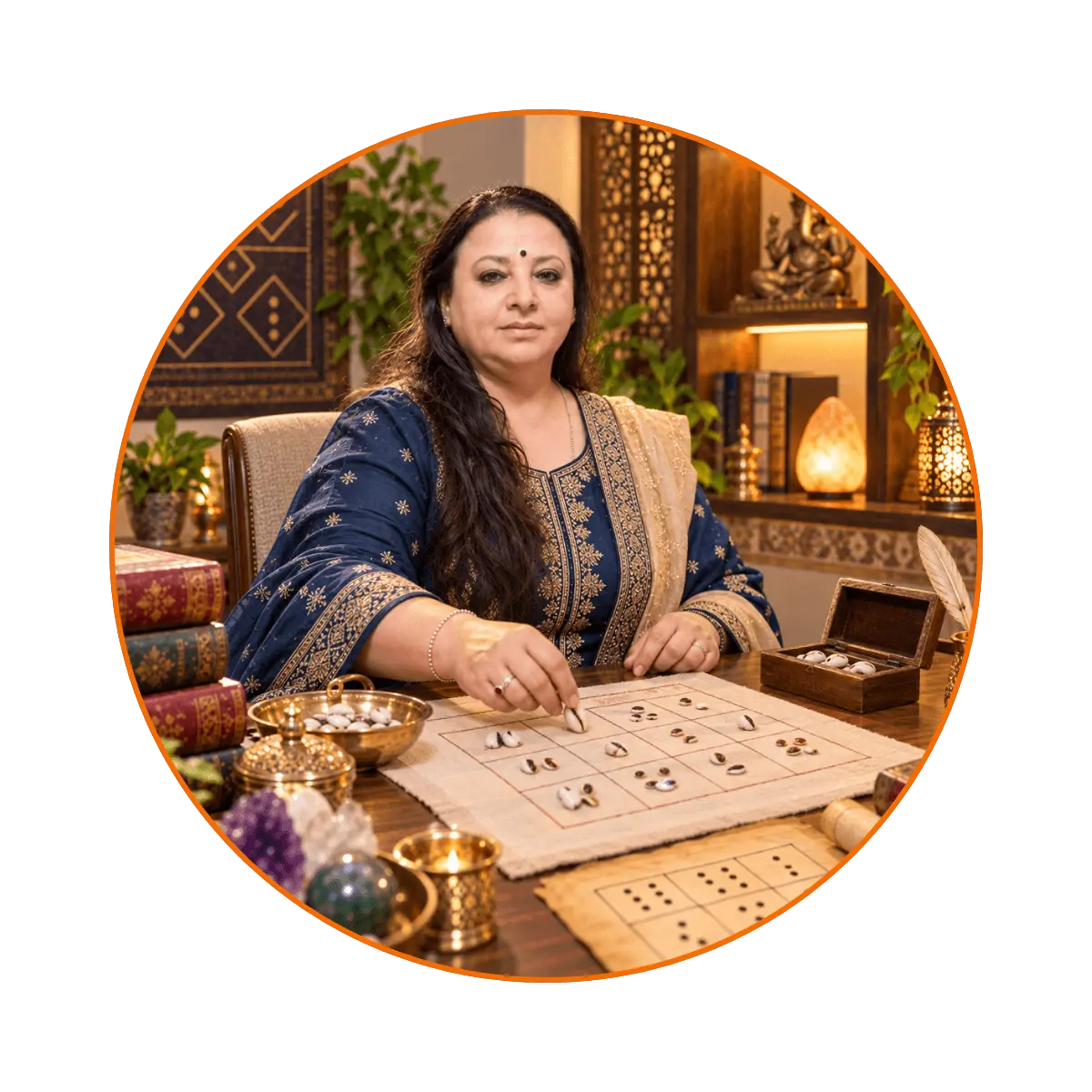
The Ramal Vidya Course is designed for students who want to study the traditional Indian system of Ramal Vidya and learn how Ramal charts are prepared and interpreted. Ramal is a traditional form of divination that uses specific figures, patterns, houses and calculations to study questions.
The Ramal Vidya Course introduces the basic principles in a practical and easy-to-follow manner. Students can learn the traditional figures, understand their meanings, prepare a Ramal chart and study the relationship between different houses and figures.
Ramal Vidya has its own terminology and calculation methods. For this reason, learning the basic structure first is important before moving into detailed readings. This course provides a foundation for students who want to understand the method and practise it regularly.
What Is Ramal Vidya?
The Ramal Vidya Course begins with an introduction to Ramal and its traditional approach to question-based readings. Ramal is commonly associated with geomantic methods in which patterns of dots or marks are arranged into figures. These figures are then placed in houses for interpretation.
Traditional Ramal practice uses sixteen basic figures. Each figure has its own pattern and symbolic meaning. The figures are studied along with houses, planetary or elemental associations used within particular traditions, and the question being asked.
Students learn how these parts work together rather than studying each figure separately.
Understanding the Sixteen Ramal Figures
One of the main parts of the Ramal Vidya Course is learning the sixteen traditional figures used in Ramal practice.
Each figure is made from four rows or levels of points. Depending on the pattern, each row can contain an odd or even number of points. These combinations create the different Ramal figures.
Students learn to identify the figures correctly before moving into interpretation. Correct identification is important because a small mistake in the pattern can produce a different figure.
The course therefore encourages learners to practise drawing, recognising and recording the figures until the process becomes familiar.
Ramal Houses
The Ramal Vidya Course also introduces the houses used for organising a Ramal chart.
Different houses are traditionally associated with different areas of life. Depending on the question, students may examine houses connected with the self, family, wealth, communication, education, work, relationships, partnerships, travel, profession and other subjects.
The meaning of a figure can be considered together with the house in which it appears. This provides a broader basis for traditional interpretation.
Preparing a Ramal Chart
Chart preparation is an important practical section of the Ramal Vidya Course.
Students learn how the initial figures are created and how additional figures are derived according to the traditional method being taught. These figures are then placed into the appropriate houses.
A typical study process involves:
- Understanding the question.
- Creating the initial Ramal figures.
- Recording each figure correctly.
- Deriving additional figures.
- Placing figures into the houses.
- Identifying important houses for the question.
- Comparing the figures and their meanings.
- Forming a traditional interpretation.
This step-by-step approach helps students keep their calculations organised.
Understanding the Ramal Question
The Ramal Vidya Course places importance on the question being asked. A clear question gives the reader a specific subject to examine.
For example, a student may study a question related to work, travel, education, property, partnership or another personal matter. The relevant houses can then be considered along with the figures placed there.
Students learn that a Ramal reading should not begin with random interpretation. The question, relevant houses and figures should be considered together.
Mother Figures and Derived Figures
Another part of the Ramal Vidya Course is understanding how figures are derived from the initial set.
Traditional Ramal systems use a sequence in which figures are combined to produce additional figures. These may have different roles within the chart.
Students learn how to record the figures and follow the calculation process carefully. This section requires practice because the final chart depends on correctly preparing the earlier figures.
Witnesses and Judge
The Ramal Vidya Course can also introduce traditional concepts such as witnesses and the judge of the chart.
These figures are used as part of the overall interpretation and are considered along with the question and houses. Students learn how these positions are traditionally read and how they relate to the rest of the chart.
Rather than giving meaning to one figure alone, learners practise looking at the chart as a complete structure.
Practical Ramal Reading
Theory becomes easier to understand when students work through examples. The Ramal Vidya Course encourages practical chart reading so learners can become familiar with the complete process.
Students can practise preparing charts for sample questions and recording each stage. After preparing the chart, they can identify the important houses and figures and compare their traditional meanings.
Writing down the reasoning used for each interpretation can also help students review their work later.
Learning Figure Meanings
Memorising sixteen figures may seem difficult at first. The Ramal Vidya Course helps students approach the figures systematically.
Learners can create a simple study table containing the figure name, pattern, traditional associations and general meanings. Repeated practice makes figure identification easier.
It is also useful to study how the meaning can change according to the house where a figure appears. The same figure may be considered differently when the subject of the question changes.
Applying Ramal to Different Questions
The Ramal Vidya Course can be used to study different types of traditional questions.
Students may practise questions concerning:
- Career and work
- Education
- Marriage and partnerships
- Travel
- Property
- Family matters
- Financial questions
- Business matters
- Communication
- General personal questions
The purpose is to learn the reading method and understand how the chart is traditionally interpreted. It should not be presented as a guarantee that a particular event will happen.
Who Can Take This Course?
The Ramal Vidya Course can be useful for:
- Beginners interested in Ramal Vidya
- Astrology students
- Numerology and traditional divination learners
- Spiritual study practitioners
- Students interested in Indian traditional systems
- Existing Ramal practitioners who want structured revision
- Learners interested in question-based chart methods
A basic interest in traditional astrology or divination can be helpful, but advanced astrology knowledge is not necessarily required to begin learning the basic Ramal method.
Developing Your Ramal Practice
Regular practice is important for anyone studying the Ramal Vidya Course. Students can prepare sample charts, practise identifying figures and compare their interpretations with the traditional rules being studied.
Keeping a separate Ramal notebook can make revision easier. Record the question, figures, houses, calculations and interpretation for every practice chart.
Students should also avoid changing calculation methods halfway through a reading. Different traditions may use different approaches, so following one consistent method during study can help prevent confusion.
Important Note
The Ramal Vidya Course teaches Ramal as a traditional system of divination and symbolic interpretation. Its predictive and divinatory claims are not scientifically established.
Ramal readings should not be used as a replacement for qualified medical, legal, financial, psychological or other professional advice. Personal and business decisions should be based on appropriate practical information and professional guidance where required.
Why Choose the Ramal Vidya Course?
The Ramal Vidya Course gives students a structured introduction to figures, houses, calculations and traditional chart interpretation. It is suitable for learners who want to understand how a Ramal chart is prepared and how its different parts are studied together.
From the sixteen main figures to derived figures, houses, witnesses and the judge, the Ramal Vidya Course covers the basic framework needed for regular practice.
With consistent study, learners can become familiar with figure patterns, chart preparation and question-based interpretation. The course can also provide a useful foundation for students who want to explore other traditional systems of astrology and divination.
Reviews
There are no reviews yet.