

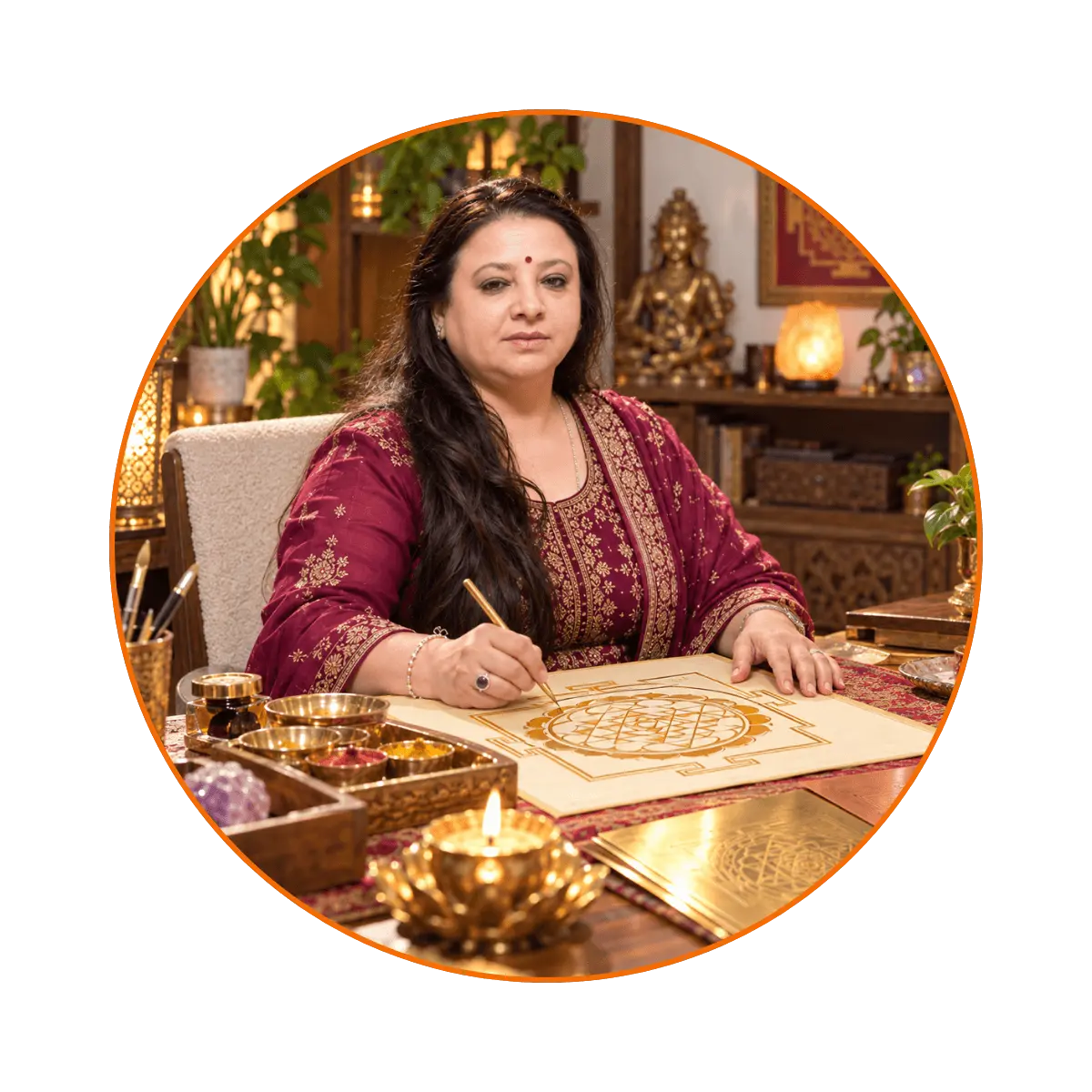
Yantras are geometric designs used in various Hindu spiritual traditions for worship, meditation, and contemplation. Their shapes, lines, circles, triangles, and lotus patterns often carry symbolic meanings connected with particular deities, spiritual ideas, or traditional practices. The Making Yantras Course is intended for people who want to explore the art of creating these designs and understand their place in Indian religious and cultural traditions.
A yantra is more than a decorative drawing within the traditions that use it. Its layout may follow established rules, and the placement of each shape can be important to its traditional interpretation. Learning about yantras can therefore involve both careful drawing and an understanding of the beliefs associated with a particular design.
The Making Yantras Course may suit beginners, art enthusiasts, spiritual learners, and people interested in traditional Indian geometry. The exact designs, materials, and methods covered depend on the course provider, so check the course details before enrolling.
Understanding Yantras and Their Meaning
The word “yantra” is commonly associated with an instrument, diagram, or device. In Hindu spiritual traditions, yantras often serve as visual aids for worship, meditation, or focused contemplation. Some are associated with particular deities, while others represent broader ideas about the structure of the universe or the relationship between different aspects of existence.
Yantras can contain several geometric elements arranged in a specific pattern. These may include intersecting triangles, circles, squares, lotus petals, and a central point. Each element can carry symbolic meaning within the tradition connected with that yantra.
The Making Yantras Course provides an opportunity to explore these designs as both visual forms and cultural objects. Understanding the background of a design can help learners appreciate why its proportions and arrangement may be treated with care.
Interpretations can vary across texts, teachers, and religious lineages. For this reason, it is helpful to study each design in its proper context rather than assuming that every yantra follows the same rules.
The Art of Creating Yantras
Making a yantra often requires patience, attention to detail, and careful placement of geometric shapes. Even a simple pattern can involve symmetry, proportion, and repeated forms. Learners may begin by observing the design, identifying its main elements, and understanding how those elements fit together.
The Making Yantras Course may introduce traditional drawing methods or examples of yantra construction, depending on the provider’s approach. Some learners may be interested in the visual design itself, while others may want to understand the spiritual ideas associated with the finished diagram.
Accuracy can be important when studying a traditional yantra. If a particular design follows established proportions, changing its arrangement may alter the way it is understood within that tradition. Reference images and reliable teaching materials can help learners recognise the difference between a traditional pattern and a personal artistic variation.
The specific drawing tools, materials, and techniques included in the course should be confirmed through the provider’s published information.
Geometry, Symmetry, and Visual Balance
Geometry is a major feature of many yantras. Triangles may point upward or downward, circles can surround a central figure, and lotus petals may be arranged evenly around a centre. Squares and gateways also appear in some designs, creating a structured outer boundary.
These forms can be studied from an artistic and mathematical perspective. Learners can observe symmetry, compare proportions, and notice how individual shapes work together to create a balanced composition. Such observation may also improve general drawing skills and attention to detail.
The Making Yantras Course may be of interest to people who enjoy geometric art and traditional design. It offers a topic through which learners can explore the connection between visual structure and cultural meaning.
Not every geometric diagram is used in the same way. Some yantras have particular religious associations, while others may be discussed mainly as examples of symbolic geometry. Learning about the context of each design helps avoid treating all patterns as interchangeable.
Yantras in Hindu Spiritual Traditions
Yantras are used in different ways across Hindu traditions. Depending on the design and religious context, a yantra may be placed in a worship area, used as a focus for contemplation, or included in a ritual setting. Some traditions connect particular diagrams with specific deities or forms of devotional practice.
The Making Yantras Course may help learners explore this cultural and spiritual background alongside the process of creating designs. The course provider’s teaching approach will determine whether the focus is mainly artistic, historical, devotional, or practical.
It is important to distinguish between drawing a yantra for artistic study and preparing one for a religious ritual. Some ritual practices follow specific instructions or are taught within particular lineages. If the course discusses such practices, learners should follow the guidance provided and ask questions when anything is unclear.
A respectful approach recognises that these diagrams have meaning for many practitioners and are not simply decorative patterns in every setting.
Who May Be Interested in This Course?
The Making Yantras Course may be suitable for:
- Beginners interested in learning about traditional yantra designs.
- Art enthusiasts who enjoy geometric patterns and detailed drawing.
- Learners curious about Hindu spiritual and cultural traditions.
- People interested in the relationship between geometry and symbolism.
- Spiritual practitioners who want to study the visual forms used in their traditions.
- Students exploring traditional Indian art and religious diagrams.
No previous drawing or spiritual experience should be assumed unless the provider lists specific requirements. Beginners may wish to check whether the course explains basic shapes and design principles before introducing more complex patterns.
Developing Patience and Attention to Detail
Creating geometric designs can encourage careful observation and steady work. Learners may need to compare lines, check spacing, and repeat shapes consistently. Working slowly can make it easier to notice mistakes and understand how a pattern is constructed.
The Making Yantras Course may offer a structured way to explore this process. If the course includes practical drawing exercises, learners can follow the supplied examples and practise at a comfortable pace. Keeping personal notes or saving practice drawings may help track progress.
There is no need to rush through the process. Traditional designs can contain many details, and understanding their structure may take time. The aim is to learn carefully and appreciate the design, not simply to finish a drawing as quickly as possible.
What to Check Before Enrolling
Before purchasing the Making Yantras Course, review the product details carefully. Confirm the course format, duration, language, access period, and learning materials included. If you want to study a particular yantra, check that it is specifically mentioned in the course description.
Do not assume that drawing tools, printed charts, downloadable templates, live demonstrations, personal guidance, or a certificate are included unless the provider clearly states so. If a certificate is offered, check whether it is a certificate of completion or a qualification recognised by a relevant institution.
If your interest is in ritual use rather than artistic study, make sure the course explains whether it covers the relevant traditional practices. This can help you choose a programme that matches your expectations.
Begin Exploring Traditional Yantra Design
The Making Yantras Course offers an opportunity to explore geometric drawing, traditional symbolism, and the cultural role of yantras. It may be a suitable starting point for people who want to understand how these designs are formed and why they remain important within particular Indian spiritual traditions.
Approach the subject with patience, curiosity, and respect for its background. By studying the shapes alongside their meanings, learners can develop a fuller appreciation of yantra design as both a visual art and a traditional form of spiritual expression.
Important note: The exact designs, methods, and spiritual practices covered in the Making Yantras Course depend on the provider. Yantras have religious and cultural significance in particular traditions, but claims about guaranteed spiritual, financial, health, or personal outcomes should not be assumed. Check the course information before enrolling.
Reviews
There are no reviews yet.