
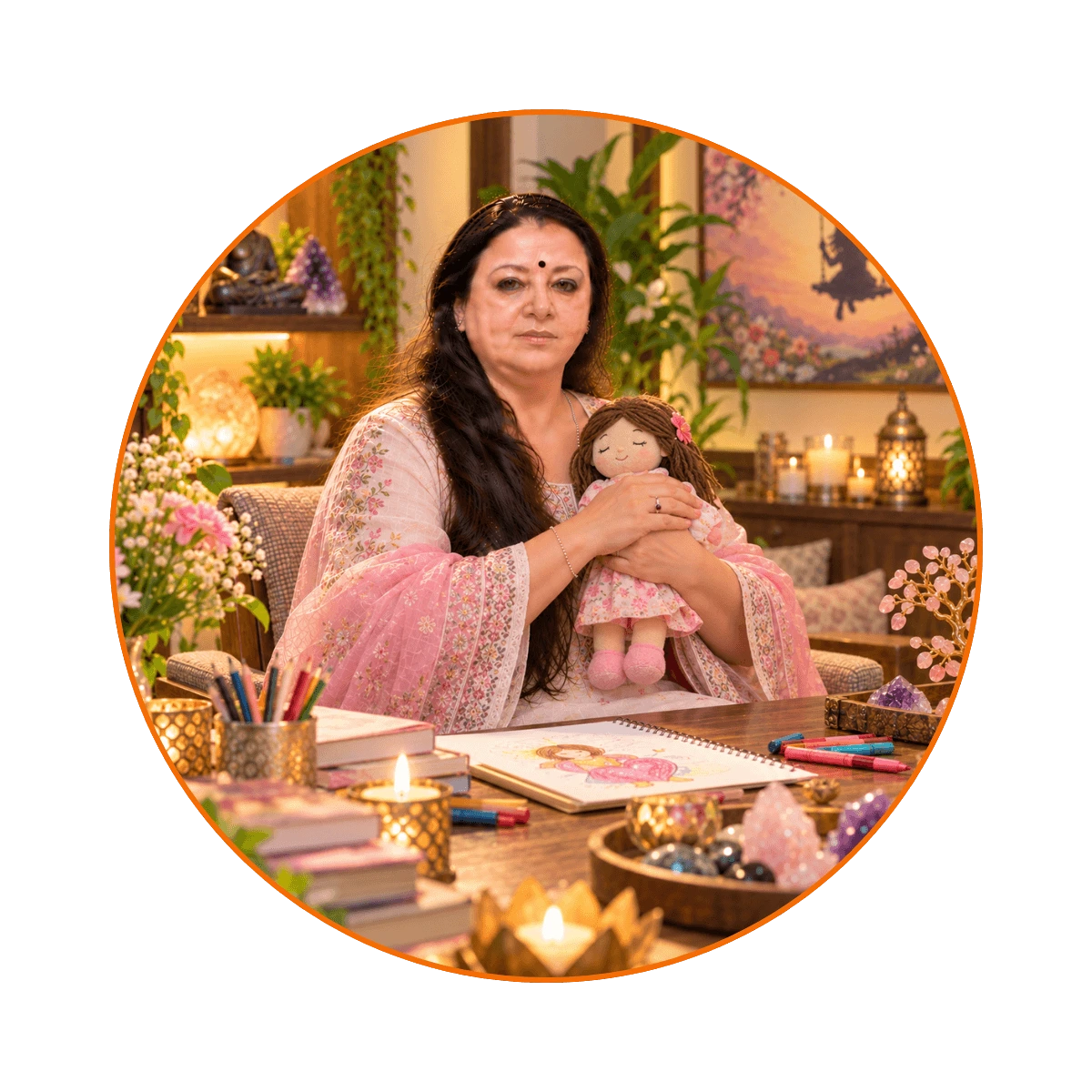
The Inner Child Healing Course is designed for people who want to explore childhood experiences, emotional patterns, self-reflection and personal wellbeing. The term “inner child” is commonly used in personal development and therapeutic discussions to describe the younger parts of ourselves that may still influence how we respond to situations in adult life.
A Inner Child Healing Course provides a structured way to explore this concept through reflection, journaling, visualization, meditation and self-compassion practices. The focus is on understanding personal experiences and developing greater awareness of emotional responses.
The idea of an inner child does not mean that there is literally a separate child living inside a person. It is a useful framework used by some people to describe memories, feelings, needs and patterns connected with earlier stages of life.
A Inner Child Healing Course can therefore be approached as a personal reflection practice. It should not be considered a replacement for professional mental health care or trauma treatment.
Understanding the Inner Child Concept
Childhood experiences can influence the way people understand themselves, relationships, boundaries and emotional situations. Some experiences may be remembered clearly, while others may be difficult to recall or may carry emotional meaning without a detailed memory.
The Inner Child Healing Course introduces the inner child as a way of reflecting on these experiences without requiring students to accept one particular psychological theory.
Students may explore memories of childhood needs, feelings, family relationships, school experiences, friendships and situations where they felt supported or misunderstood.
The purpose is not to blame people from the past. Instead, the practice focuses on understanding personal responses in the present.
Why Inner Child Work Is Used
Inner child work is often used as a personal development approach for people who want to understand recurring emotional patterns.
A Inner Child Healing Course may help students reflect on questions such as why certain situations feel particularly difficult, why particular words or behaviours cause strong reactions, or why a person may struggle with self-worth or boundaries.
These questions do not have one universal answer. Emotional responses can have many causes, including current circumstances, personality, relationships and past experiences.
Inner child work is one reflective framework that some people find useful.
Childhood Memories and Reflection
Memories can be complex. A Inner Child Healing Course encourages students to approach childhood memories gently and without trying to force details.
A memory may appear as a clear event, a feeling, an image or a general sense of a particular period.
Students should not assume that every image or feeling that appears during visualization is a factual memory. Imagination and memory can overlap, especially during guided exercises.
The goal is personal reflection rather than reconstructing a perfect record of childhood.
Guided Visualization
Visualization is commonly used in an Inner Child Healing Course. Students may imagine meeting their younger self in a safe and comfortable setting.
For example, they may picture themselves sitting with their younger self, listening to what the child might need or offering words of reassurance.
This is a symbolic exercise. It does not require believing that the younger self exists as a separate person.
Some people may experience clear images, while others may experience thoughts, feelings or no strong imagery at all. All of these responses are possible.
Self-Compassion
Self-compassion is an important part of a Inner Child Healing Course. Many people are more understanding toward others than they are toward themselves.
Inner child practices may encourage students to consider how they would speak to a younger person who was feeling hurt, confused or disappointed.
They can then practise offering themselves similar patience and understanding.
This does not mean ignoring personal responsibility. Self-compassion can exist alongside learning from mistakes and making practical changes.
Understanding Emotional Triggers
An emotional trigger can be a situation, word, behaviour or experience that produces a strong reaction. A Inner Child Healing Course can use journaling to help students notice patterns in their reactions.
For example, a person may feel unusually upset when criticised, ignored or excluded. Reflecting on the situation can help them distinguish between what is happening now and what the situation reminds them of.
This does not mean that every strong reaction comes from childhood. Current circumstances can be important too.
The practice is about observation rather than assuming a single cause.
Inner Child and Personal Boundaries
Boundaries are another area that may be explored through inner child work. Childhood experiences can influence how comfortable a person feels saying no, asking for help or expressing personal needs.
A Inner Child Healing Course can encourage students to examine these patterns without judging themselves.
Students may use simple statements such as:
- “My needs are important.”
- “I can say no when something does not feel right.”
- “I can ask for support.”
- “I can take time before responding.”
These statements are reminders rather than guarantees of immediate change.
Journaling Practice
Journaling can provide a private space for inner child reflection. During a Inner Child Healing Course, students may write about childhood memories, emotions, personal needs or situations that create strong reactions.
A journal can also be used after visualization exercises.
Useful prompts might include:
- What did I need more of when I was younger?
- What made me feel supported?
- What situations still affect me today?
- How would I speak kindly to my younger self?
- What boundary do I need in my current life?
Students should choose prompts that feel manageable and avoid pushing themselves into distressing memories.
Reparenting as a Personal Practice
The term “reparenting” is sometimes used in inner child work to describe giving oneself the care, structure, encouragement and boundaries that may have been missing earlier in life.
A Inner Child Healing Course may introduce reparenting as a reflective concept.
This can include practical actions such as maintaining healthy routines, allowing adequate rest, speaking kindly to oneself, setting reasonable boundaries and asking for appropriate support.
Reparenting should not be treated as a replacement for professional therapy. It is a personal development idea that can be explored alongside qualified support when needed.
Inner Child and Self-Worth
Self-worth can be another theme within a Inner Child Healing Course. Students may reflect on messages they received about achievement, appearance, behaviour or personal value while growing up.
Some people may have learned to connect their worth with being successful, helpful or approved by others.
Reflective exercises can help students notice these beliefs and consider whether they still serve them.
The aim is not to blame parents, teachers or other people for every adult difficulty. Childhood experiences are only one part of a person’s development.
Meditation and Inner Child Work
Meditation can provide a quiet setting for an Inner Child Healing Course practice. Students may sit comfortably, focus on breathing and bring attention to a chosen memory, feeling or younger-self image.
The practice should remain gentle. If a memory becomes overwhelming, students should stop the exercise and return attention to the present environment.
Grounding activities such as noticing the room, feeling the feet on the floor or speaking with a trusted person can be useful when needed.
Working With Difficult Emotions
Inner child reflection may bring up emotions such as sadness, anger, disappointment or loneliness. A Inner Child Healing Course should encourage students to respect their own limits.
There is no need to complete an exercise simply because it has been started.
Students can take breaks, choose lighter reflection topics or seek professional support if needed.
People with significant trauma, severe anxiety, depression or other mental health concerns should consider working with a qualified mental health professional rather than relying only on self-guided inner child exercises.
Creating a Safe Practice Space
A comfortable environment can make personal reflection easier. Students taking an Inner Child Healing Course may choose a quiet room where they will not be interrupted.
A notebook, comfortable chair and calming background music may be useful, but no special equipment is required.
The important part is having enough privacy and time to stop the exercise if it becomes uncomfortable.
Students should avoid practising deep emotional exercises while driving or doing activities that require full attention.
Inner Child Work in Daily Life
The ideas from an Inner Child Healing Course can also be applied to everyday situations.
When a strong emotional response appears, a person can pause and ask what they are feeling, what they need and whether the current situation is connected with an older pattern.
This pause can create space between the emotional reaction and the next action.
Practical responses may include taking a break, communicating clearly, asking for help or setting a boundary.
Who Can Study an Inner Child Healing Course?
The Inner Child Healing Course can be suitable for people interested in personal development, meditation, journaling, emotional awareness and reflective spiritual practices.
It may also interest people who have already studied Reiki, energy work, affirmations, mindfulness or related subjects.
No particular background is necessarily required unless the course provider has specific requirements.
Students should approach the subject at a comfortable pace and recognise when professional support is more appropriate.
Developing a Personal Practice
A regular Inner Child Healing Course practice does not need to be long. Students may spend a few minutes journaling, practising self-compassion or doing a short visualization.
It can be helpful to focus on one topic at a time rather than trying to examine every childhood experience at once.
Keeping notes can also help students observe changes in their thoughts and responses over time.
Personal growth is rarely a straight process, so students should avoid judging themselves based on how quickly they notice changes.
Important Note
Inner child work is a personal development and reflective practice. It is not a scientifically established treatment for trauma, mental health conditions or physical illness.
The Inner Child Healing Course should not replace psychotherapy, counselling, medical care or other professional treatment. People dealing with trauma, abuse, severe emotional distress or mental health concerns should seek support from a qualified professional.
Visualization can produce imagined images or feelings that should not automatically be treated as factual memories. Students should approach childhood memories carefully and avoid making major decisions based solely on a visualization exercise.
Why Choose an Inner Child Healing Course?
The Inner Child Healing Course provides a simple framework for exploring childhood themes, emotional patterns, self-compassion and personal boundaries.
For beginners, it offers an accessible introduction to inner child concepts without requiring complicated equipment. Journaling, meditation and visualization can be practised privately and at a comfortable pace.
For people already interested in personal development or spiritual practices, the Inner Child Healing Course can provide another method for reflecting on personal experiences.
The main focus is awareness rather than blame. Students can examine old patterns while also paying attention to their present circumstances and practical choices.
Used responsibly, inner child work can serve as one reflective tool among many. It can encourage patience with oneself, thoughtful self-observation and greater awareness of personal needs and boundaries.
Reviews
There are no reviews yet.