

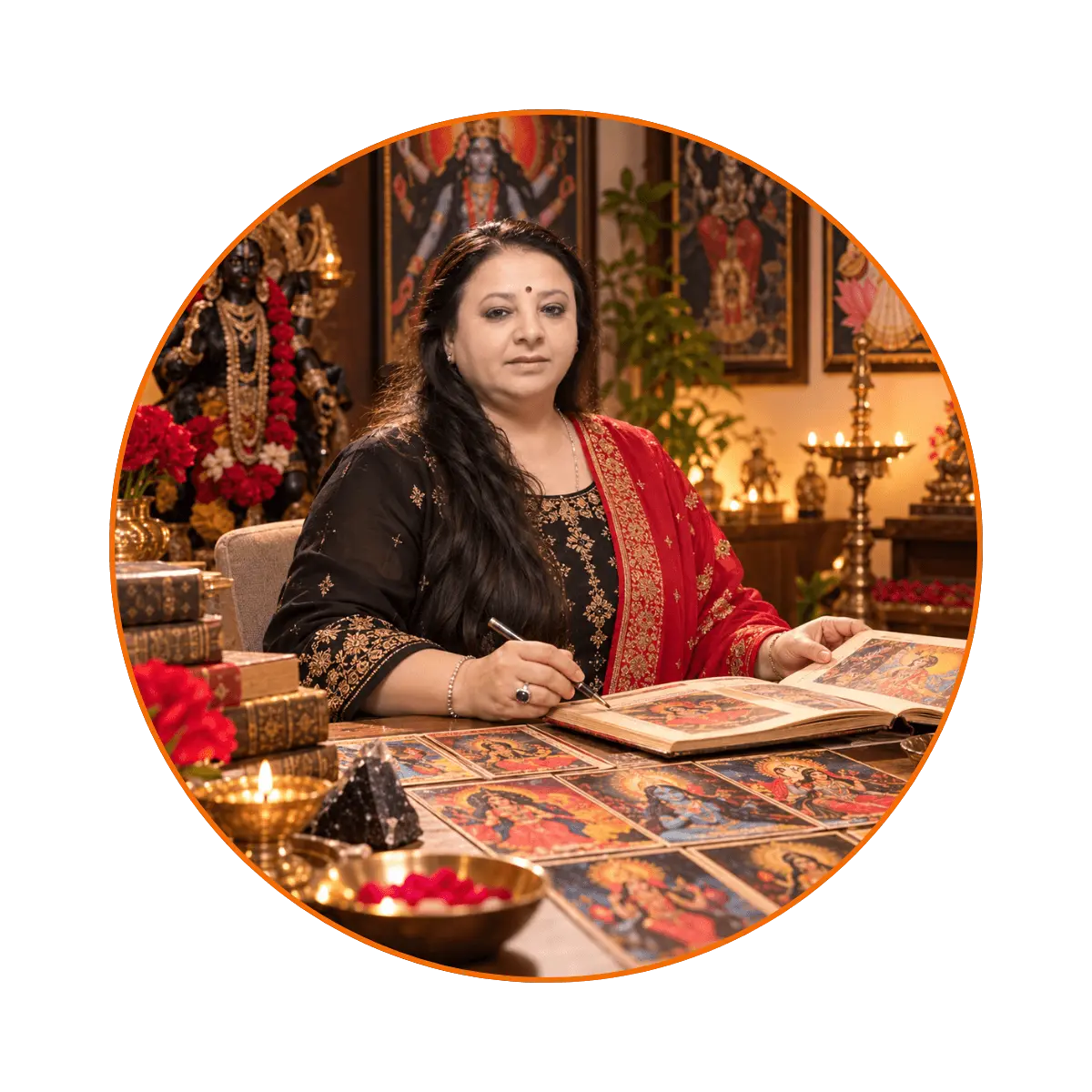
The Dus Mahavidya Course is designed for people who want to learn about the ten Mahavidyas, a group of goddesses who hold an important place in Hindu Shakta and Tantric traditions. The term “Dasha Mahavidya” means the ten great wisdom goddesses. Each goddess has a distinct name, form, symbolism, and place within the religious teachings associated with the Divine Mother.
These traditions explore different aspects of divine power, wisdom, time, speech, abundance, devotion, and spiritual understanding. Studying the Mahavidyas offers an opportunity to learn about Hindu religious thought, traditional stories, devotional customs, and the meanings associated with different forms of the Goddess.
The Dus Mahavidya Course may suit beginners, spiritual learners, devotees, and anyone interested in Hindu philosophy or Tantric traditions. The exact subjects, teaching methods, and practices included depend on the course provider. Review the course details before enrolling to understand its scope and whether it matches your interests.
Understanding the Ten Mahavidyas
The ten Mahavidyas are generally identified as Kali, Tara, Tripura Sundari, Bhuvaneshwari, Bhairavi, Chhinnamasta, Dhumavati, Bagalamukhi, Matangi, and Kamala. Names and spellings can vary between traditions and regional sources.
Each goddess is associated with particular stories, images, qualities, and forms of worship. Kali is often connected with time and the end of limitations. Tara is associated with guidance and protection in several traditions. Tripura Sundari is linked with beauty, knowledge, and the fullness of divine experience, while Bhuvaneshwari is associated with the universe and the space it occupies.
Bhairavi represents a fierce aspect of divine power. Chhinnamasta has distinctive imagery associated with self-offering and the nature of life energy. Dhumavati is linked with themes of absence, hardship, and wisdom gained through difficult circumstances. Bagalamukhi is associated in some traditions with stillness and the restraint of harmful speech or action. Matangi is connected with speech, music, and knowledge, while Kamala is associated with prosperity and abundance.
The Dus Mahavidya Course offers a way to explore these traditional meanings and understand how the ten forms fit within the broader worship of the Goddess.
The Role of the Mahavidyas in Hindu Traditions
Shakta traditions place the Goddess, or Devi, at the centre of religious understanding and worship. In these traditions, divine power may be understood through different forms of the Goddess, each expressing particular qualities or aspects of existence.
The Mahavidyas are especially significant in Tantric religious literature and practice. Their stories and representations may appear unusual or powerful to someone encountering them for the first time. Understanding their meaning requires attention to the texts, customs, and traditions in which they developed.
The Dus Mahavidya Course may help learners approach these subjects with greater context. Rather than judging a goddess only by her image, students can explore the symbolism, religious narratives, and philosophical interpretations associated with her form.
Different lineages may explain the Mahavidyas in different ways. A careful study recognises these differences and avoids assuming that every tradition follows one identical interpretation.
Symbolism, Stories, and Religious Meaning
Images of the Mahavidyas often include distinctive colours, objects, gestures, animals, and settings. These details can carry symbolic meanings within particular religious traditions. Some images express protection or wisdom, while others present ideas about time, change, desire, detachment, or the limits of ordinary understanding.
Learning about these symbols can provide a better understanding of Hindu religious art and devotional literature. It can also help learners recognise why certain forms of the Goddess are approached with particular prayers, customs, or attitudes.
Through the Dus Mahavidya Course, learners may explore these themes as part of their study of Shakta beliefs. The specific stories and interpretations covered will depend on the provider’s material, so check the published description for details.
It is useful to remember that religious symbolism does not always have one fixed meaning. A symbol may be explained differently in different texts, communities, or teaching lineages. Reading with care and considering the source can help learners develop a more informed understanding.
Devotion and Spiritual Study
For many devotees, the Mahavidyas are not simply figures to study but forms of the Divine Mother who are approached through prayer, reverence, and established religious customs. Devotional practice may include reading traditional accounts, chanting prayers, attending worship, or learning about festivals associated with the Goddess.
The Dus Mahavidya Course may be relevant to learners who want to understand the religious background of these practices. However, not every course includes practical instruction, mantra teaching, or formal ritual guidance. Confirm which elements are included before purchasing.
Some Tantric practices are traditionally taught within specific lineages and may require guidance from an experienced teacher. Learners should avoid attempting unfamiliar rituals or mantras based only on incomplete information. Respecting the tradition includes understanding the context in which a practice is taught.
Who Can Consider This Course?
The Dus Mahavidya Course may be suitable for:
- Beginners interested in the ten wisdom goddesses.
- Devotees who want to learn more about forms of Devi.
- Students of Hindu philosophy and religious history.
- Learners curious about Shakta and Tantric traditions.
- People interested in Hindu mythology, symbolism, and devotional literature.
- Spiritual learners who want to understand the traditional meanings associated with the Mahavidyas.
No previous knowledge should be assumed unless the course provider lists specific requirements. Beginners may wish to check whether the material explains the basic concepts and terminology before discussing more specialised subjects.
Studying with Respect and Care
The Mahavidyas belong to living religious traditions that are meaningful to many people. Their stories, images, and practices should be approached with respect and an awareness of the cultural context. Online summaries may simplify complex teachings, so learners should consider the quality and background of the material being used.
The Dus Mahavidya Course can be a starting point for exploring these traditions in an organised way. Learners may find it helpful to take notes, compare interpretations, and ask questions when a concept is unfamiliar.
If the course refers to particular scriptures, teachers, or Tantric lineages, check those references to understand the basis of its explanations. This is especially important when studying specialised rituals or practices that may differ between traditions.
What to Check Before Enrolling
Before purchasing the Dus Mahavidya Course, review the course information carefully. Confirm the format, duration, language, access period, and learning materials provided. If you are looking for instruction on a particular goddess, mantra, text, or ritual tradition, make sure that topic is specifically included.
Do not assume that live sessions, personal guidance, ritual initiation, downloadable resources, or a certificate are included unless the provider clearly states so. If a certificate is offered, check whether it represents course completion or a recognised qualification.
Begin Your Study of the Ten Wisdom Goddesses
The Dus Mahavidya Course offers an opportunity to explore an important subject within Hindu Shakta traditions. By studying the ten goddesses, their symbolism, and their place in religious thought, learners can gain a better understanding of the varied ways the Divine Mother is represented and worshipped.
Approach the material with curiosity, patience, and respect for the traditions behind it. Review the course details before enrolling so you can choose an option that suits your interests and level of experience.
Important note: The Dus Mahavidya Course is intended for religious or spiritual education. Its exact content depends on the provider, and no specific spiritual, health, financial, or personal outcome is guaranteed. Any mantra or ritual practice should be approached according to the guidance and requirements of the relevant tradition.


Reviews
There are no reviews yet.