

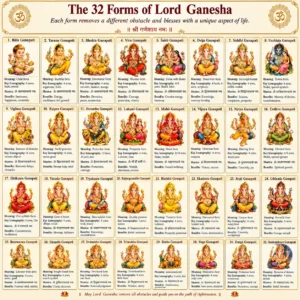
64 Forms of Lord Ganesha – Names, Meanings & Spiritual Significance
64-form Ganesha sadhana list, with Sanskrit name, meaning, iconography, mantra, traditional purpose, suggested worship time/tithi, and a simple procedure. 1. बाल गणपति — Bāla Gaṇapati Meaning: Child Ganesha. Iconography: A childlike, four-armed Ganesha, generally depicted holding fruits and sweets, representing the abundance of nature. Mantra:ॐ बालगणपतये नमः।Om Bāla-Gaṇapataye Namaḥ. Benefits: Innocence, happiness, creativity, protection of children and auspicious beginnings. Worship: Wednesday or Chaturthi is traditionally suitable. Sadhana: Bathe and wear clean clothes. Place Ganesha before you. Light a lamp and incense. Offer durvā grass, flowers and a sweet. Chant the mantra 108 times and pray for purity, happiness and a successful beginning. 2. तरुण गणपति — Taruṇa Gaṇapati Meaning: Young Ganesha. Iconography: A youthful four-armed form, associated with vitality, growth and enthusiasm. Mantra:ॐ तरुणगणपतये नमः।Om Taruṇa-Gaṇapataye Namaḥ. Benefits: Energy, confidence, youthfulness, enthusiasm and progress. Worship: Wednesday or Shukla Paksha Chaturthi. Sadhana: Light a ghee lamp. Offer red flowers and durvā. Chant 108 times while visualising your life becoming energetic and purposeful. 3. भक्त गणपति — Bhakta Gaṇapati Meaning: Devotional Ganesha. Iconography: A peaceful, devotional form of Ganesha, traditionally associated with offerings such as coconut, banana, mango and sweet dishes. Mantra:ॐ भक्तगणपतये नमः।Om Bhakta-Gaṇapataye Namaḥ. Benefits: Devotion, surrender, emotional peace and strengthening one’s connection with the Divine. Worship: Chaturthi, especially during Shukla Paksha. Sadhana: Sit quietly before Ganesha. Offer your favourite sattvic food. Chant 108 times and spend a few minutes in silent prayer. 4. वीर गणपति — Vīra Gaṇapati Meaning: Warrior or heroic Ganesha. Iconography: A powerful multi-armed form carrying various weapons, symbolising divine courage. Mantra:ॐ वीरगणपतये नमः।Om Vīra-Gaṇapataye Namaḥ. Benefits: Courage, determination, protection and overcoming difficult circumstances. Worship: Tuesday or Chaturthi. Sadhana: Light a lamp and offer red flowers. Chant 108 times. Visualise obstacles being removed and your courage becoming stronger. 5. शक्ति गणपति — Śakti Gaṇapati Meaning: Ganesha united with divine Shakti. Iconography: Ganesha accompanied by Shakti, representing the union of consciousness and divine energy. Mantra:ॐ शक्तिगणपतये नमः।Om Śakti-Gaṇapataye Namaḥ. Benefits: Creative energy, harmony, protection and spiritual strength. Worship: Friday or Chaturthi. Sadhana: Light a ghee lamp. Offer red flowers. Chant 108 times and meditate on balanced masculine and feminine divine energies. 6. द्विज गणपति — Dvija Gaṇapati Meaning: The twice-born Ganesha. Iconography: Traditionally depicted with four heads and associated with sacred learning and Brahmanical knowledge. Mantra:ॐ द्विजगणपतये नमः।Om Dvija-Gaṇapataye Namaḥ. Benefits: Education, knowledge, memory, spiritual discipline and learning. Worship: Wednesday. Sadhana: Place a book or study material before Ganesha. Offer white flowers. Chant 108 times before beginning study. 7. सिद्धि गणपति — Siddhi Gaṇapati Meaning: Ganesha of accomplishment. Iconography: A peaceful form holding objects associated with prosperity and achievement. Mantra:ॐ सिद्धिगणपतये नमः।Om Siddhi-Gaṇapataye Namaḥ. Benefits: Completion of projects, achievement, success and removal of delays. Worship: Chaturthi. Sadhana: State your goal clearly before beginning. Chant 108 or 1008 repetitions and conclude with a prayer for successful completion. 8. उच्छिष्ट गणपति — Ucchiṣṭa Gaṇapati Meaning: An esoteric/Tantric form of Ganesha. Iconography: A Tantric manifestation associated with Shakti and specialised ritual symbolism. Mantra:ॐ उच्छिष्टगणपतये नमः। Benefits: Traditionally associated with mastery of desires, transformation and Tantric spiritual practice. Worship: Should be undertaken according to a qualified Tantric lineage rather than through improvised rituals. Sadhana: For this form, use the mantra, nyāsa and ritual instructions given by your guru. I would not recommend self-directed Tantric experimentation. 9. विघ्न गणपति — Vighna Gaṇapati Meaning: Remover of obstacles. Iconography: A richly ornamented multi-armed Ganesha carrying various auspicious objects. Mantra:ॐ विघ्नगणपतये नमः।Om Vighna-Gaṇapataye Namaḥ. Benefits: Removal of obstacles, delays and difficulties. Worship: Before beginning important work; especially Chaturthi. Sadhana: Light a lamp, offer durvā and modak. Chant 108 times before commencing the important activity. 10. क्षिप्र गणपति — Kṣipra Gaṇapati Meaning: Swift or quickly responsive Ganesha. Iconography: Traditionally depicted with several arms holding a noose, goad and other objects. Mantra:ॐ क्षिप्रगणपतये नमः। Benefits: Traditionally invoked when one seeks prompt assistance. Worship: Wednesday or Chaturthi. Sadhana: State your genuine need clearly. Chant 108 times and offer red flowers and durvā. 11. हेरम्ब गणपति — Heramba Gaṇapati Meaning: Protective Ganesha. Iconography: Five-faced Ganesha riding a lion; generally ten-armed in traditional representations. Mantra:ॐ हेरम्बगणपतये नमः। Benefits: Courage, protection and overcoming fear. Worship: Chaturthi. Sadhana: Light five lamps if possible. Offer red flowers and durvā. Chant 108 times while visualising yourself surrounded by divine protection. 12. लक्ष्मी गणपति — Lakṣmī Gaṇapati Meaning: Ganesha accompanied by Lakshmi/Shakti and associated with prosperity. Iconography: Ganesha with Shakti figures, holding auspicious attributes. Mantra:ॐ श्रीं ह्रीं क्लीं ग्लौं गं गणपतये वर वरद सर्वजनं मे वशमानय स्वाहा। This is a traditional Lakshmi-Ganapati-associated mantra, but longer Tantric mantras should ideally be learned from a competent teacher. Benefits: Prosperity, abundance, auspiciousness and success. Worship: Friday or Shukla Paksha Chaturthi. Sadhana: Clean the puja area. Light a ghee lamp. Offer lotus or red flowers, durvā, fruits and sweets. Chant the chosen mantra 108 times. 13. महा गणपति — Mahā Gaṇapati Meaning: The Great Ganesha. Iconography: A majestic red form, traditionally associated with multiple arms and Shakti. Mantra:ॐ महागणपतये नमः। Benefits: Overall spiritual and worldly wellbeing. Worship: Chaturthi. Sadhana: Perform a full Ganesha puja, followed by 108 or 1008 repetitions of the mantra. 14. विजय गणपति — Vijaya Gaṇapati Meaning: Victorious Ganesha. Iconography: Ganesha associated with victory and successful accomplishment. Mantra:ॐ विजयगणपतये नमः। Benefits: Victory over difficulties and successful completion of legitimate goals. Worship: Tuesday or Chaturthi. Sadhana: Offer red flowers and durvā. Chant 108 times and pray for victory through righteous action. 15. नृत्य गणपति — Nṛtya Gaṇapati Meaning: Dancing Ganesha. Iconography: Ganesha shown dancing, often with four arms. Mantra:ॐ नृत्यगणपतये नमः। Benefits: Creativity, artistic expression, joy and freedom. Worship: Wednesday or Friday. Sadhana: Offer flowers and incense. Chant 108 times. After chanting, meditate or listen to devotional music. 16. ऊर्ध्व गणपति — Ūrdhva Gaṇapati Meaning: Elevated/upward-rising Ganesha. Iconography: Ganesha associated with Shakti and upward-moving spiritual energy. Mantra:ॐ ऊर्ध्वगणपतये नमः। Benefits: Spiritual growth, discipline and elevation of consciousness. Worship: Chaturthi. Sadhana: Sit upright. Perform slow breathing. Chant 108 times while visualising energy rising toward higher awareness. 17. एकाक्षर गणपति — Ekākṣara Gaṇapati Meaning: One-syllable Ganesha; associated with
64 Forms of Lord Ganesha – Names, Meanings & Spiritual Significance Read Post »