

Can Vastu Defects Be Corrected Without Demolition? Practical Solutions for Existing Homes
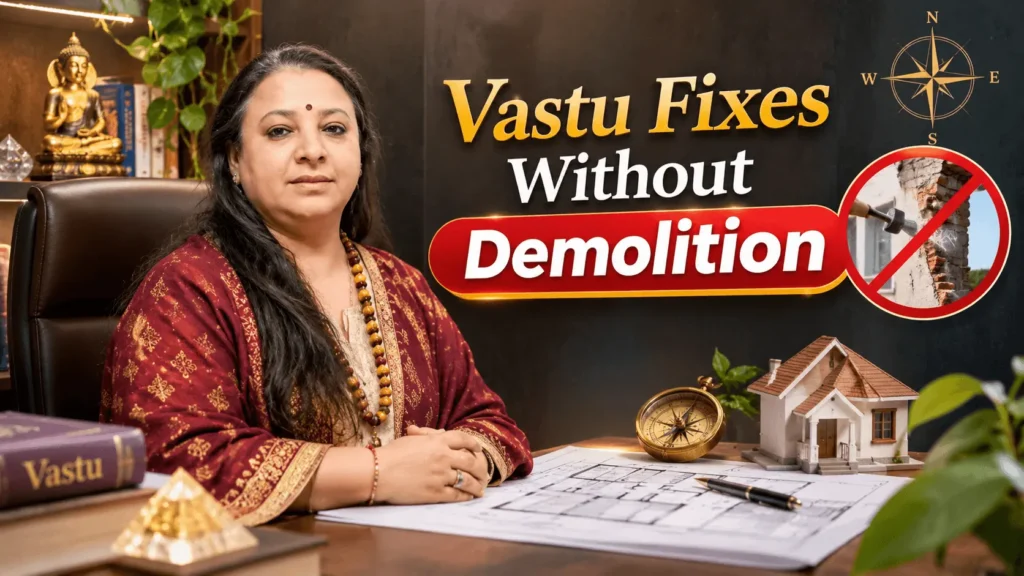
Imagine purchasing your dream home after years of careful planning. Everything looks beautiful, comfortable, and perfectly arranged. Then someone identifies a Vastu defect in your kitchen. Another person questions your entrance direction. Suddenly, your peaceful home becomes a source of unnecessary worry.
Does correcting Vastu really mean breaking walls or rebuilding rooms? Not necessarily. Many Vastu defects can be addressed without demolition. The right approach depends on the property’s layout and specific concerns.
If you already live in your home, you have options. You can explore practical corrections before considering structural changes.
Can Vastu Defects Be Corrected Without Demolition?
Yes, many Vastu defects can be addressed without demolishing existing structures. Corrections often involve furniture placement, room usage, lighting, ventilation, and suitable arrangements. Some traditional practitioners also recommend symbolic remedies for particular directional concerns.
However, every situation requires individual consideration. A misplaced cupboard differs considerably from an incorrectly positioned bathroom. Both require different approaches and realistic expectations.
The objective is to identify manageable concerns first. Structural modifications should never become the automatic recommendation.
Which Vastu Defects Can Be Corrected Without Breaking Walls?
Not every Vastu concern requires the same correction. Some situations allow simple adjustments within the existing room. Others require more detailed architectural consideration.
Here are common situations homeowners frequently encounter.
1. Main Entrance Facing an Unfavourable Direction
Many homeowners become concerned about their entrance direction. This concern becomes particularly common after purchasing apartments or completed houses.
Changing the main entrance may involve significant structural alterations. Fortunately, some traditional approaches focus on improving the existing entrance.
Consider these practical adjustments:
- Keep the entrance clean and free from unnecessary storage.
- Ensure adequate lighting throughout the entrance area.
- Maintain a functional, attractive, and well-maintained main door.
- Avoid keeping broken footwear or unwanted objects nearby.
- Consider a suitable entrance partition where privacy requires it.
These adjustments improve everyday functionality and entrance appearance. They do not physically change the entrance direction.
2. Kitchen Located in the North-East Direction
A north-east kitchen is a frequently discussed Vastu concern. Many homeowners immediately assume their kitchen needs relocation.
However, relocating an entire kitchen involves plumbing, electrical connections, and ventilation. Such changes are not always practical in completed properties.
Some traditional Vastu approaches recommend adjustments within the existing kitchen.
- Position the cooking stove towards the south-east area, where practical.
- Consider an arrangement allowing the cook to face east.
- Keep cooking and washing areas reasonably separated.
- Maintain cleanliness around the north-east portion.
- Avoid unnecessary storage in lighter areas of the kitchen.
Remember that these suggestions follow traditional Vastu interpretations. Practical kitchen safety and ventilation must always remain priorities.
3. Toilet Located in the North-East
This placement creates considerable concern among homeowners following Vastu principles. Apartment owners particularly struggle because bathroom locations rarely offer flexibility.
Moving an existing toilet requires drainage modifications and suitable plumbing arrangements. Therefore, relocation may be impractical without substantial renovation.
Meanwhile, consider these manageable adjustments:
- Keep the bathroom clean and properly maintained.
- Ensure adequate ventilation through an exhaust system.
- Repair leaking taps and avoid unnecessary water accumulation.
- Keep the bathroom door closed when unused.
- Maintain sufficient lighting and functional drainage.
Some practitioners additionally recommend salt bowls or symbolic remedies. These practices reflect traditional beliefs, not scientifically established correction methods.
If relocation becomes necessary during future renovation, consult an architect first.
4. Bedroom Located in the Wrong Direction
Sometimes, the bedroom location cannot be changed. This situation commonly occurs in compact apartments and builder-designed homes.
However, the room’s actual usage can sometimes be adjusted. Consider whether another bedroom better suits the household’s requirements.
Traditional recommendations frequently include:
- Positioning the bed with its head towards south or east.
- Keeping heavy wardrobes towards the south or west.
- Avoiding unnecessary clutter beneath the bed.
- Maintaining comfortable movement around sleeping areas.
- Using suitable lighting without making the room uncomfortable.
If another bedroom is available, consider switching sleeping arrangements. This may address the concern without changing walls.
5. Staircase Located in an Unfavourable Position
Staircases create different challenges because they involve structural design. Their relocation usually requires substantial architectural intervention.
Fortunately, some concerns can be managed through surrounding arrangements. Keep the staircase clean, accessible, and adequately illuminated.
Avoid using its surrounding area for unnecessary storage. Maintain comfortable movement and follow applicable building safety requirements.
A staircase cannot genuinely change position through decorative adjustments. Traditional remedies should not be presented as structural corrections.
6. Heavy Storage in the North-East
This is among the simpler concerns to address. Heavy cupboards, storage boxes, and unnecessary furniture occupy valuable space.
Traditional Vastu recommendations generally favour lighter arrangements in the north-east. They often suggest placing heavier storage towards the south-west.
You can consider the following changes:
- Move bulky cupboards towards suitable southern or western areas.
- Remove unused furniture and unnecessary storage boxes.
- Keep windows accessible for natural light.
- Avoid blocking ventilation with oversized furniture.
- Maintain an organised and comfortable central area.
These adjustments can improve space utilisation without construction.
What If Your Apartment Has Multiple Vastu Defects?
This is where many homeowners feel particularly confused. A single apartment might have several concerns simultaneously.
The entrance may face an unfavourable direction. The kitchen might occupy the north-east, while bathrooms remain fixed.
Should you correct everything separately? Not necessarily.
Start by examining the complete floor plan. Individual rooms should not be evaluated without considering surrounding spaces.
For example, changing bedroom usage might address multiple practical concerns. Rearranging storage could improve two adjoining directional zones.
A combined assessment helps identify overlapping corrections. It also prevents unnecessary purchases and repeated adjustments.
Most importantly, avoid treating every directional variation as a serious defect.
Can Vastu Defects Be Corrected in Rented Houses?
Yes, rented properties offer several possibilities for non-structural adjustments. Tenants generally cannot change permanent walls, bathrooms, or kitchen locations.
However, movable arrangements provide considerable flexibility.
Consider these examples:
- Rearrange beds and workstations without damaging existing interiors.
- Use movable storage instead of permanent cupboards.
- Improve lighting with suitable fixtures.
- Keep entrances and common areas organised.
- Select removable decorative elements where appropriate.
- Avoid permanent changes without the owner’s permission.
These adjustments are particularly useful for tenants planning temporary accommodation.
You should never undertake structural alterations without proper authorisation.
Do Vastu Pyramids, Mirrors, Salt, and Metal Strips Really Help?
Homeowners frequently encounter these products while researching Vastu corrections. Different practitioners recommend different objects for particular directional concerns.
Some suggest copper strips, while others recommend pyramids or mirrors. Salt bowls and specific symbols also appear frequently.
However, these recommendations are not universally accepted. Their effectiveness has not been established through reliable scientific evidence.
Traditional practitioners may consider them supplementary remedies. They should not replace necessary architectural corrections or practical improvements.
Before purchasing anything, ask three important questions:
- What specific defect is this remedy intended to address?
- Why is this particular placement being recommended?
- Is there a practical alternative using existing household arrangements?
A genuine assessment should explain the reasoning clearly. Buying multiple products without understanding the actual concern rarely helps decision-making.
When Is Demolition Actually Necessary for Vastu Correction?
Although many corrections avoid construction, some situations remain difficult. Certain concerns cannot be permanently addressed through furniture or decorative changes.
For example, consider these situations:
- A toilet occupies a location that requires architectural reconsideration.
- A kitchen layout cannot accommodate practical cooking arrangements.
- A staircase creates an unavoidable structural conflict.
- Major alterations are necessary to change room positioning.
- Existing construction prevents essential functional improvements.
Even in these situations, demolition should not be the first recommendation.
An architect must examine structural possibilities before approving modifications. Load-bearing walls, beams, columns, and concealed services require particular attention.
Sometimes, a future renovation offers a more practical opportunity. There is no universal requirement to rebuild an otherwise functional home.
The important distinction is between managing a Vastu concern and permanently changing its structural cause.
How Should You Choose the Right Non-Demolition Vastu Remedy?
Choosing remedies without understanding the actual layout can create further confusion. One suggestion might contradict another practitioner’s recommendation.
A proper assessment should consider the complete property. It should also account for how residents actually use different spaces.
Here is what deserves attention during an assessment:
1. Accurate directional identification
Directions should be established using appropriate measurements. Incorrect directional identification can lead to unsuitable recommendations.
2. Complete floor plan examination
The entrance, kitchen, bedrooms, bathrooms, staircase, and central area matter. Their relationship with surrounding spaces also requires consideration.
3. Existing furniture and room usage
Sometimes, changing the room’s purpose offers a practical alternative. Furniture rearrangement may also address certain traditional concerns.
4. Available correction possibilities
Every recommendation should suit the property’s actual limitations. Apartment owners and tenants require different approaches from independent homeowners.
5. Clear explanation of limitations
Not every concern has a permanent non-structural solution. A responsible practitioner should explain this distinction honestly.
Can Online Vastu Consultation Help With Existing Property Defects?
Yes, online consultation can help assess many existing property layouts. Homeowners can share floor plans, photographs, and directional information.
This approach is particularly useful for apartment owners. People living in different cities can also seek guidance.
However, the quality of assessment matters more than consultation format. Incomplete floor plans can produce inaccurate interpretations.
Before proceeding, ensure the practitioner understands your specific concerns. Ask whether recommendations will address individual rooms and existing limitations.
For complex structural questions, involve a qualified architect. Online Vastu guidance cannot replace engineering inspections or building approvals.
Frequently Asked Questions
1. Can Vastu dosh be removed without breaking walls?
Yes, many Vastu concerns can be managed without structural demolition. Common approaches include furniture rearrangement, room usage changes, lighting, and ventilation. Some traditional practitioners additionally suggest symbolic remedies for specific concerns.
2. Can a Vastu-defective house become suitable without renovation?
Many existing homes can accommodate practical, non-structural corrections. The available options depend on the actual floor plan. Certain structural concerns may remain unchanged without renovation.
3. What should I do if my main door has the wrong direction?
First, verify the entrance direction using an accurate directional assessment. Then examine practical improvements involving lighting, cleanliness, and entrance arrangements. Avoid relocating the door without architectural evaluation.
4. Can a north-east toilet be corrected without demolition?
Relocating the toilet is not always practical in existing apartments. Traditional recommendations include maintaining cleanliness, ventilation, lighting, and dryness. These measures manage the space but do not change its location.
5. Are Vastu corrections possible in flats?
Yes, apartments can accommodate several non-structural adjustments. Furniture placement, room usage, lighting, and storage arrangements offer flexibility. Fixed architectural features require separate consideration.
6. Can I correct Vastu defects myself?
You can make straightforward changes involving furniture and household organisation. However, directional identification and complicated layout concerns require careful assessment. Avoid making permanent structural changes independently.
7. Do Vastu remedies work immediately?
There is no scientifically established timeline for Vastu remedies. Traditional beliefs and individual experiences vary considerably. Avoid anyone promising guaranteed results within a particular timeframe.
8. Should I sell my property because of Vastu defects?
A Vastu concern alone does not automatically justify selling property. First, understand the actual concern and available alternatives. Consider your financial, family, and practical circumstances before making major decisions.
Final Thoughts: Your Existing Home May Have More Options Than You Think
Discovering a Vastu defect does not automatically mean rebuilding your home. Many concerns allow practical adjustments without disturbing existing construction.
Start with the actual problem rather than purchasing random remedies. Understand what can change and what requires architectural attention.
If structural changes become necessary, seek professional technical advice. Your family’s comfort, safety, and everyday requirements should remain important.
A home should support comfortable living, not create constant anxiety. Thoughtful corrections can help you make better use of existing spaces.
Before considering demolition, understand every available correction for your particular property.
Find the Right Vastu Solutions for Your Property
Every property has a different layout and unique challenges. Get personalised guidance for your home, apartment, or commercial property. Explore practical Vastu corrections based on your existing floor plan.