

There are moments when ordinary routines no longer satisfy the deeper part of us. We may begin looking for a spiritual practice that helps us become more disciplined, focused and connected with our inner world. For people interested in traditional Indian spiritual practices, Apsara sadhana course can be an intriguing path of learning when approached with sincerity, proper guidance and realistic expectations.
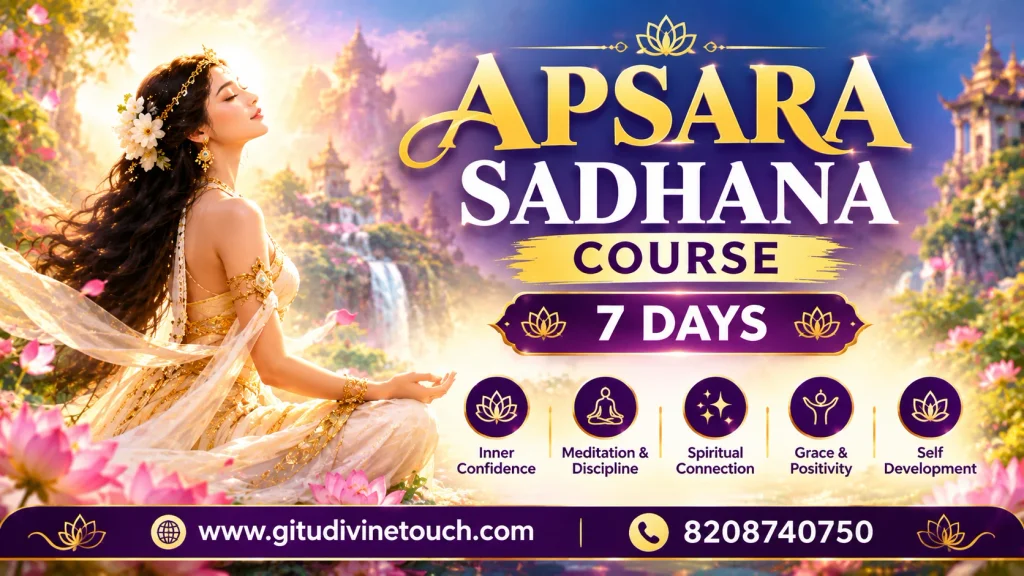
Apsara Sadhana belongs to a broader tradition of spiritual practices associated with meditation, mantra, visualization, devotion and disciplined sadhana. Many seekers become interested in it because of traditional descriptions of apsaras and their symbolic connection with beauty, grace, artistic expression and subtle spiritual energy.
However, authentic sadhana is not simply about achieving a particular supernatural experience. It is about developing concentration, discipline and awareness while following a structured spiritual practice.
At Gitu Divine Touch, the focus can be placed on learning the practice in a systematic and responsible manner rather than treating it as a shortcut to instant results. For someone genuinely interested in traditional spiritual learning, an Apsara sadhana course f can provide structure that is often difficult to create when studying alone.
What Is an Apsara Sadhana Course?
An Apsara Sadhana course is a guided learning program based on traditional spiritual practices associated with apsara sadhana. Depending on the specific teaching tradition, the course may include elements such as mantra practice, meditation, visualization, sankalpa, spiritual discipline and methods for maintaining a consistent practice.
The word sadhana itself refers to a disciplined spiritual practice undertaken with a particular intention or goal. Rather than simply reading about a practice, a student learns how to approach it through regular practice.
This distinction is important.
Many people search online for mantras or rituals and attempt to perform them without understanding pronunciation, preparation, timing, mindset or the importance of consistency. A structured course can help a learner understand the practice more carefully.
What can make guided learning valuable?
A good spiritual course should help students understand:
- The traditional background of the practice
- Preparation before beginning sadhana
- Meditation and concentration techniques
- Mantra or prayer-based practices, where appropriate
- Visualization and intention-setting
- Maintaining discipline during the practice
- How to approach spiritual experiences responsibly
- Common mistakes made by beginners
- How to continue personal practice after completing the course
The purpose is not to promise instant results. Spiritual practices differ from commercial products where a particular physical outcome can be guaranteed. Individual experiences can vary considerably.
That is precisely why Apsara sadhana course f should be approached as a learning and spiritual-development program rather than as a guaranteed method for obtaining a particular result.
What Makes Apsara Sadhana Special?
The fascination surrounding apsaras has existed in Indian religious and cultural literature for centuries. They are traditionally described as celestial beings and are frequently associated with beauty, music, dance and artistic qualities.
For a spiritual practitioner, these stories can also be approached symbolically. Beauty can represent refinement, music can represent harmony, and disciplined practice can represent the transformation of attention and intention.
This symbolic dimension makes the practice interesting for people who want to explore spirituality beyond ordinary meditation.
One of the strongest features of a properly structured course is guidance.
Imagine someone reading several different websites about sadhana. One page recommends one method, another recommends a different mantra, while a third provides instructions without explaining preparation. The student can quickly become confused.
A teacher-led course creates a clearer framework.
Instead of collecting random information, students can learn one approach systematically and understand why each stage is included.
A spiritual practice requires patience
One of the most important lessons for beginners is that sadhana is a process.
Some people expect dramatic experiences immediately. Others become discouraged if they do not experience something unusual after a few days.
A mature approach is different.
The practitioner focuses on regularity, concentration, self-awareness and sincerity. Experiences may differ from person to person, and there is no need to force an outcome.
This balanced approach can make the learning experience more meaningful and sustainable.
Apsara Sadhana Benefits: What Can Practitioners Explore?
Searches for apsara sadhana benefits are common because people naturally want to understand what they may gain from a spiritual practice before investing their time and money.
It is important to distinguish between traditional spiritual beliefs and scientifically established outcomes. Sadhana practices are spiritual traditions, and personal experiences cannot be guaranteed.
Practitioners commonly associate disciplined meditation and spiritual practice with qualities such as:
- Greater concentration
- Improved self-discipline
- A calmer approach to daily life
- Deeper self-reflection
- Greater awareness of thoughts and emotions
- Development of devotional or spiritual focus
- Increased consistency in meditation
- A stronger connection with one’s personal spiritual practice
These are best understood as potential personal experiences rather than guaranteed results.
The deeper value of sadhana
Perhaps the most valuable part of any spiritual practice is what happens gradually.
A person who commits to a daily practice learns to sit quietly, observe the mind and continue even when motivation changes. That discipline itself can become a valuable part of personal growth.
For this reason, apsara sadhana benefits should not be understood only in terms of extraordinary experiences. The practice can also be viewed as an opportunity to develop patience, concentration and spiritual discipline.
Why Learn Apsara Sadhana Online?
Online learning has made specialized spiritual education accessible to people who may not live near a teacher or spiritual centre.
An online Apsara sadhana course f can be particularly convenient for students who have work, family responsibilities or limited travel opportunities.
Advantages of online learning
Flexible learning:
Students can attend from home and organise their learning around their schedule.
Better accessibility:
A learner does not necessarily need to travel to another city to access specialised guidance.
Focused instruction:
A structured course can bring the important concepts together rather than requiring students to search through scattered information.
Opportunity to revisit lessons:
Where recorded material is provided, students can review instructions and take notes at their own pace.
Comfort and privacy:
Some people prefer learning spiritual practices from the privacy of their own home.
For a practice that requires concentration, having a quiet personal environment can also be helpful.
Where to Learn an Apsara Sadhana Course
When choosing a spiritual course, the teacher and teaching approach matter as much as the subject itself.
Rather than selecting a course solely because it makes extraordinary promises, look for transparency.
A trustworthy spiritual educator should clearly explain:
- What the course teaches
- How the classes are conducted
- Whether the course is live, recorded or both
- What preparation is required
- What students can realistically expect
- Whether there is guidance during practice
- How to contact the teacher or training centre
For those interested in learning through Gitu Divine Touch, course information and available training options can be explored through:
You can also contact the centre directly at 8208740750 for current course details, schedule and enrolment information.
How to Choose the Right Apsara Sadhana Course
Not every spiritual course is designed in the same way. Before paying for an online or classroom program, spend a few minutes checking what you are actually receiving.
1. Understand the course syllabus
Do not purchase a course simply because the title sounds attractive.
Ask what is actually taught.
A good syllabus should give you a clear idea about the sequence of learning and the type of practice involved.
2. Check the teacher’s background
Look for information about the instructor, their teaching experience and the broader spiritual traditions they work with.
3. Look for practical guidance
A course that only provides theoretical information may not be enough for someone who wants to establish a regular practice.
4. Avoid guaranteed-result claims
Be cautious when a course promises guaranteed supernatural experiences, guaranteed financial gains, guaranteed relationships or other extraordinary outcomes.
Spiritual practice is personal. Responsible teaching should leave room for individual differences.
5. Check course format
Before purchasing, confirm whether the course is:
- Live online
- Pre-recorded
- Classroom-based
- A combination of formats
Also check whether study material or ongoing guidance is included.
Different Ways to Approach Apsara Sadhana
Apsara-related spiritual practices can be presented differently depending on the tradition and teacher.
Some approaches may place greater emphasis on:
Mantra-based practice
The practitioner works with a prescribed mantra and develops consistency through repetition and concentration.
Meditation-based practice
The emphasis is placed on quietness, visualization, breath awareness and mental concentration.
Devotional practice
The practitioner approaches the sadhana through prayer, reverence and spiritual intention.
Traditional ritual practice
Some lineages may include specific ritual procedures, offerings, timings or preparatory practices.
Because traditions differ, students should follow the method taught by their instructor rather than mixing instructions from unrelated sources.
This is one reason a structured Apsara sadhana course f can be more useful than collecting disconnected instructions from social media.
Who Can Consider Learning Apsara Sadhana?
A spiritual course may appeal to people who already have an interest in:
- Meditation
- Mantra practice
- Indian spiritual traditions
- Energy practices
- Tantric and esoteric traditions
- Personal spiritual development
- Devotional practices
- Consciousness and self-exploration
It can also appeal to experienced spiritual practitioners who want to explore a different traditional practice.
However, beginners should not feel pressured to have extraordinary spiritual experiences. Curiosity, patience and willingness to learn are more useful starting points.
Tips Before You Enroll
Before purchasing your course, make a simple checklist.
Ask about the syllabus:
Know exactly what you will learn.
Check the duration:
Understand how many sessions or lessons are included.
Confirm the format:
Check whether classes are online, recorded or classroom-based.
Ask about support:
Find out whether students can ask questions during or after the course.
Verify the contact details:
Use the official website or direct contact information rather than relying only on social-media messages.
Understand the fee:
Know the complete course fee and what it includes before making payment.
These small checks can prevent disappointment later.
Common Mistakes Students Should Avoid
Trying multiple methods simultaneously
A common beginner mistake is combining several different spiritual practices without understanding any of them properly.
Choose one structured method and give yourself enough time to learn it.
Expecting instant results
Sadhana requires consistency. Expecting a dramatic experience after one or two sessions can create unnecessary frustration.
Following random internet instructions
Not every mantra, ritual or procedure shared online belongs to the same tradition. Avoid mixing practices without proper understanding.
Practising without preparation
If your teacher provides specific preparation guidelines, follow them carefully.
Treating spirituality like a quick-fix product
A spiritual practice is not a guarantee of money, relationships, fame or supernatural abilities. Its value is better approached through learning, discipline and personal exploration.
Why Learning Through a Structured Course Can Be a Smart Choice
When people purchase a course, they are not only paying for information. They are paying for structure, teaching, convenience and guidance.
That can be particularly important for specialised spiritual subjects.
Instead of spending weeks jumping between videos, articles and social-media posts, a learner can follow a defined curriculum.
The right course can save time and reduce confusion.
For someone who has already been searching for apsara sadhana benefits, the next logical step is to understand how the practice is actually taught and whether a guided course matches their spiritual interests.
If you are serious about learning, compare the syllabus, teaching format, instructor information and support available before enrolling.
Frequently Asked Questions
What is an Apsara Sadhana course?
It is a guided spiritual-learning program based on traditional practices associated with apsara sadhana. Depending on the teaching tradition, it may involve mantra, meditation, visualization, discipline and related spiritual practices.
What are the main Apsara Sadhana benefits?
People interested in apsara sadhana benefits often explore its potential for concentration, discipline, meditation, spiritual reflection and deeper engagement with traditional practices. Individual experiences vary, and specific results should not be guaranteed.
Can beginners learn Apsara Sadhana?
Yes, beginners can explore a structured course, provided they approach the practice respectfully and follow the teacher’s instructions rather than mixing unrelated methods.
Is an online Apsara Sadhana course useful?
Online learning can be convenient for students who cannot attend physical classes. Before enrolling, check whether the course includes live guidance, recorded lessons, study material and opportunities to ask questions.
How can I enrol with Gitu Divine Touch?
For information about the current Apsara Sadhana training, schedule, format and fees, contact Gitu Divine Touch at 8208740750
Conclusion: Begin Your Spiritual Learning Journey
An authentic spiritual practice deserves patience, respect and proper guidance. If you are fascinated by traditional Indian sadhana and want to explore apsara-related spiritual practices in a structured environment, learning through a dedicated course can give you a clearer starting point.
The real value of an Apsara sadhana course f is not simply in collecting information. It is in learning a practice systematically, understanding its traditional context and developing the discipline to practise consistently.
Before enrolling, check the syllabus, teaching format, instructor’s experience, course support and realistic expectations. Avoid programs that rely entirely on exaggerated promises.
If the approach at Gitu Divine Touch matches what you are looking for, contact the centre to learn about the current course format, availability and enrolment process.