
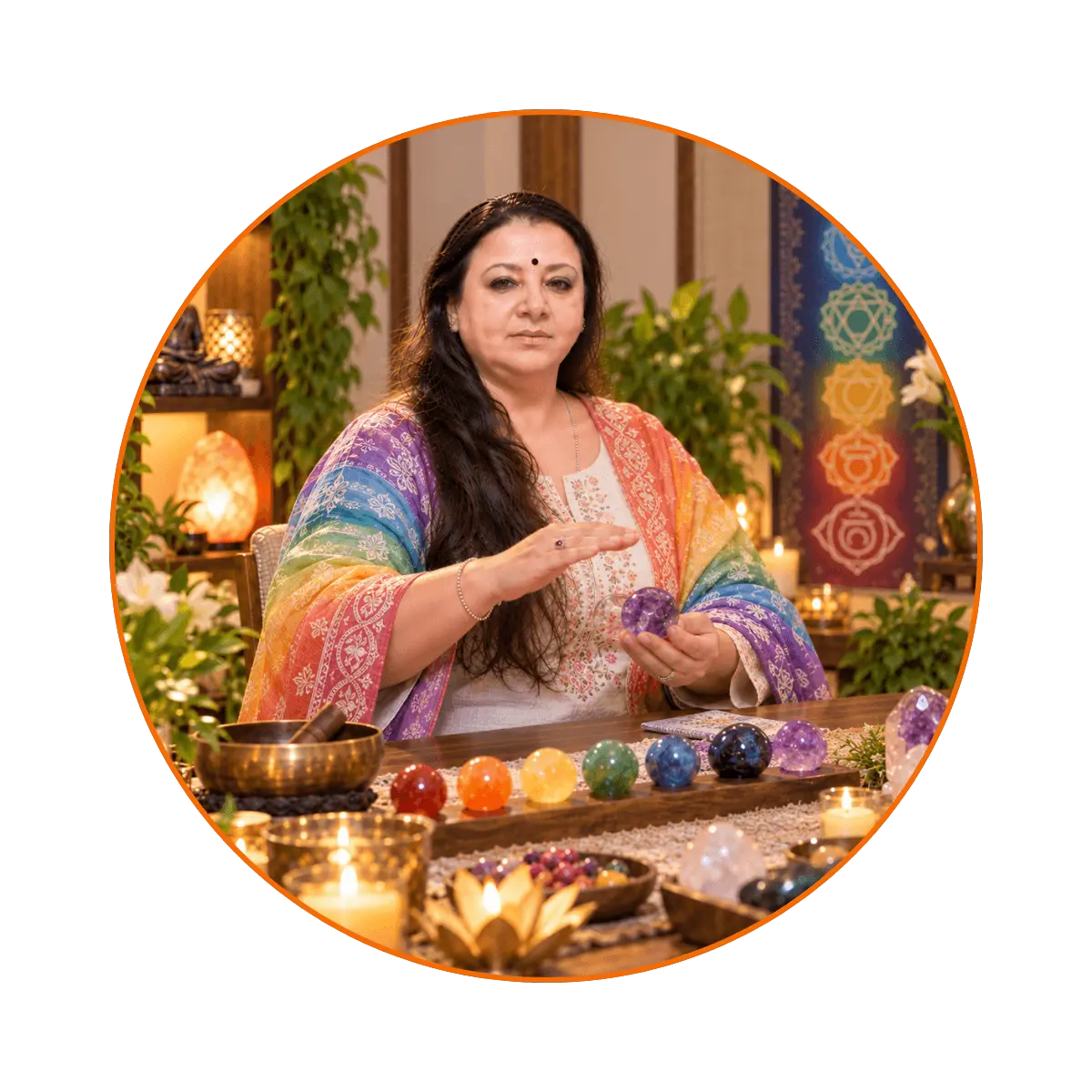
The Chakra Healing Course is designed for people who want to study the traditional chakra system and practise meditation, visualization and energy-focused techniques. The course introduces the seven main chakras, their traditional associations and simple practices used for personal reflection and spiritual wellness.
The Chakra Healing Course can be suitable for beginners as well as learners who already have an interest in meditation, Reiki, yoga, energy practices or spiritual traditions. Students can develop a basic understanding of the chakra system and learn how different practices may be used to focus attention on individual chakras.
Chakras are traditionally described as energy centres within certain Indian spiritual and yogic traditions. Modern chakra practices may combine these traditional ideas with meditation, breathwork, visualization, sound and other wellness exercises. These practices are generally used for spiritual reflection and personal wellbeing rather than as medical treatment.
Understanding the Chakra System
The Chakra Healing Course begins with an introduction to the traditional chakra system and the idea of energy centres.
The seven commonly discussed chakras are associated with different areas of the body, colours, symbols and themes. These are traditionally known as Root, Sacral, Solar Plexus, Heart, Throat, Third Eye and Crown chakras.
Each chakra is given a different symbolic meaning. Students learn how these associations are used during meditation and personal energy practices.
The course also helps learners understand that different traditions may describe chakras in different ways.
The Seven Main Chakras
A central part of the Chakra Healing Course is studying the seven commonly referenced chakras.
The Root Chakra is traditionally associated with stability, grounding and a sense of security. The Sacral Chakra is often connected with emotions, creativity and personal expression.
The Solar Plexus Chakra is associated with confidence, personal will and motivation. The Heart Chakra is linked with compassion, relationships and emotional balance.
The Throat Chakra is traditionally connected with communication and expression. The Third Eye Chakra is associated with intuition, awareness and inner reflection.
The Crown Chakra is commonly connected with spirituality, contemplation and a sense of connection.
These meanings are symbolic and can vary between traditions.
Chakra Meditation
The Chakra Healing Course introduces meditation as one of the main ways people work with chakra concepts.
A meditation session can focus on one chakra at a time or move through several chakras in sequence. Students may use breathing, visualization, colour imagery or simple attention practices.
For example, a learner may sit quietly, focus on breathing and bring attention to the area traditionally associated with a particular chakra.
The practice is based on personal observation rather than trying to force a particular physical or emotional experience.
Chakra Visualization
Visualization is another common practice discussed in the Chakra Healing Course.
Students may visualize the traditional colour associated with a chakra while focusing their attention on the corresponding area of the body.
For example, the Root Chakra is commonly associated with red, while the Heart Chakra is associated with green. Other chakras are traditionally linked with orange, yellow, blue, indigo and violet or related shades.
These colours are symbolic elements of the practice and are not medical indicators.
Breathing and Chakra Practice
The Chakra Healing Course can include simple breathing exercises as part of meditation.
Slow and comfortable breathing can help students settle their attention before beginning a chakra-focused practice.
A learner may sit comfortably, observe the breath and gradually bring attention to the chosen chakra. The practice can then finish with a few minutes of quiet observation.
Breathing should always remain comfortable. Students should not force their breath or practise techniques that cause dizziness or discomfort.
Chakra Balancing Practices
The Chakra Healing Course may introduce traditional ideas about chakra balance.
In spiritual practices, people may describe a chakra as balanced, blocked, overactive or underactive. These descriptions are symbolic concepts used within chakra traditions and are not medical diagnoses.
Students can use meditation, visualization, yoga-inspired movement, sound or reflective exercises according to the method being studied.
The purpose is to develop a personal practice rather than to make claims about treating physical disease.
Working With Individual Chakras
The Chakra Healing Course encourages students to study each chakra separately before trying longer practices.
A learner can choose one chakra, review its traditional associations and spend a few minutes focusing on it through meditation.
Keeping notes can be helpful. Students may record the chakra studied, the meditation method used and their personal observations.
This makes it easier to compare different practices and develop a routine that feels comfortable.
Chakra and Emotional Reflection
Chakra practices are often used for personal reflection. The Chakra Healing Course can help students explore the symbolic relationship between chakras and emotional themes.
For example, the Heart Chakra is traditionally associated with compassion and relationships, while the Throat Chakra is linked with communication and expression.
Students can use these themes as prompts for journaling or meditation. They can ask themselves questions about their feelings, habits and experiences without treating the chakra system as a psychological diagnosis.
Chakra Meditation With Sound
Sound can also be included in the Chakra Healing Course.
Some chakra traditions associate particular sounds, chants or mantras with different energy centres. Students may use gentle chanting or repeated sounds during meditation.
The purpose is to provide an additional focus for attention.
Learners can choose a quiet practice or use a suitable recording, depending on their personal preference and the method taught in the course.
Chakra Practice and Reiki
Students interested in Reiki may also connect the Chakra Healing Course with their existing practice.
Some modern Reiki practitioners use chakra concepts while conducting meditation or energy sessions. They may focus on particular areas of the body or combine Reiki hand positions with chakra visualization.
These are complementary spiritual practices, and different Reiki systems may use different approaches.
Students should follow the method they are trained in rather than mixing practices without understanding their differences.
Chakra Practice and Crystals
Crystals are sometimes used in modern chakra practices as symbolic meditation objects. The Chakra Healing Course may discuss how different stones are traditionally associated with particular chakras.
For example, clear quartz, amethyst, rose quartz, citrine and other stones are commonly used in modern chakra-based practices.
These associations are part of spiritual and symbolic traditions. There is no established scientific evidence that crystals can medically balance or repair chakras.
Students should treat crystals as optional meditation or symbolic tools.
Creating a Chakra Practice Space
The Chakra Healing Course can help students create a simple space for meditation and reflection.
A comfortable mat, chair or cushion can be enough. Students may also use soft lighting, a journal, meditation music or symbolic objects if they find them helpful.
There is no need for expensive equipment.
A quiet space with fewer distractions can make it easier to concentrate during meditation.
Developing a Daily Chakra Routine
Regular practice is useful when studying the Chakra Healing Course.
Students can begin with a short daily session focused on one chakra. Over time, they can practise a complete sequence involving all seven chakras.
A simple routine might include breathing, chakra visualization, quiet meditation and journaling.
Keeping the routine manageable makes it easier to continue consistently.
Working With Others
The Chakra Healing Course may also be useful for learners who want to practise guided chakra meditation with others.
When working with another person, clear communication and consent are important. The practitioner should explain that chakra work is a spiritual or complementary wellness practice.
No practitioner should claim to diagnose a medical condition by observing a person’s chakras or promise that chakra work can cure an illness.
Who Can Take This Course?
The Chakra Healing Course can be suitable for:
- Beginners interested in chakras
- Meditation learners
- Reiki practitioners
- Yoga and wellness students
- Energy practice learners
- Spiritual study students
- Crystal practice enthusiasts
- People interested in personal reflection
No advanced background is required for basic chakra study.
Developing Your Practice
Regular practice can help students become more familiar with the chakra system. The Chakra Healing Course can be supported by keeping a simple journal.
Learners can record which chakra they studied, the meditation used and any thoughts or observations that came up.
It is useful to approach these experiences with an open but practical attitude. Not every sensation or emotion needs to be given a spiritual explanation.
Important Note
The Chakra Healing Course presents chakras as part of traditional spiritual and yogic concepts. Modern claims that chakra balancing can diagnose, prevent, treat or cure physical or psychological conditions are not scientifically established.
This course should not replace medical treatment, mental health care, prescribed medication or professional healthcare advice.
Meditation and breathing exercises should be practised comfortably. Anyone with a health concern should seek guidance from an appropriately qualified professional.
Why Choose the Chakra Healing Course?
The Chakra Healing Course provides a structured introduction to the seven main chakras, their traditional meanings and practical meditation methods.
Students can explore chakra visualization, breathing, sound, journaling and other traditional practices while developing a regular personal routine.
The course is suitable for people who want to understand chakra concepts without needing advanced knowledge of energy work.
With regular practice, learners can become more familiar with the symbolic meanings of the chakras and use meditation as a simple way to support personal reflection and spiritual study.
For anyone interested in Reiki, yoga, meditation, crystals or traditional energy practices, the Chakra Healing Course offers a practical foundation for further learning.
Reviews
There are no reviews yet.