

Dus Mahavidya Course: Learn About the Dus Mahavidyas, Their Mantras and Sadhana
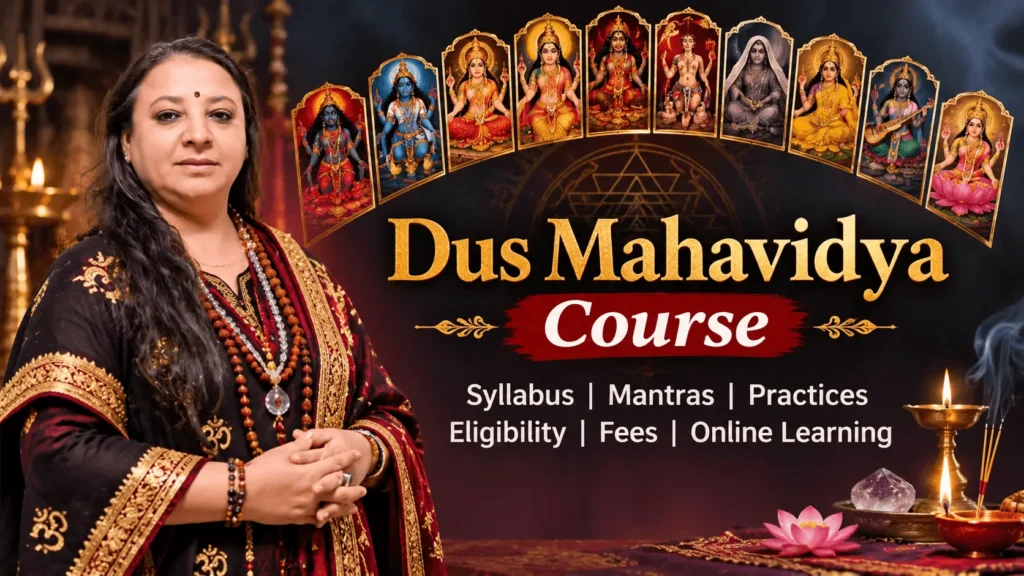
Have you ever wondered why Hindu traditions describe ten forms of divine feminine wisdom? Each Mahavidya represents a distinct understanding of life, knowledge, and spiritual practice.
The Dus Mahavidya tradition explores these ten forms through stories, symbolism, mantras, and worship. For anyone interested in Shakti traditions, learning about them can be meaningful.
A Dus Mahavidya course offers structured guidance about these ten forms. It helps students understand their individual significance and traditional practices.
But what exactly does such a course teach? Who can join, and what should beginners know before enrolling?
Let’s understand everything before choosing a suitable learning program.
What Is the Dus Mahavidya Course?
Dus Mahavidya means ten great wisdom traditions associated with the Divine Mother. These ten forms represent different aspects of Shakti in Hindu spiritual traditions.
The teachings connect mythology, philosophy, meditation, mantra, and traditional worship. Each Mahavidya has distinct characteristics, symbolism, and spiritual associations.
A structured course introduces students to these concepts systematically. Depending on the instructor, practical training may also form part of learning.
Some programs concentrate on theoretical knowledge and deity identification. Others include mantra chanting, yantra practices, and guided sadhana.
Therefore, checking the actual syllabus is important before enrolling.
Who Are the Ten Mahavidyas?
Understanding all ten Mahavidyas forms the foundation of this learning journey. Each goddess has a distinct identity and traditional significance.
- Maa Kali: Represents time, transformation, and freedom from ignorance. Her teachings explore courage, detachment, and the nature of existence.
- Maa Tara: Associated with protection, guidance, and spiritual knowledge. Her traditions emphasize wisdom and guidance through difficult circumstances.
- Maa Tripura Sundari: Represents beauty, harmony, and the highest consciousness. She holds an important position within Sri Vidya traditions.
- Maa Bhuvaneshwari: Represents the cosmic space and the universe. Her symbolism explores creation, existence, and universal awareness.
- Maa Bhairavi: Associated with discipline, spiritual intensity, and inner strength. Her worship traditions emphasize commitment and focused practice.
- Maa Chhinnamasta: Represents selflessness, sacrifice, and spiritual understanding. Her iconography carries deep philosophical and symbolic meanings.
- Maa Dhumavati: Associated with detachment, difficult experiences, and deeper wisdom. Her teachings explore life’s temporary nature and acceptance.
- Maa Bagalamukhi: Traditionally associated with speech, restraint, and the power of stillness. Her worship includes specific mantra and ritual traditions.
- Maa Matangi: Represents knowledge, artistic expression, and refined communication. Her traditions connect wisdom with music, learning, and creativity.
- Maa Kamala: Represents prosperity, abundance, and auspiciousness. She is closely associated with Lakshmi’s traditional attributes.
A good course should explain their individual differences clearly. Students should understand their stories, symbols, and traditional worship methods.
What Will You Learn in a Dus Mahavidya Course?
Course structures differ between teachers and spiritual learning institutions. However, several important subjects deserve attention during enrollment.
1. Introduction to Mahavidya Philosophy
Students explore the origin and meaning of the ten Mahavidyas. Lessons explain their relationship with Shakti and different Tantric traditions.
2. Mantra Knowledge and Pronunciation
Mantras form an important part of many Mahavidya practices. Students may learn pronunciation, chanting methods, and traditional meanings.
Check whether the instructor explains mantra eligibility and initiation requirements. Not every traditional mantra is taught without specific guidance.
3. Yantra Understanding
Yantras represent particular deities through traditional geometric arrangements. Students may study their symbolism, structure, and worship procedures.
Some advanced programs also include yantra drawing and ritual preparation. Check whether practical instruction is included in your chosen syllabus.
4. Traditional Worship Methods
Students may learn about offerings, worship materials, and daily rituals. Instruction should explain the differences between individual deity traditions.
5. Sadhana and Meditation
Some courses introduce meditation and structured daily spiritual practices. Others provide guided sessions for specific Mahavidyas.
Always understand the recommended practice before starting independently.
Can Beginners Join a Dus Mahavidya Course?
Yes, many introductory programs accept students without previous experience. However, eligibility depends on the instructor and teaching tradition.
Beginners should first understand basic concepts and worship terminology. They should also learn about the ten goddesses individually.
Advanced mantra practices may have additional eligibility requirements. Some traditions require diksha or guidance from an authorized guru.
Therefore, ask about prerequisites before selecting a program. A beginner-friendly syllabus should explain everything without assuming previous knowledge.
Is Diksha Necessary for Learning the Ten Mahavidyas?
This is an important question among prospective students. The answer depends on the specific practice and teaching tradition.
General knowledge about Mahavidyas does not automatically require initiation. However, certain mantra and Tantric practices may require diksha.
Different teachers follow different traditional approaches and eligibility guidelines. Students should never assume every practice is suitable independently.
Ask the instructor about initiation before joining advanced training. Clear guidance helps students understand their responsibilities and limitations.
Online or Offline: Which Course Should You Choose?
Today, students can find different Mahavidya learning formats. These include live online classes, recorded lessons, and in-person workshops.
Online classes provide flexibility for students living outside major cities. Live sessions also allow direct interaction with instructors.
Offline programs may offer more opportunities for practical demonstrations. However, travel, accommodation, and scheduling require additional planning.
Choose according to your learning needs and available time. Always check whether recordings and study materials are provided.
How Much Does a Dus Mahavidya Course Cost?
There is no fixed fee across all institutions. Pricing depends on the instructor, duration, and included learning materials.
Some introductory programs offer affordable recorded lessons. Comprehensive live workshops generally involve higher enrollment fees.
Certain programs also include initiation, personal guidance, or additional training. Compare the syllabus rather than choosing through price alone.
Before payment, confirm these important details:
- Total course fees and additional charges.
- Number of classes and overall duration.
- Live sessions versus recorded learning.
- Study materials and language options.
- Instructor experience and teaching background.
- Refund policies and missed-class arrangements.
- Certificate availability and its actual recognition.
A completion certificate does not automatically establish traditional authority. Check what the certificate represents before considering professional applications.
How Much Daily Time Should You Give?
Daily practice requirements depend on the particular course. Some introductory lessons require little additional study time.
Structured meditation or chanting may require regular dedicated sessions. Certain traditional practices involve more detailed preparation and instructions.
Ask the teacher about realistic daily commitments before enrolling. This helps you balance learning with personal responsibilities.
Frequently Asked Questions About the Dus Mahavidya Course
1. Can I learn all ten Mahavidyas together?
Yes, introductory courses commonly cover all ten Mahavidyas. Advanced practices may require separate training or initiation.
2. Can married people join the course?
Many introductory programs welcome household practitioners. However, specific traditional practices may have individual eligibility requirements.
3. Is Sanskrit knowledge compulsory?
No, Sanskrit knowledge is not always necessary. Good instructors explain terminology and mantra pronunciation during lessons.
4. Can I learn the Dus Mahavidya course online?
Yes, several institutions offer online learning opportunities. Check live interaction, recordings, teaching materials, and practical guidance.
5. Will I receive a certificate after completing training?
Some institutions provide course completion certificates. Confirm their availability and conditions before registration.
6. Are all ten Mahavidyas worshipped in the same way?
No, their traditional worship methods can differ considerably. Mantras, offerings, rituals, and eligibility requirements may vary.
7. Can beginners practise Mahavidya mantras independently?
Beginners should avoid experimenting with advanced mantra practices. Follow appropriate instructions from a knowledgeable and qualified teacher.
8. How do I select the right Mahavidya course?
Compare the curriculum, instructor credentials, duration, and teaching format. Ask questions before paying any registration fees.
How to Choose the Right Dus Mahavidya Course
Choosing a spiritual learning program deserves careful consideration. Different institutions offer different approaches to Mahavidya education.
Start by checking the instructor’s background and teaching experience. Look for clear explanations of the syllabus and practices.
Next, understand what happens after registration and enrollment. Check whether students receive personal guidance during their learning.
Avoid choosing programs based entirely on extraordinary promises. Genuine learning requires patience, understanding, and consistent study.
Most importantly, select a course matching your learning objectives. The right guidance makes complex traditional subjects easier to understand.
Begin Your Learning With the Right Guidance
The ten Mahavidyas offer a vast field of philosophical and spiritual study. Their traditions connect mythology, worship, symbolism, and different approaches to knowledge.
A well-structured Dus Mahavidya course provides an organized introduction. It helps students understand each goddess beyond basic names and descriptions.
Before enrolling, explore the curriculum and teaching approach carefully. Ask questions, understand the requirements, and make an informed decision.
If you genuinely wish to study these traditions, start with clarity. Good learning begins with understanding, not rushing into practice.
Learn the Traditions of Dus Mahavidya Course
Study all ten Mahavidyas with Gitu Mirpuri through structured online classes. Understand traditional mantras, worship methods, and daily sadhana practices with guided instruction.
- ✓ 10 Days of Live Online Classes
- ✓ Detailed PDF Study Notes
- ✓ 10 Laminated Mata Photos
- ✓ Digital Completion Certificate
Have questions about the course, classes, or enrollment? Speak with us directly on WhatsApp.