

Spirituality and Positivity After 60 – A Complete Guide to Finding Peace, Purpose and Happiness
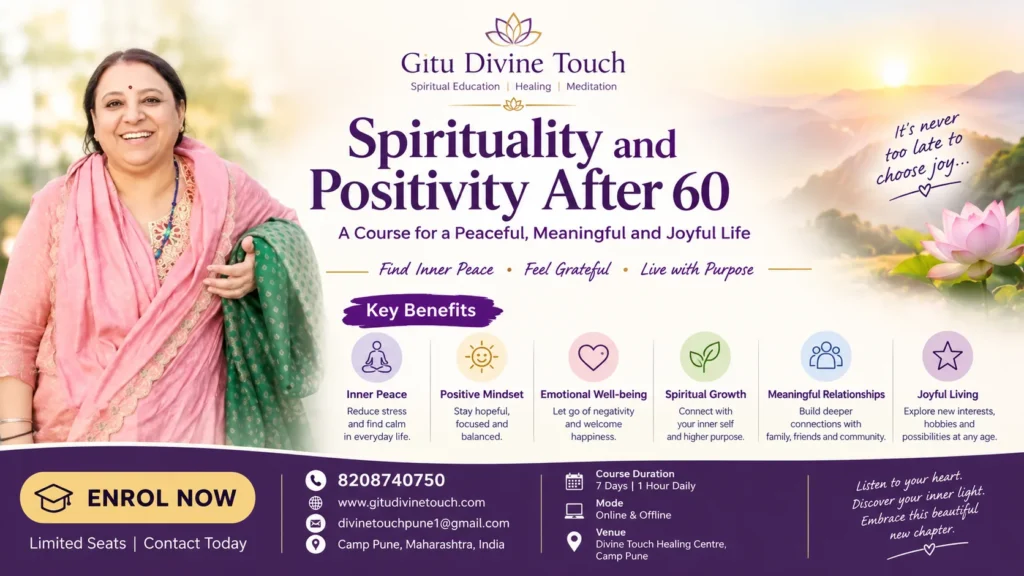
Introduction: A Beautiful New Chapter of Life
Life after 60 can be a meaningful opportunity to rediscover yourself. By this stage, many people have experienced the joys and challenges of family life, work, relationships, responsibilities and personal change. Children may have grown up, careers may be winding down, and daily routines may be different from what they once were.
These changes can sometimes bring loneliness, uncertainty or a feeling that life has become less exciting. But they can also create space for something beautiful: self-reflection, spiritual growth, gratitude and a deeper appreciation of life.
Spirituality and positivity after 60 are not about pretending that everything is perfect. They are about learning to accept life’s changes, appreciate what remains, discover new meaning and nurture a peaceful relationship with yourself and the world around you.
Spirituality does not have to mean following a particular religion. It can mean prayer, meditation, connecting with nature, helping others, reading inspiring teachings, practising gratitude or simply spending a few quiet moments with yourself.
At Gitu Divine Touch, a spiritual education, healing and meditation academy in Pune, we encourage people to explore spiritual practices in ways that feel comfortable and meaningful to them.
In this guide, you will discover how to develop a positive outlook after 60, begin a simple spiritual routine, manage everyday worries, reconnect with your purpose and make each day more meaningful.
1. What Is Spirituality and Positivity After 60?
Spirituality and positivity after 60 means approaching later life with greater awareness, acceptance, gratitude and a willingness to continue growing.
Spirituality helps you explore questions such as:
- What gives my life meaning?
- What brings me inner peace?
- What values do I want to live by?
- How can I accept changes that I cannot control?
- How can I contribute to the happiness of others?
- What would I still like to learn or experience?
Positivity means looking for possibilities without denying difficulties. A positive person can feel sad, worried or disappointed. The difference is that they try not to let difficult emotions define their entire life.
For example, someone who has retired may initially feel that they are no longer useful. With time, they might discover a new purpose by mentoring younger people, learning meditation, volunteering, pursuing a hobby or spending meaningful time with family and friends.
Spirituality and positivity work together when inner reflection helps you understand your experiences and a positive outlook encourages you to move forward.
A simple definition
Spirituality and positivity after 60 is the practice of finding peace, purpose, gratitude and hope during later life through meaningful daily activities, personal reflection, relationships and spiritual practices.
2. Why Spirituality Can Become Important After 60
Every stage of life brings different questions. In younger years, much of our attention may be on education, earning money, raising children and building a career. Later in life, we may have more time to reflect on our experiences and values.
Some people naturally become more interested in spirituality as they grow older. Others discover new interests, while some have followed a spiritual path throughout their lives.
Common reasons for exploring spirituality after 60 include:
Retirement and changes in routine: When work no longer provides a daily structure, spiritual practice can offer a peaceful routine and a new focus.
Family changes: Children may move away, relationships may change, and people may need to discover new ways of feeling connected.
A desire for meaning: Life may feel more fulfilling when daily activities reflect personal values rather than obligations alone.
Reflection on past experiences: Some people wish to understand old disappointments, practise forgiveness or make peace with decisions they cannot change.
A desire to give back: Helping others, sharing life lessons and participating in community activities can create a sense of purpose.
There is no single correct age or reason to begin. You can explore spirituality at any time.
3. The Meaning of Positivity in Later Life
Being positive after 60 does not mean smiling all day or refusing to talk about problems. Genuine positivity is realistic, gentle and flexible.
It involves recognising difficulties while also noticing what is still possible.
Consider these examples:
| Negative thought | A more balanced thought |
|---|---|
| “My useful years are over.” | “I can still learn, contribute and enjoy new experiences.” |
| “My children are busy, so I am alone.” | “I miss spending time with them, and I can also build friendships and interests of my own.” |
| “I am too old to learn meditation.” | “I can begin with two quiet minutes and progress at my own pace.” |
| “I cannot change my past.” | “I can learn from my past and choose how I live today.” |
| “Every day is the same.” | “I can introduce one small, meaningful activity into my day.” |
Positive thinking is not a promise that life will always be easy. It is a way of responding to life with greater awareness and self-kindness.
4. The Spiritual Principles That Support a Positive Life After 60
You do not need to master complicated spiritual teachings. A few simple principles can guide everyday life.
Gratitude
Gratitude means noticing and appreciating what is valuable in your life. It might be a supportive friend, a comfortable home, a pleasant conversation, a favourite song or a peaceful morning.
Try writing down three things you appreciate each evening. They do not need to be extraordinary.
Acceptance
Acceptance means acknowledging reality without spending all your energy fighting what cannot be changed.
It does not mean tolerating mistreatment or giving up on improvement. It means understanding what is within your control and deciding where your energy is best used.
Forgiveness
Forgiveness may help some people release the burden of carrying old resentment. It is a personal process, not an obligation. It does not require you to excuse harmful behaviour, forget what happened or resume an unsafe relationship.
You can begin by acknowledging your feelings and considering what would help you move forward.
Compassion
Compassion means treating yourself and others with understanding. You may have regrets about the past, but constant self-criticism rarely helps you live better today.
Ask yourself, “If a close friend were experiencing this, what kind words would I offer them?” Then try offering some of those words to yourself.
Living in the present
The past can teach us, and the future can be planned for, but neither needs to occupy every moment.
Mindfulness encourages you to notice what is happening now: your breathing, the sounds around you, the taste of your tea or the feeling of sunlight on your skin.
Service and kindness
A meaningful life does not have to be built around grand achievements. Listening to a neighbour, encouraging a younger person, helping at a community event or checking on a friend can all be expressions of purpose.
5. Benefits of Spirituality and Positivity After 60
The experience differs from person to person. Spiritual practices are not guaranteed to solve every difficulty, but many people find them personally meaningful.
Spiritual benefits
- A stronger sense of connection with personal beliefs or values.
- More opportunities for reflection and prayer.
- A deeper appreciation of life’s ordinary moments.
- Greater clarity about what matters most.
- A renewed sense of purpose.
For people who follow a religious or spiritual tradition, prayer, scripture reading or devotional practice may also provide comfort and a sense of belonging.
Emotional and personal benefits
- An opportunity to reflect on feelings rather than react immediately.
- More awareness of unhelpful thought patterns.
- A kinder attitude towards oneself.
- A structured way to work through regret and change.
- Greater willingness to explore new interests.
These are possible benefits, not guaranteed outcomes. Persistent sadness, anxiety or loneliness deserves care and support rather than pressure to think positively.
Daily-life benefits
A spiritual routine can help create structure in the day. For example, a morning meditation followed by a walk, a conversation with a friend and an evening gratitude practice can provide enjoyable points of connection throughout the day.
Other helpful activities include reading, music, gardening, creative hobbies, volunteering and spending time outdoors when possible.
6. How to Practise Spirituality After 60
The best routine is one that fits your interests, beliefs, energy and physical abilities. Begin simply and make changes when needed.
Step 1: Start the morning peacefully
Before reaching for your phone, sit comfortably for a minute or two. Take a few natural breaths and ask yourself, “How would I like to approach today?”
You might choose patience, gratitude, courage or kindness as your intention.
Step 2: Practise gratitude
Name three things you appreciate. They might be people, experiences, opportunities or small comforts.
If writing is difficult or inconvenient, simply say them aloud or think about them quietly.
Step 3: Include gentle movement
If appropriate for your abilities, consider walking, gentle stretching, chair-based movement or another activity recommended for your needs.
Movement is not a spiritual requirement. It is one possible way to care for yourself and remain engaged with daily life.
Step 4: Spend time in silence or meditation
Start with two to five minutes. Focus on your breathing or repeat a meaningful prayer or phrase.
When your mind wanders, gently return your attention. There is no need to force your mind to become completely empty.
Step 5: Connect with someone
Call a friend, meet a neighbour, speak with a family member or participate in a group activity.
Spiritual growth does not require isolation. Meaningful relationships and social connections can be an important part of a fulfilling life.
Step 6: Learn something new
You might explore meditation, devotional music, spiritual books, a creative hobby or a structured course. Learning can provide interest and a sense of progress at any age.
Step 7: End the day with reflection
Ask yourself:
- What was one good moment today?
- What did I learn?
- Is there anything I want to approach differently tomorrow?
- What can I release for tonight?
Keep your answers gentle and realistic.
7. A Simple Five-Minute Meditation for Positivity After 60
This short exercise can be practised in a chair or another comfortable position. Keep your eyes open if that feels safer or more comfortable.
Minute 1: Settle down
Sit comfortably and notice the support beneath you. Let your shoulders relax if possible.
Minute 2: Notice your breathing
Breathe naturally. There is no need to take unusually deep breaths or hold your breath.
Minute 3: Appreciate the present
Bring to mind one thing you appreciate today. It could be a person, a memory, a meal or a moment of quiet.
Minute 4: Choose an intention
Silently repeat a phrase such as:
“I welcome this day with patience and gratitude.”
Or choose words that fit your own beliefs.
Minute 5: Return gently
Notice the room around you. Ask yourself what small, positive action you would like to take next.
This meditation is a personal reflection exercise, not a substitute for medical or mental health care.
8. Practical Examples of Spirituality and Positivity After 60
Example 1: Finding purpose after retirement
A retired teacher misses the daily interaction of a classroom. Instead of concluding that the most meaningful part of life is over, they begin helping children with reading at a local community group.
The activity may provide opportunities for connection, contribution and continued learning.
Example 2: Dealing with loneliness
A person whose children live in another city feels lonely during the week. Along with arranging regular family calls, they join a walking group, attend a community gathering or explore a meditation class.
Spiritual reflection can support this process, while practical social steps help create opportunities for connection.
Example 3: Making peace with the past
Someone continues to regret a decision made many years earlier. During quiet reflection, they acknowledge the regret, consider what they learned and identify whether there is a constructive step they can take now.
They may not be able to change the past, but they can choose how they respond to it today.
Example 4: Beginning a spiritual practice later in life
A beginner assumes that meditation requires sitting cross-legged on the floor for a long time. They discover that they can sit on a chair and begin with a few minutes of quiet attention.
The lesson is simple: a spiritual practice can be adapted to the individual.
9. Common Mistakes to Avoid
When exploring spirituality and positivity after 60, avoid these common misunderstandings.
Mistake 1: Believing you must always be happy. Every person experiences difficult emotions. Allowing yourself to acknowledge them is healthier than pretending they do not exist.
Mistake 2: Comparing your spiritual journey with others. People have different beliefs, abilities, backgrounds and experiences. Choose practices that are meaningful to you.
Mistake 3: Starting with an unrealistic routine. A lengthy daily routine can feel overwhelming. Begin with a small, manageable habit.
Mistake 4: Using spirituality to avoid practical problems. Prayer or meditation can be meaningful, but important financial, relationship, legal or health concerns may also require practical action or professional guidance.
Mistake 5: Isolating yourself. Quiet time can be valuable, but it need not replace friendship, family relationships or community involvement.
Mistake 6: Blaming yourself for difficult experiences. Positivity does not mean every hardship is your fault or that you attracted it through negative thinking.
Mistake 7: Expecting instant results. New habits take time to become familiar. Let your practice develop gradually.
10. Spirituality, Meditation and Healing: What Is the Difference?
These practices may overlap, but they are not identical.
| Practice | Main focus | Simple example |
|---|---|---|
| Spirituality | Meaning, values and connection | Prayer, reflection or time in nature |
| Meditation | Attention and awareness | Quietly noticing the breath |
| Mindfulness | Awareness of the present moment | Eating a meal without distraction |
| Reiki | A traditional energy-healing practice | Receiving or learning a Reiki session |
| Gratitude practice | Recognising what you appreciate | Writing down three good things |
Some people combine these activities; others choose just one. Reiki and other spiritual healing systems should not be presented as proven cures for medical conditions or substitutes for necessary treatment.
11. Spirituality and Positivity After 60 for Beginners
If you are new to spiritual practice, remember that you do not need special equipment, advanced knowledge or a particular background.
Try this simple seven-day starting plan:
- Day 1: Spend two minutes in quiet reflection.
- Day 2: Write down three things you appreciate.
- Day 3: Listen to a favourite devotional or calming piece of music.
- Day 4: Contact someone you enjoy speaking with.
- Day 5: Spend a few minutes noticing nature.
- Day 6: Read a meaningful passage or reflect on a personal value.
- Day 7: Review the week and choose the practices you would like to continue.
Adapt the plan to your preferences and abilities. If you miss a day, simply begin again.
12. When to Seek Additional Support
Spirituality can be a source of comfort, but it is not necessary to handle every challenge alone.
If you experience persistent low mood, loss of interest, intense anxiety, ongoing sleep difficulties or loneliness that interferes with everyday life, consider speaking with a qualified healthcare or mental health professional.
You can continue prayer, meditation or other meaningful spiritual practices alongside appropriate professional support.
Seek help from a trusted person if you feel overwhelmed. If you have physical limitations or health concerns, adapt your meditation and movement practices to your needs.
13. Learning Spiritual Practices Through a Course
Some people prefer to explore spirituality independently through books, prayer and personal reflection. Others enjoy learning in a structured class.
A suitable meditation or spiritual learning course may offer:
- Clear instructions for beginners.
- Guided practice and opportunities to ask questions.
- A regular routine that supports continued learning.
- Contact with others who share similar interests.
- An opportunity to explore a particular spiritual tradition in more depth.
Before enrolling, ask about the course content, teaching approach, accessibility, class format and fees. Choose a programme that respects your beliefs and personal boundaries.
A course should not promise guaranteed health improvements, supernatural results or a perfect life.
14. Spirituality and Positivity After 60 in Pune
For people living in Pune and nearby areas, spiritual learning can be explored through local classes, community activities, religious gatherings, meditation groups and independent daily practice.
At Gitu Divine Touch in Camp, Pune, people interested in spiritual education, healing and meditation can enquire about relevant learning opportunities. Depending on your interests, you may wish to explore meditation or a spiritual healing course.
Local classes can provide a setting for guided learning and interaction with a teacher. Online learning may be more convenient for those who prefer to practise from home or have difficulty travelling.
Before choosing a class, check its current schedule, fees, accessibility and suitability for beginners.
If you are searching online for spirituality classes in Pune or meditation courses near you, look for clear course information, transparent fees and realistic descriptions of what you will learn.
15. Why a Positive Spiritual Outlook Matters at Every Age
There is no deadline for personal growth. You can learn to meditate at 65, discover a new interest at 72, make a new friend at 80 or begin reflecting on life’s meaning at any age.
Spirituality after 60 is not about becoming a different person overnight. It is about discovering what supports a meaningful life now.
You may find that your priorities change. You might value peace over competition, genuine connection over social approval, or simple pleasures over constant activity. These changes can be an invitation to live more intentionally.
Try asking yourself:
- What brings me peace?
- Which relationships do I want to nurture?
- What do I still wish to learn?
- How can I contribute to someone else’s life?
- What small thing would make tomorrow meaningful?
You do not need to answer all these questions at once. Choose one and reflect on it gently.
Frequently Asked Questions
Q1. What is spirituality and positivity after 60?
It means cultivating meaning, gratitude, acceptance and hope during later life. It may involve meditation, prayer, relationships, service, time in nature or personal reflection.
Q2. Is 60 too late to begin a spiritual journey?
No. People can begin or deepen a spiritual practice at any age. Start with simple activities that match your interests and abilities.
Q3. What are the benefits of spirituality after 60?
Some people find that spiritual practices help them reflect on their values, appreciate daily experiences and develop a sense of meaning. Experiences differ, and benefits are not guaranteed.
Q4. How can I stay positive after 60?
Set realistic daily goals, maintain social connections, practise gratitude, explore enjoyable interests and allow yourself to acknowledge difficult feelings rather than suppressing them.
Q5. Which meditation is suitable for older beginners?
A short, comfortable breathing-awareness or guided meditation may be a useful starting point. You can sit in a chair, keep your eyes open and practise for just a few minutes.
Q6. Can spirituality help with loneliness?
Spirituality may offer comfort and meaning for some people. Combining personal practice with friendships, community participation and appropriate support can also help address loneliness.
Q7. Do I need to follow a religion to be spiritual?
No. Some people express spirituality through religion and prayer, while others explore it through nature, meditation, compassion, reflection or service.
Q8. Can I learn meditation or spiritual healing after 60?
Yes, provided the practice is suitable for your needs. Choose a beginner-friendly course and ask about accessibility, teaching methods and what the training includes.
Q9. Where can I explore spirituality in Pune?
You can explore local meditation groups, community activities and spiritual education providers. Gitu Divine Touch, located in Camp, Pune, offers spiritual education, healing and meditation learning opportunities. Contact the centre to ask about current options.
Q10. Does positive thinking mean ignoring problems?
No. A healthy positive outlook recognises difficulties and encourages practical responses. It does not require denying grief, avoiding professional support or pretending that everything is fine.
Conclusion: Make Every Stage of Life Meaningful
Spirituality and positivity after 60 are about creating space for gratitude, purpose, reflection and meaningful connection. You do not need to change your entire life to begin. A few quiet moments, a daily act of kindness, a new interest or a sincere conversation can be a valuable first step.
Allow yourself to learn at your own pace. Accept that some days will be easier than others. Keep the practices that feel helpful, remain connected with people who support you, and seek professional assistance when you need it.
Your life continues to hold opportunities for growth, contribution, learning and joy.
Explore Spiritual Learning with Gitu Divine Touch
If you would like to explore meditation, spiritual healing or personal spiritual development, contact Gitu Divine Touch to enquire about relevant courses and learning opportunities.
- Website: www.gitudivinetouch.com
- Phone: 8208740750
- Email: divinetouchpune1@gmail.com
- Location: Camp, Pune, Maharashtra, India
About Gitu Divine Touch
Gitu Divine Touch is a spiritual education, healing and meditation academy based in Camp, Pune. It offers learning opportunities for people interested in exploring spiritual practices, meditation and healing traditions. Contact the centre directly for current course details and availability.
If you wish to explore energy healing and learn techniques for self-healing and helping others, discover our **Reiki Courses** at Gitu Divine Touch. Learn Reiki step by step through structured training and guided practice.
Spiritual Healing Courses
Explore our **Spiritual Healing Courses** to learn different healing modalities, develop your spiritual awareness, and build confidence in your personal healing journey.
Tarot Reading Course
Develop your intuition and learn to interpret tarot cards through our **Tarot Reading Course**. It is suitable for those interested in understanding tarot symbolism and offering tarot readings professionally.
Astrology Courses
If you are interested in understanding planetary influences and birth charts, explore our **Astrology Courses** to deepen your knowledge of astrological principles and their practical applications.