
The Colour Therapy Course is designed for people who want to understand the traditional and spiritual use of colours in personal practice. Colour has been associated with emotions, moods, symbolism, meditation and different cultural traditions for many years. People may use particular colours during meditation, relaxation, creative activities or personal reflection based on their beliefs and experiences.
A Colour Therapy Course provides a structured way to explore these ideas without treating colour as a guaranteed method for changing health or life circumstances. The course can be approached as a spiritual, reflective or creative practice, depending on the learner’s interests.
Colour is part of everyday life. The colours we see in clothing, rooms, artwork and nature can influence how we describe our surroundings and how we personally respond to them. A Colour Therapy Course helps students look at these responses with greater awareness and understand the symbolic meanings often connected with different colours.
Understanding Colour in Traditional Practices
Different cultures and spiritual traditions have assigned meanings to colours. Red may be associated with strength, activity or passion. Blue is often connected with calmness, communication or peace. Green may be linked with nature, balance and growth. Yellow can represent optimism, attention or warmth, while violet is sometimes associated with meditation and spirituality.
The meanings are not universal. A colour can have different meanings depending on culture, personal experience and the situation in which it is used.
A Colour Therapy Course helps students understand these differences instead of treating one colour meaning as suitable for everyone. This makes the practice more personal and flexible.
Colour and Personal Awareness
One of the useful parts of a Colour Therapy Course is learning to notice personal reactions to colours. A person may feel comfortable around certain colours while finding others unpleasant or distracting.
These reactions can be explored through simple observation. Students may keep a colour journal, select colours during meditation or notice which colours naturally appear in their creative work.
The purpose is not to diagnose a person’s emotional or mental condition from colour preferences. Instead, colour can be used as a simple tool for self-observation.
Colour Meditation
Colour meditation is a common part of spiritual colour practices. During a meditation session, a person may focus on one colour while sitting quietly and breathing slowly.
In a Colour Therapy Course, colour meditation can be approached as an exercise in concentration and personal reflection. Students may visualise a colour, look at a physical colour card or use coloured objects as a focus point.
The meditation does not need to be complicated. A quiet space, comfortable position and a few minutes of focused attention can be enough for a basic practice.
Different colours can be selected according to personal preference or traditional symbolic associations.
Colour Visualization
Visualization involves creating a mental image of a colour. For example, a student may close their eyes and imagine a soft blue field or picture green light surrounding a natural landscape.
A Colour Therapy Course can introduce visualization as a way of developing concentration and imagination. Some students may find it easier to focus on an image than on a spoken instruction.
Colour visualization can also be combined with breathing exercises. As the person breathes slowly, they can imagine the chosen colour and observe any thoughts, memories or feelings that arise.
These experiences are personal and can vary greatly from one person to another.
Colours and the Chakras
Many modern spiritual practices connect colours with the seven main chakras. Red is commonly associated with the root chakra, orange with the sacral chakra, yellow with the solar plexus, green with the heart, blue with the throat, indigo with the brow and violet with the crown.
A Colour Therapy Course may discuss these traditional associations as part of spiritual study. Students can use the colours during meditation, visualization or reflective exercises.
Chakra colour systems are part of spiritual traditions and modern energy practices. They are not established medical systems, and colour should not be used to diagnose or treat a health condition.
Colour Selection for Personal Practice
Choosing a colour can become part of a personal meditation routine. Some people may select colours based on their mood, while others may follow traditional colour associations.
A Colour Therapy Course can encourage students to experiment with different colours and record their observations. This can help them identify which colours they personally find calming, stimulating, pleasant or distracting.
There is no need to assume that one colour will have the same effect on every person. Personal background, memories and preferences all play a role in how colours are experienced.
Using Colour in Everyday Spaces
Colour can also be explored through surroundings. Wall colours, fabrics, artwork and decorative items can change the visual character of a room.
Through a Colour Therapy Course, students may learn to think about colour choices in a more deliberate way. For example, someone may prefer softer colours in a quiet meditation area or brighter colours in a creative workspace.
This does not mean that a particular colour will automatically create a certain emotional state. The goal is simply to become more aware of the atmosphere and personal response created by different colour choices.
Colour, Creativity and Expression
Colour is closely connected with creative activities such as drawing, painting, colouring and design. A Colour Therapy Course can include colour-based creative exercises as a form of personal expression.
Students may choose colours without worrying about traditional meanings and then reflect on why those choices were made. Another exercise may involve creating a simple colour pattern based on a particular theme or feeling.
Such activities can provide an easy way to spend quiet time and observe personal preferences.
Colour can also be used in mandala work, journaling, art meditation and other reflective activities.
Working With Colour Cards and Objects
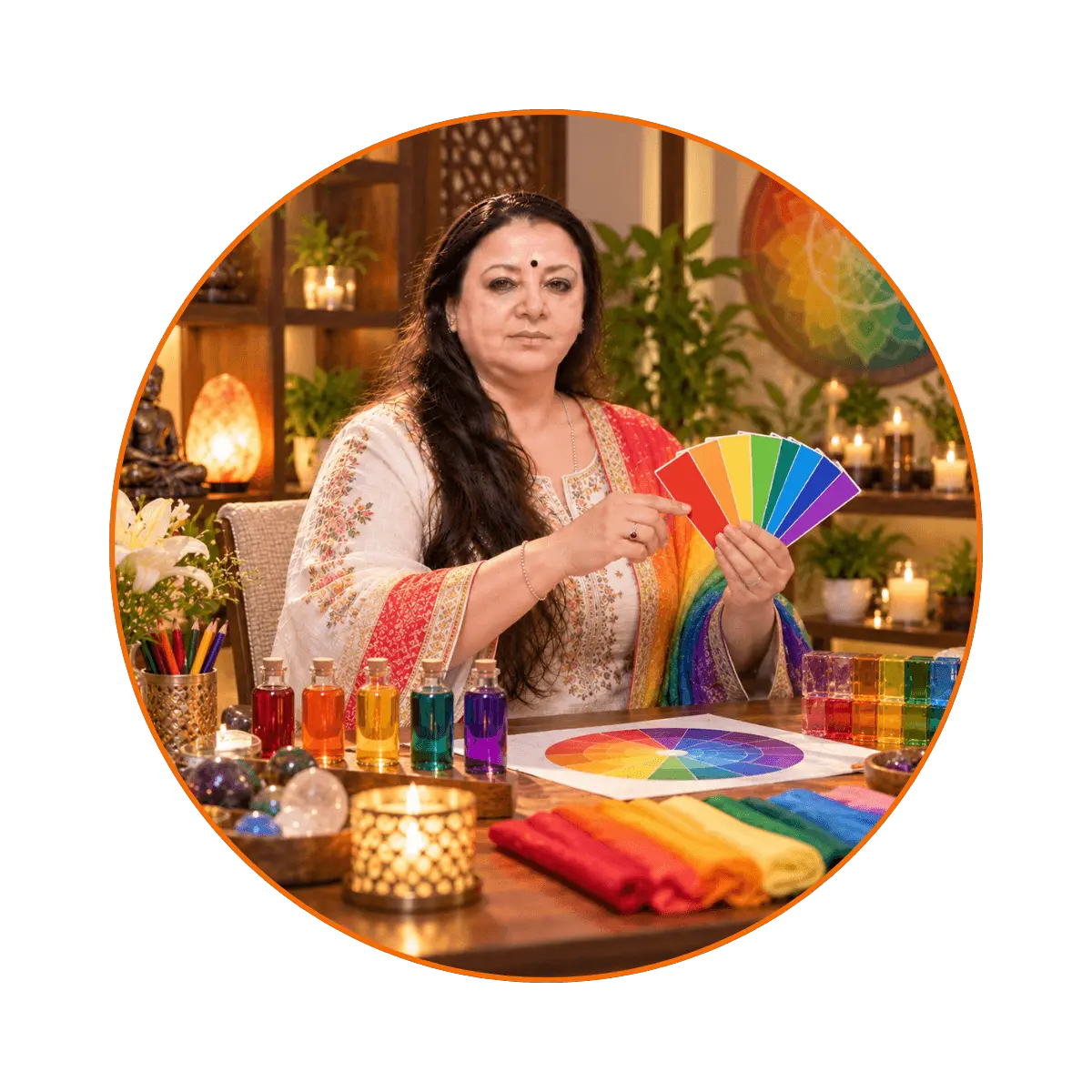
Physical colour cards, fabrics, stones, artwork or other coloured objects can be used during practice. Looking at a colour for a few minutes can provide a simple concentration exercise.
In a Colour Therapy Course, students can learn how to use these objects in a personal setting. They may select one colour, observe it carefully and write down their thoughts afterward.
The activity is simple and does not require expensive materials. Everyday objects can be used as long as their colours are clear enough for comfortable observation.
Colour and Emotional Reflection
Colour can be a useful starting point for talking about emotions without claiming that colours diagnose emotions. A person may associate a certain colour with a memory, place, person or period in life.
A Colour Therapy Course can use this type of reflection to encourage students to explore their personal associations.
For example, a particular shade of green may remind someone of nature, while yellow may remind another person of childhood or a favourite place. These associations are individual and do not need to follow a fixed system.
Journaling can help record these observations and identify personal patterns over time.
Responsible Use of Colour Therapy
The Colour Therapy Course should be approached as a spiritual, creative and reflective practice. Colour preferences and symbolic colour systems can be useful for personal exploration, but they should not be presented as medical facts.
Colour therapy is not a replacement for medical treatment, psychological care, counselling or professional diagnosis. There is no reliable scientific basis for claiming that a specific colour can cure a disease or guarantee a particular physical or emotional result.
Students should use colour practices alongside appropriate professional care when dealing with health concerns.
Developing a Personal Colour Practice
A regular colour practice can be simple. A student might spend a few minutes observing a chosen colour, practise colour visualization, write in a journal or use colour during meditation.
The Colour Therapy Course can help bring these activities together into a consistent personal routine. There is no need to spend a long time practising. Short sessions can be enough for observation and reflection.
Over time, students can compare their experiences with different colours and decide which practices are personally useful.
Who Can Study a Colour Therapy Course?
The Colour Therapy Course can be suitable for beginners, spiritual practitioners, meditation learners, creative people and anyone interested in traditional colour symbolism.
No particular background is required for basic colour meditation and observation unless a course provider has specific requirements.
The course can also be useful for people who already work with meditation, chakras, energy practices or other spiritual traditions and want to include colour-based exercises in their personal routine.
Important Note
Colour therapy is commonly used in spiritual, traditional and complementary practices, but its claimed healing effects are not scientifically established. Colour should not be used as a substitute for medical treatment, psychological care or professional advice.
The Colour Therapy Course is intended for education, personal reflection, meditation and spiritual study. Individual experiences with colours may differ, and no specific health, emotional, financial or personal outcome should be expected or guaranteed.
Why Choose a Colour Therapy Course?
The Colour Therapy Course offers a simple way to study colour symbolism, meditation, visualization and personal observation. It can be approached without complicated equipment and adapted to different spiritual or creative interests.
For people interested in meditation and energy-based traditions, a Colour Therapy Course can provide a practical way to include colour in their daily reflective practice. For creative learners, it can also offer ideas for using colour in journaling, artwork and personal expression.
Most importantly, the practice encourages observation rather than fixed assumptions. Each person can explore colours at their own pace, record personal experiences and decide which exercises fit their interests.
Whether used for meditation, creative expression, chakra-based spiritual practice or simple self-reflection, the Colour Therapy Course provides an accessible introduction to the traditional use of colour in personal practices.
Reviews
There are no reviews yet.