
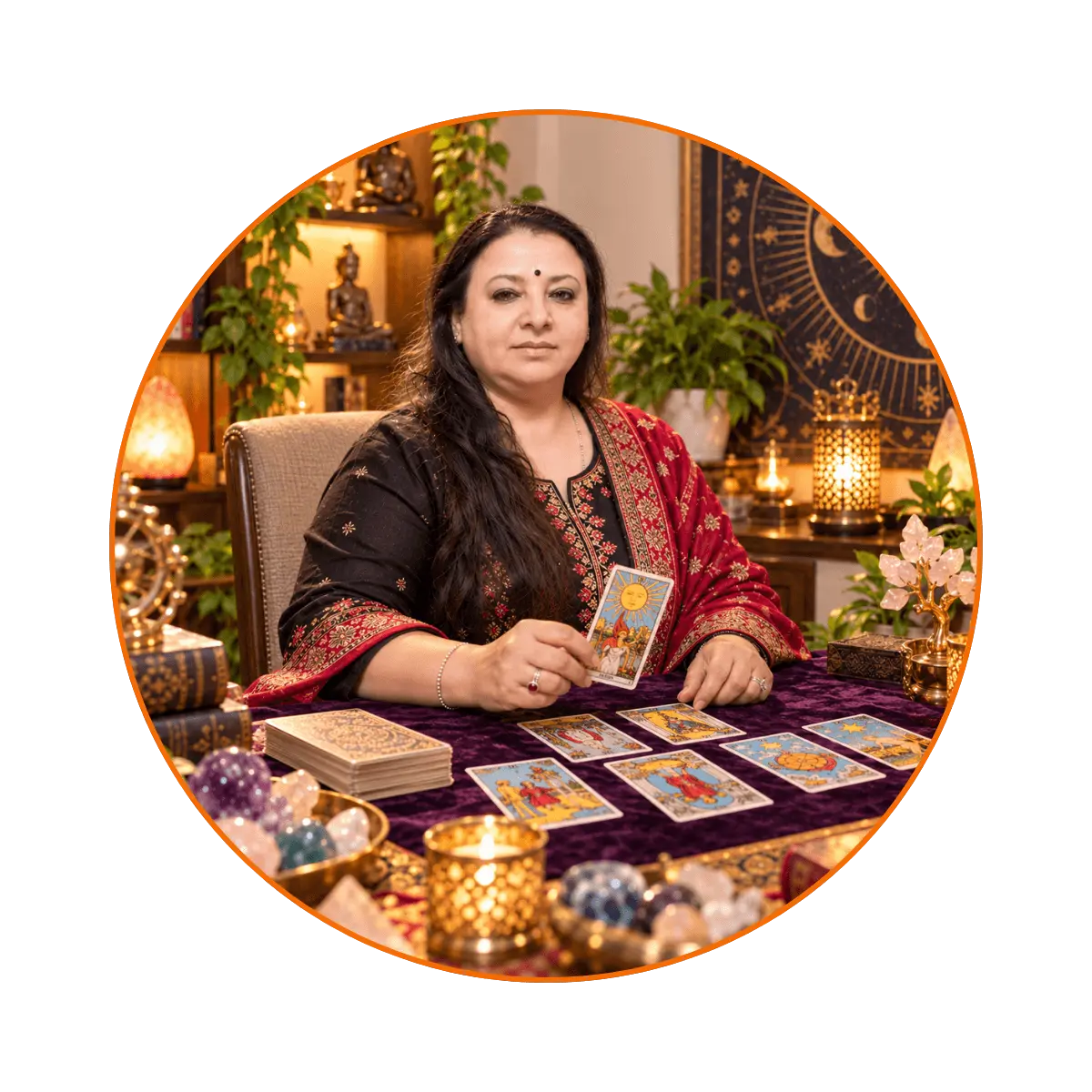
The Tarot Card Reading Course is designed for students who want to learn tarot card meanings and understand how to conduct traditional tarot readings. Tarot combines images, symbols, numbers and card positions to create a structured system for interpretation.
The Tarot Card Reading Course is suitable for beginners as well as learners who already have some experience with tarot cards. Students can learn about the Major Arcana, Minor Arcana, suits, card numbers, court cards, spreads and practical reading methods.
The course focuses on learning the cards step by step rather than simply memorising isolated meanings. Students can develop a clear method for preparing a reading, asking suitable questions, selecting a spread and interpreting the cards together.
Tarot is used by many people as a spiritual, symbolic and reflective practice. The cards can provide themes and ideas for personal thought, but their interpretations should not be treated as certain predictions of future events.
What Is Tarot Reading?
The Tarot Card Reading Course begins with an introduction to tarot and the basic structure of a tarot deck.
A traditional tarot deck contains 78 cards divided into the Major Arcana and Minor Arcana. The Major Arcana contains 22 cards, while the Minor Arcana contains 56 cards divided into four suits.
Each card has its own imagery, symbolism and traditional meanings. The meaning can also change according to the question, spread position and relationship with other cards.
Students learn how these elements work together during a reading.
Understanding the Major Arcana
A major part of the Tarot Card Reading Course is the study of the 22 Major Arcana cards.
The Major Arcana includes well-known cards such as The Fool, The Magician, The High Priestess, The Empress, The Emperor, The Lovers, The Chariot, Strength, The Hermit, Wheel of Fortune, Justice, The Hanged Man, Death, Temperance, The Devil, The Tower, The Star, The Moon, The Sun, Judgement and The World.
Each card has traditional themes and symbolism. Students learn how to identify these themes and understand how they may relate to a question.
The card called Death, for example, is traditionally associated with endings, change and transition. It does not necessarily refer to physical death. Learning the symbolic meaning of cards helps students avoid overly literal interpretations.
Understanding the Minor Arcana
The Tarot Card Reading Course also covers the 56 Minor Arcana cards.
The Minor Arcana is divided into four suits: Wands, Cups, Swords and Pentacles. Each suit is traditionally associated with different areas of experience.
Wands are often linked with energy, action, ambition and creativity. Cups are commonly associated with emotions, relationships and personal feelings. Swords are connected with thoughts, communication, decisions and challenges. Pentacles are often related to practical matters, work, resources and material concerns.
Students learn the general themes of each suit and how these themes can appear in different readings.
Number Cards and Court Cards
The Tarot Card Reading Course teaches students how numbers from Ace through Ten are used within the Minor Arcana.
The numbers can provide an additional layer of interpretation. Students learn the basic themes associated with the numbers and how those themes interact with the suit.
Court cards include Page, Knight, Queen and King. They can represent people, personality traits, situations or ways of approaching a matter, depending on the reading.
Understanding these cards is important for developing a complete tarot reading.
Upright and Reversed Cards
Some tarot readers use only upright cards, while others include reversed cards. The Tarot Card Reading Course can introduce both approaches.
When a card appears reversed, some readers interpret it as a blocked, internal, delayed or modified expression of the card’s traditional meaning.
Other readers prefer to read all cards upright and use the surrounding cards and spread position to provide additional context.
Students can learn both approaches and select a method that suits their style of study.
One Card Tarot Reading
A one-card reading is a useful starting point for beginners. The Tarot Card Reading Course teaches students how to select one card and interpret it according to a specific question.
A single card can be used for daily reflection, a simple question or study practice. Students can write down the card, its traditional meaning and their interpretation.
This method is also useful for learning individual cards because there are fewer symbols to consider.
Three Card Tarot Spread
The Tarot Card Reading Course introduces the three-card spread as another simple method for practice.
A three-card spread can be used in several ways. One popular structure is past, present and future. Another may use situation, challenge and advice.
Students learn that the positions should be clearly defined before interpreting the cards. The meaning of each card is then considered according to its position and relationship with the other cards.
Tarot Spreads
Larger spreads can provide more detailed readings. The Tarot Card Reading Course introduces the basic idea of using several cards in defined positions.
A spread may focus on relationships, career, personal decisions or general questions. Each position represents a specific part of the subject being studied.
Students learn to move through the spread carefully rather than trying to interpret every card at the same time.
Asking Clear Questions
Good questions are an important part of the Tarot Card Reading Course.
A clear question gives the reading a specific focus. Instead of asking a broad question about everything that may happen, students can identify one subject they want to explore.
Questions may concern work, education, relationships, personal choices, plans or general reflection.
Tarot should not be used to make medical, legal or financial decisions. Such matters require appropriate professional advice.
Combining Card Meanings
One of the main skills developed through the Tarot Card Reading Course is learning how to combine cards.
A card does not always have one fixed meaning. Its interpretation can depend on the question, its position in the spread and the cards surrounding it.
For example, a card associated with movement may have a different meaning when placed beside cards associated with delay, stability or conflict.
Students practise looking at the reading as a group of connected symbols rather than treating each card as a separate answer.
Practical Tarot Reading
The Tarot Card Reading Course encourages regular practice through sample readings.
A simple reading process can include:
- Choose a clear question.
- Select an appropriate spread.
- Shuffle the cards.
- Select the required cards.
- Place each card in its position.
- Review the traditional meanings.
- Consider the imagery and symbolism.
- Compare the cards with each other.
- Write the overall interpretation.
Keeping notes can help students review their readings and improve their understanding.
Tarot Journal
A tarot journal can be useful while studying the Tarot Card Reading Course.
Students can record daily card selections, questions, spreads and interpretations. They can also note which traditional meanings were used and why.
Over time, these records can help students become more familiar with the deck. Comparing older readings can also show how their interpretation style develops.
Reading Tarot for Others
The Tarot Card Reading Course can introduce basic guidelines for reading tarot for other people.
A reader should explain that tarot is a symbolic and spiritual practice. Interpretations should not be presented as guaranteed facts.
Privacy is also important. A reader should avoid sharing another person’s personal information and should obtain consent before conducting a reading.
Professional boundaries are especially important when questions involve health, legal matters, serious financial decisions or mental wellbeing.
Who Can Take This Course?
The Tarot Card Reading Course can be useful for:
- Beginners learning tarot
- Spiritual study learners
- Astrology students
- Numerology practitioners
- Existing tarot readers
- People interested in symbolic systems
- Students interested in personal reflection
- Anyone wanting structured tarot practice
No advanced background is required. Beginners can start with the deck structure and gradually learn the individual cards.
Building Regular Tarot Practice
Regular practice is important when learning the Tarot Card Reading Course. Students can begin with one-card readings and slowly move to three-card and larger spreads.
Studying a few cards at a time can make the learning process easier. Students can also practise identifying symbols, colours, numbers and visual themes within each card.
Using the same deck regularly can help learners become familiar with its artwork and traditional meanings.
Important Note
The Tarot Card Reading Course presents tarot as a traditional symbolic, spiritual and divination practice. Tarot readings and predictions are not scientifically established methods for determining future events.
Tarot should not replace qualified medical, legal, financial, psychological or other professional advice. Readings are best treated as a tool for reflection, personal study and symbolic interpretation.
Why Choose the Tarot Card Reading Course?
The Tarot Card Reading Course provides a practical introduction to tarot cards, their traditional meanings, spreads and reading methods. Students can start with the structure of the deck and gradually develop their understanding of individual cards.
From the Major Arcana and Minor Arcana to suits, numbers, court cards and practical spreads, the Tarot Card Reading Course gives learners a clear framework for regular study.
With consistent practice, journaling and careful observation, students can become more comfortable with card meanings and develop an organised approach to tarot reading.
Whether you are new to tarot or already familiar with a few cards, the Tarot Card Reading Course can help you study the deck in a simple and structured manner.
Reviews
There are no reviews yet.